From Stars to Sales: Reviews Local SEO and How Reviews Improve Your Rankings
For many local businesses, reviews are treated as a trust signal only — they help customers decide whether to call, but they are seen as separate from search performance.
In reality, reviews sit at the intersection of trust and visibility. They influence how often your business appears in local results, where it appears, and whether people click when they see you.
Reviews do not just affect conversion. They affect discovery.
In local search, trust signals and ranking signals overlap. A business that generates consistent, recent reviews is not just more credible to prospective customers — it is more visible to them in the first place.
This article explains how reviews influence local SEO in plain terms, why stars turn into sales, and how to align review activity with lead generation goals without getting lost in technical detail.
How local SEO actually works
Local SEO determines which businesses appear when someone searches for a service in a specific area, improving online visibility for location-based searches and people looking for nearby services — especially in "near me", map-based results, and other local search results. Google's goal is not to reward the most optimised business. It is to show the business most likely to satisfy the searcher.
Local SEO
Local SEO is the process of improving your visibility in location-based search results by signalling relevance, reliability, and trust. It is part of a broader local SEO strategy, not a one-off setup. It covers your Google Business Profile, how your business information appears across directories, and the ongoing signals — including reviews — that indicate whether you are active and valued by real customers.
Reviews help Google answer a key question: "Is this business active, reliable, and valued by real customers right now?" The more convincingly your profile answers that question, the more consistently you appear in local results.
Why reviews matter more than most local SEO tactics
Many local SEO guides focus on technical actions — citations, categories, and keyword adjustments. These matter, but they rarely move the needle on their own.
Reviews are different. They are ongoing signals created through customer reviews, not the business. That makes them harder to fabricate and more valuable to search engines as evidence of genuine activity and quality. Positive reviews strengthen trust while also supporting local search rankings.
Google trusts customer behaviour more than business claims
Many businesses focus on technical website work first, but building customer reviews often has more practical SEO impact. A profile with consistent, recent, detailed reviews carries significantly more weight than one with a polished description and nothing else.
This is why two businesses with similar services and locations can perform very differently in local search — and why turning a steady flow of reviews into revenue is consistently one of the highest-leverage actions a local business can take.
Your Google Business Profile: the foundation everything else builds on
Your Google Business Profile is the cornerstone of local SEO. It is the first place Google looks to verify your business information and determine where you appear in local results and on Google Maps. Claiming and verifying your profile gives you control over how your business is presented — and it is a prerequisite for reviews appearing against your name in search. That step still gets missed more often than it should: only 44% of businesses have claimed their Google Business Profile, even though optimising it significantly impacts local ranking success.
A complete and accurate profile strengthens your position. Business name, address, phone number, opening hours, and category should always be accurate and up to date, because consistent Name, Address, and Phone number data improves local SEO and helps Google trust what it shows. A clear, specific description that reflects what you actually do and where you serve is more useful than vague marketing language. Managing Google reviews effectively in the UK alongside consistent business information across directories supports stronger local rankings, improves your business's visibility, and keeps business listings reliable.
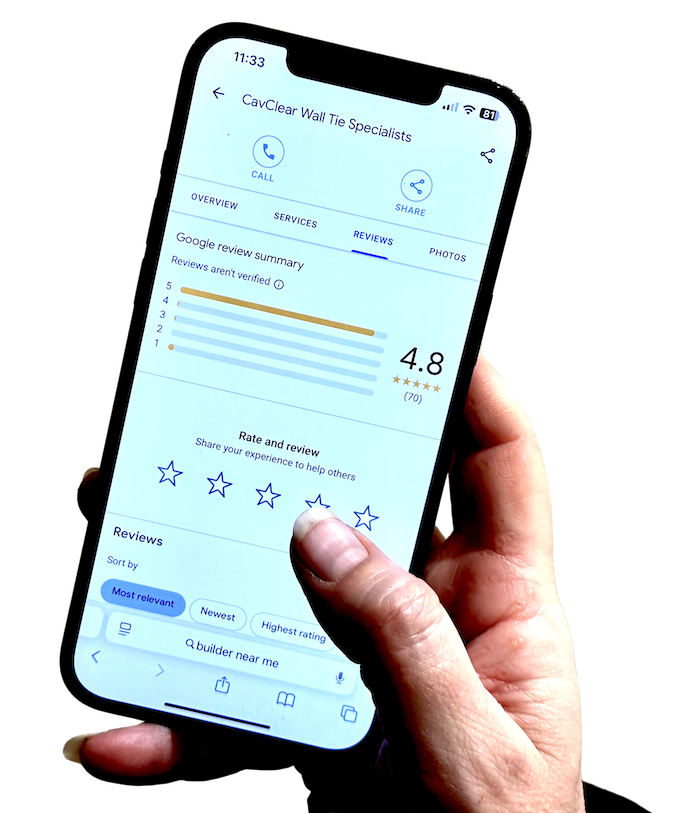
Reviews connect directly to your profile. When customers leave reviews on Google, they appear on your Business Profile — contributing to your rating, your review count, and the recency signal that influences how Google assesses your current relevance. Responding to reviews on the same profile demonstrates active management, which reinforces that signal further.
The key review signals that influence local SEO
Not all review activity has the same impact. The following five signals together determine how much your review profile contributes to your local visibility and conversion rate. Reviews account for roughly 15% of local pack ranking factors, so these signals are widely treated as a meaningful part of local SEO performance.
Five review signals and what they each do
Quantity — the total number of reviews on your profile. Provides social proof at a glance and gives search engines a larger sample of customer behaviour to assess.
Rating — your average star rating. Directly influences click-through rates and functions as the fastest trust filter buyers apply when scanning local results.
Recency — how recently reviews were left. Signals that the business is currently active rather than historically active, and that customers are still leaving new reviews.
Velocity — how consistently reviews arrive over time. A steady flow is treated more favourably than occasional bursts, because it reflects genuine ongoing activity rather than a campaign.
Language — the specific words customers use in reviews. Reinforces relevance for searches related to the services and locations mentioned, and this user-generated content helps search engines connect your profile to relevant searches.
Together, these signals paint a picture of relevance and reliability. A profile that scores well across all five is significantly stronger than one that excels on a single dimension while neglecting the others.
Review quantity: credibility at a glance
Review quantity affects perception before a click ever happens. A business with 200 reviews looks more established than one with 12, even when ratings are similar. Volume signals that a meaningful number of real customers have chosen this business and taken the time to comment on the experience.
A stronger review count also tends to attract more reviews over time, because visible social proof makes future customers more comfortable leaving feedback too.
For search engines, volume reduces uncertainty. A larger sample of reviews suggests that the rating reflects consistent delivery rather than a handful of unusually good or bad experiences.
A high rating with very few reviews still feels risky
Prospective customers apply a mental threshold — typically somewhere between 15 and 30 reviews — before a rating feels representative rather than accidental. Below that threshold, even a strong average is not enough to remove doubt.
Quantity alone does not guarantee rankings, but low volume creates a ceiling on both visibility and conversion that rating alone cannot raise.
Star rating: influencing clicks and calls
Star rating strongly affects click-through rate. When buyers scan local results, stars are one of the fastest comparison signals — processed before most buyers read a single word of your description or reviews. Visible positive feedback and strong reviews often shape whether potential customers click in the first place.
Even small differences matter. A 4.6-star business often attracts more clicks than a 4.1-star competitor listed above it. More clicks send positive engagement signals back to Google, which can reinforce visibility over time — creating a compounding benefit for businesses that maintain a strong rating consistently, with reviews affecting local SEO indirectly when better ratings improve click behaviour and trust.
Higher average ratings consistently correlate with stronger click-through rates in local search
The relationship is not linear — improvements at the lower end of the scale (moving from 3.8 to 4.1, for example) tend to produce a more material change in enquiry volume than equivalent improvements at the higher end. Knowing where you sit on the scale helps you prioritise where to focus.
Recency and velocity: signalling an active business
Recency answers a simple question: "Is this business active now?" A profile with reviews from the past few weeks feels current. One where the most recent review is from eight months ago raises questions that rating and volume cannot resolve. That drop-off matters quickly: 85% of customers believe reviews written over three months ago are irrelevant, so older feedback can lose practical value for both visibility and buyer confidence even when it still looks impressive on paper.
Velocity matters because it demonstrates ongoing engagement rather than historical success. A steady, consistent flow of reviews — even if modest in number — is treated more favourably by both search algorithms and prospective customers than a large burst followed by a long gap. Automated review systems that trigger timely requests can help sustain that steady flow. Reviews from satisfied customers help reinforce that sense of current, credible service when they keep arriving steadily.
Search engines and buyers both respond to momentum, not just totals
A business receiving six reviews per month for six months will typically outperform one that received 40 reviews in a single month and nothing since — even if the total counts are similar. Recency is assessed continuously, not at a fixed point in time. For example, a business with 25 recent reviews at 4.3 stars will often outrank one with 150 older reviews at 4.1 stars.
Review language: how customer words reinforce your relevance
When customers write reviews, they naturally describe what they experienced — the service they received, the problem that was solved, the area they live in, the person who helped them. This language does something useful for local search that no amount of business-side optimisation can replicate: it reinforces your relevance in the words of real customers, and it supports the same local search rankings signals that stronger localised website content and local keywords can help build for nearby customers.
A review that says "brilliant job replacing the boiler in our house in Stafford — on time, clean, and explained everything clearly" does several things simultaneously. It signals to Google that this business performs boiler work in Stafford. It signals that the service was completed (not just discussed). It uses the natural language a prospective customer in Stafford might use in a search query, and that kind of detailed feedback can reinforce the same relevant keywords people use in search queries. And it adds a layer of specificity that a five-star rating without text cannot provide.
Why detailed reviews support local search relevance
Designing the perfect review request — with clear, well‑timed, and specific prompts — makes it more likely customers will leave the kind of detailed feedback that strengthens your local relevance.
A home services business in a mid-sized town began receiving more detailed reviews after refining its review request message to thank customers for specific services by name. Over several months, the proportion of reviews that mention specific services and locations increased, which can help strengthen local search rankings. Search impressions for service-specific and location-specific queries improved correspondingly — without any other changes to the business profile or website.
This reinforcement happens organically. There is no need to script reviews or instruct customers on what to write — in fact, doing so would violate Google's policies. A well-timed, genuine review request that arrives when the experience is fresh tends to produce naturally detailed responses from customers who are still thinking about what you did for them.
Reviews also contribute to the Q&A section of your Google Business Profile. Questions posted by prospective customers — and answered by the business or previous customers — create additional indexed content that reinforces relevance. Checking your Q&A section periodically and responding to unanswered questions is a straightforward way to extend the relevance benefit that reviews provide.
Map pack visibility and the review advantage
The map pack is where local competition is fiercest. Only a small number of businesses appear, and reviews heavily influence which ones feel credible when they do. In fact, 93% of local searches show the google local pack.
When several businesses meet basic relevance criteria for a search, review signals help differentiate them. A stronger combination of volume, recency, rating, and response behaviour tips the balance — not just in terms of ranking position, but in terms of which businesses actually receive clicks and calls once they appear in the local pack and map listings.
Two plumbers, same area, very different results
Two local plumbers offer similar services in the same area. One has 180 reviews with consistent recent activity and professional responses. The other has 25 older reviews and no responses. The first receives significantly more map pack clicks and calls, with stronger visibility in the local pack — even when both appear in the same results. Visibility is not just about appearing. It is about being chosen when you do.
How reviews turn visibility into leads
Online reviews influence the final step: action. When buyers click through to a Google Business Profile, reviews continue to reassure them — reinforcing the decision to enquire rather than continue comparing alternatives.
Reviews shorten the trust gap between finding you and contacting you
When trust is pre-established through a strong, current review profile, buyers are more likely to call or submit an enquiry without conducting additional research. 92% of customers consult online reviews before making a purchase decision. This is why review investment often delivers stronger returns than purely technical SEO work — it improves conversion at the point of decision, not just visibility at the point of discovery. Review responses, especially to criticism, shape how future customers judge your business, and 85% of consumers consider responses to negative reviews in their decision-making process.
Aligning review activity with local SEO goals
The aim is not to "do reviews for SEO" as a separate task. The aim is to run a process that naturally supports both visibility and conversion through consistent, genuine feedback collection. In practice, that means treating review collection and the way you manage reviews as part of a practical review strategy within wider local SEO work, where local SEO strategies include optimizing business profiles and acquiring reviews and choosing straightforward reputation management services that fit your needs.
That alignment comes from consistency and timing — not from campaigns or periodic pushes.
Aligning your review process with local SEO
Using a simple direct link to your Google reviews as part of that process removes friction for customers and increases the chances they will follow through.
Set up consistent review requests tied to defined trigger points — job completion, appointment attended, invoice paid, and make it easy to leave google reviews by sending a direct link.
Time requests well — promptly after the trigger event, while the experience is still fresh enough for customers to write something specific and genuine.
Focus on recency — a steady flow month after month is more valuable for local search than any single burst.
Respond to reviews professionally and consistently — both positive and negative. Timely replies support customer engagement, and maintaining active customer engagement improves local SEO effectiveness. Responses are visible on your profile and contribute to the signal of active management. Many customers expect reviews respond within about seven days, which is why consistency matters more than occasional catch-up sessions.
Review patterns monthly, not daily — look for trends in volume, recency, and the language customers use, and note whether enquiry activity correlates with periods of stronger review flow. Simple reputation monitoring services focused on reviews can help you keep on top of these patterns without adding complexity.
If you want to improve local SEO, start with review recency
It is often the fastest lever available. A profile that has been dormant for several months can see meaningful improvement in local visibility within six to eight weeks of establishing a consistent review process.
Common misconceptions about reviews and rankings
There are persistent myths about how reviews interact with local search that are worth addressing directly.
Reviews alone do not guarantee top rankings — proximity and relevance are still primary factors, and reviews are only one of several local SEO signals alongside profile quality. Reviews are a meaningful multiplier, not a shortcut.
Star rating matters, but consistency matters more. A stable 4.4 with regular recent reviews often outperforms a 4.7 that has been dormant for months, and businesses with optimised profiles rank better in local searches. That is part of why local SEO helps increase visibility for small businesses in their area and can allow them to outrank larger competitors when review flow stays steady.
Negative reviews do not "kill" local rankings when overall volume is healthy. A well-handled critical review with a professional response can actually strengthen credibility, and sectors like moving and storage often benefit from dedicated reputation management support in the UK to stay on top of feedback.
Chasing total review count without maintaining recency produces diminishing returns. Recent reviews carry more weight than an impressive historical total, especially if you are keeping up with recent customer feedback rather than leaning on glowing reviews from years ago — something particularly important for online reputation management in private healthcare.
From stars to sales
Reviews influence how often you appear in local search, helping local businesses improve visibility among new customers in their area, how often you are clicked when you do, and how often those clicks become enquiries and calls.
They sit at the centre of local SEO because they reflect real, ongoing customer experience — something no technical optimisation can substitute for. When review activity is consistent, stars become more than a decoration on your profile. They become a compounding driver of discovery, credibility, and sales, and high-intent local searches often lead not just to discovery but to enquiries, visits, and sales.
Want to See How a Managed Review Process Builds Your Local SEO?
Trusted Reviews 4U builds your personalised review page and manages the entire request process — helping local businesses leverage customer reviews as part of a managed approach, with consistent timing, follow-ups, and concern routing designed to keep your Google profile active, current, and converting. Try the demo →