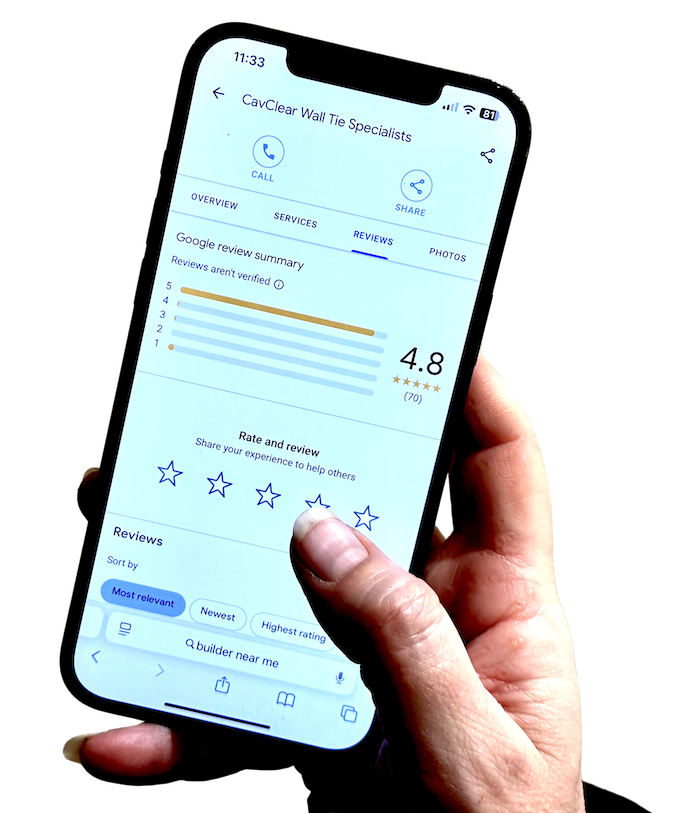
Google reviews matter to most small businesses in the UK, but many owners still are not quite sure what “good” looks like in practice.
They know reviews are important. They know prospects look at them. They know Google Business Profiles show stars, comments, and response history before a customer ever picks up the phone. What is less clear is how to build reviews consistently without making it awkward for customers, adding more admin to the week, or relying on a process that only happens when someone remembers.
That is where many businesses get stuck. Reviews are treated as something to ask for now and then, rather than something that is managed properly.
This guide explains what google reviews uk means in practical terms for a UK small business, why reviews affect visibility and trust, what a healthy review profile looks like, and what a sensible repeatable process should involve. If you want broader context around review growth and reputation, you can also explore other guides in the Learning Centre.
What “google reviews uk” means for a small business in practice
When people search for google reviews uk, they are usually trying to understand one of three things.
First, they want to know how Google reviews influence whether a business gets chosen. Second, they want to know how reviews affect local visibility. Third, they want to understand how to get more reviews in a way that feels genuine and sustainable.
For a UK small business, Google reviews are not just a public comment section. They are part of how your business is presented online when someone searches for your business name, your service, or a local solution nearby.
A potential customer might search for:
plumber near me
accountant in Worcester
MOT centre in Evesham
best local dog groomer
electrician reviews Bristol
In many of those cases, Google shows local business listings, maps results, star ratings, review counts, and snippets from recent customer feedback. That means your reviews shape the first impression before your website is even visited.
📖 Definition
In practice, “google reviews uk” usually means understanding how your Google review profile affects trust, local visibility, and whether a customer chooses your business over another local option.
In practice, Google reviews help answer the questions a buyer is already asking in their head:
Can I trust this business?
Do they seem established?
Are other people happy with them?
Do they respond professionally?
Do they sound active and current?
For a small business, that matters because buying decisions are often made quickly. People compare a few local options, glance at the review profile, and make a judgement. A stronger profile does not guarantee the enquiry, but it often improves the odds of being considered.
Why Google reviews matter for visibility, trust, and enquiry quality
Small business owners often think about reviews mainly in terms of reputation. That is right, but it is only part of the picture.
Google reviews work in two important ways: as a trust signal and as a local visibility signal.
Reviews help build trust quickly
When somebody has never used your business before, they have limited information. They may not know your team, your standards, or your process. Reviews help bridge that gap.
A healthy review profile can reassure a prospective customer that:
your business is real and active
people are using you now, not just years ago
customers describe a good experience in their own words
issues are handled professionally when they arise
That is especially important for small businesses, because local buying decisions are often based on confidence rather than brand fame. A national company may be known already. A local business usually has to earn trust more directly.
Reviews support local visibility
Google wants to show searchers relevant, credible local options. Reviews are part of that picture.
A business with a well-maintained Google Business Profile, steady review activity, and useful customer feedback is more likely to look strong within local search results than a similar business with an empty or neglected profile.
This does not mean reviews are the only factor. They are not. Your location, relevance, profile completeness, business category, website, and broader local SEO all matter too. But reviews are one of the clearest public signals that a business is active and being chosen by real customers.
Reviews can improve enquiry quality
There is another benefit many businesses notice in practice: better-informed prospects.
When customers read reviews before contacting you, they often come in with more confidence and more context. They may already understand the type of service you offer, the standard of communication you provide, or the kind of jobs you are known for. That can mean fewer uncertain enquiries and more conversations with people who are already leaning towards you.
For a busy owner, that matters. Good reviews do not just help with quantity. They can improve the quality of inbound enquiries too.
💡 Key Insight
Reviews do more than improve appearance. They help customers trust you faster, support local visibility, and often lead to better-quality enquiries because prospects arrive with more confidence and context.
What a strong Google review profile actually looks like in the UK
A lot of business owners assume a strong profile simply means “lots of five-star reviews”. That is too narrow.
A strong Google review profile is usually a combination of several things working together, and paying attention to key review metrics that actually improve results helps you understand whether your profile is moving in the right direction.
1. A steady flow of reviews
One of the clearest signs of a healthy profile is consistency.
A business that picked up twenty reviews two years ago and none since may still look respectable, but it does not feel current. A business receiving reviews steadily over time tends to look more active and more believable.
Consistency matters more than short bursts followed by silence.
2. Enough volume to create confidence
The right number varies by industry and area, but most buyers want to see that more than a handful of people have used you.
If one local option has 6 reviews and another has 86, the second often feels more established before the customer has read a single comment. Volume is not everything, but it shapes perception.
3. A believable overall rating
Most experienced buyers do not expect absolute perfection. In fact, a profile that looks overly polished can sometimes feel less believable than one with a strong overall rating and the occasional mixed review.
What people usually want is reassurance that the business is reliable, consistent, and professional. A solid rating backed by genuine written feedback often does that better than a suspiciously flawless profile with very little detail.
4. Written reviews with useful detail
The strongest reviews tend to sound like real people describing a real experience.
Comments about communication, reliability, workmanship, helpfulness, turnaround time, cleanliness, or aftercare all help future customers picture what dealing with the business might be like.
5. Recent activity
Fresh reviews matter. They suggest the business is active now, not just historically, and they are one of the simplest reputation monitoring signals local businesses can track without needing complex dashboards.
For many small businesses, recent activity is one of the most persuasive parts of the profile because it reduces uncertainty. A customer is more reassured by feedback from last week or last month than by praise from several years ago.
6. Professional responses
Responding to reviews helps in two ways. It shows attentiveness, and it gives future customers another glimpse into how the business communicates.
Responses do not need to be long or corporate. They simply need to be polite, human, and appropriate.
7. No awkward patterns
A healthy profile usually looks natural. It should not show strange spikes, repetitive wording, or a tone that makes the reviews feel forced, including copied phrasing or fabricated reviewers. Good practices matter here, and any attempt to purchase reviews can create compliance problems as well as trust issues. The aim is not to manufacture a perfect image. It is to reflect real customer experience in a consistent way, which is why many owners look for straightforward reputation management services rather than complicated, multi-channel agency setups.
🗒 Checklist
What a strong review profile usually includes
A steady flow of reviews over time
Enough volume to create confidence
A believable overall rating
Written reviews with useful detail
Recent activity
Professional responses
A natural pattern rather than awkward spikes
Common reasons small businesses struggle to build reviews consistently
Most small businesses do not struggle with reviews because they do not care. They struggle because review collection usually sits in the gap between good intentions and daily reality.
They rely on memory
A team member finishes a job, the customer is happy, and someone says, “We should ask for a review.” Then the phone rings, the next appointment starts, or the day runs away. No one follows up.
This is one of the biggest reasons reviews stay inconsistent. The process depends on remembering at the right moment.
They only ask in person
In-person asking can work well, but it is often hit and miss.
Some staff are comfortable asking. Others avoid it. Some ask only when the conversation feels easy. Others forget entirely when things get busy. That means the process becomes inconsistent even if the intention is good.
They are worried about sounding pushy
Many owners feel awkward about asking for reviews because they do not want to appear needy or transactional.
That concern is understandable. If the process is badly handled, it can feel uncomfortable. But the problem is usually not the asking itself. It is the lack of a clear, simple, customer-friendly way of doing it.
They do not follow up at the right time
Timing matters. If the request comes too early, the customer may not yet feel ready. If it comes too late, the moment has passed.
Without a proper process, businesses often miss that useful window when the experience is still fresh, whether that means a follow-up sent by text, email, or a QR code linking customers straight to your Google reviews while the job is still top of mind.
They leave it to whichever member of staff happens to remember
When responsibility is vague, execution is patchy.
A business might think it has a review process because “we do ask sometimes”. In reality, that often means there is no dependable process at all.
They create unnecessary friction
Even satisfied customers may not leave a review if the path is unclear or inconvenient.
The easier the process is for the customer, the more likely it is to happen. If the request is confusing, the link is buried, or the follow-up never arrives, even willing customers may do nothing.
❌ Common Mistake
The common mistake is assuming the problem is customer willingness when the real problem is usually process inconsistency. Many businesses have enough happy customers. They just do not have a dependable way of asking and following up.
The difference between ad hoc asking and a managed review process
This is the point where many businesses start to see the real issue.
The problem usually is not whether reviews matter. The problem is whether the review process is being managed properly.
What ad hoc asking looks like
Ad hoc asking tends to include:
occasional verbal requests
no set timing
no structured follow-up
inconsistent wording
no clear ownership
long gaps with no review activity
It often depends on good customer moments being noticed in real time and someone remembering to act on them.
That can produce the odd review here and there, but it rarely creates steady growth.
What a managed review process looks like
A managed review process is more deliberate.
It treats review generation as an operational process rather than a hopeful extra. That usually means:
customer requests are sent consistently
timing is thought through properly
follow-ups happen instead of being forgotten
the process is simple for the customer
activity is reviewed and adjusted over time
the business owner is not left to chase everything manually
Most importantly, it avoids making review collection depend on mood, memory, or spare time by moving to an automated review request system that triggers timely, consistent outreach.
🧭 Framework
What a managed review process needs in practice
Consistency — requests are sent reliably rather than occasionally.
Timing — customers are asked when the experience is still fresh.
Follow-up — the process does not stop after one ask.
Simplicity — the customer route is clear and easy to complete.
Ownership — somebody is responsible for making the process actually happen.
For a small business, that matters because admin already piles up from every direction. If the review process adds more work, it tends to fall apart. If it is managed well, it becomes easier to sustain.
Why managed tends to outperform inconsistent asking
A managed approach usually works better because it removes friction on both sides.
For the business, there is less reliance on memory. For the customer, there is a clearer and more timely route to leave a review, especially when you invest in designing the perfect review request with simple, well-timed language. Over time, that produces a steadier flow of genuine customer feedback.
That does not mean every customer leaves a review. They will not. It means more of the right opportunities are actually acted on.
Where TR4U fits
TR4U is a managed service built around that idea.
Rather than leaving the business to handle the process in a patchy, manual way, the aim is to create a more repeatable review journey using genuine customer outreach and a process that is handled properly.
That matters because most small businesses do not need another system to log into. They need a process that actually gets carried through, such as a managed service that helps turn reviews into predictable revenue growth.
How to handle negative feedback without making the situation worse
No business likes receiving negative feedback, but the presence of the occasional unhappy review is not automatically a sign that something is wrong. Often, what matters more is how the business responds.
Do not react emotionally
A poor review can feel personal, especially for an owner-led business. But an angry public response almost always makes things worse.
It can put off future customers even if the original complaint was unfair.
Reply calmly and professionally
A good response is usually short, polite, and measured.
It should acknowledge the feedback, avoid arguing publicly, and where appropriate invite the customer to continue the conversation privately. Future customers are reading that response as much as the original complaint.
Look for patterns
One negative review may be an outlier. Several reviews mentioning the same issue may point to something operational worth addressing.
That could be communication, handover, waiting times, cleanliness, clarity on pricing, or follow-up. Reviews can be useful feedback as well as public reputation signals.
Do not try to block unhappy customers from accessing Google
This is important.
A compliant review process must not imply that only happy customers can leave a Google review. All customers should be able to access Google regardless of rating or sentiment.
That means you should avoid any process that filters customers based on whether they seem pleased before allowing them to reach the review page. Review growth should be handled honestly and fairly.
📌 Important
All customers should be able to access Google regardless of rating or sentiment. A private feedback option can be offered, but it must be protective rather than restrictive.
Keep perspective
A single negative review rarely destroys trust on its own. Buyers usually look at the overall picture: the volume, the average rating, the recency, and how the business responds.
In many cases, a well-handled negative review can actually strengthen credibility because it shows the business behaves professionally when things are not perfect.
What to look for in a review growth service in the UK
If a small business decides it wants help, the next question is what kind of support to look for.
Not all services are the same, and the right option is usually the one that helps the business build reviews consistently without adding complexity or creating compliance risks, following the kind of practical Google reviews framework for UK businesses described in this guide.
Look for a managed service, not extra admin
Many owners do not need more software to learn. They need the review process to happen properly.
A good managed service should reduce the burden on the business, not simply shift it into another dashboard or another weekly task list.
Look for a clear, repeatable process
The service should be able to explain:
when customers are contacted
how follow-up is handled
how the process stays consistent
what the customer experience looks like
how genuine review opportunities are increased over time
If the explanation is vague, results may be too.
Look for compliance and sensible language
Be cautious of any service that sounds like it is promising to manipulate outcomes.
A trustworthy service should not imply review gating, filtering, or selective access to Google based on how happy a customer seems. It should focus on helping the business ask consistently and professionally, not on trying to control who is allowed to leave feedback.
Look for realism, not hype
Review growth should be presented in calm, practical terms.
No reputable service can guarantee that every customer will respond, or that every review will be glowing. The value is in managing the process properly and increasing the number of real opportunities that turn into real reviews.
Look for support that fits local business reality
UK small businesses usually need something straightforward. They do not need enterprise jargon. They need a service that understands how local businesses actually operate: busy days, lean teams, inconsistent follow-up, and limited time, whether they are trades, professional services, or reputation-sensitive moving and storage companies.
The best support tends to reflect that reality rather than ignoring it.
Look for a sensible trial or starting point
A practical service should make it easy to test whether the process works for your business.
For example, TR4U offers a managed route for businesses that want consistent review growth without the owner having to manage every step personally. Where the guarantee is referenced, it is a guarantee of 10 reviews, and if that is not reached in the initial period, the time extends until 10 is reached.
That keeps the promise clear and grounded.
A practical next step for small businesses that want steady review growth
If your business already gets great feedback in person but that is not being reflected consistently on Google, the issue may not be service quality. It may simply be process quality.
That is good news, because process is fixable.
A sensible next step is to look honestly at your current review journey and ask:
Are we asking consistently?
Is the timing right?
Is the customer route simple?
Is there proper follow-up?
Does this happen without relying on memory?
Is the process being managed, or just hoped for?
If the answer to most of those is “not really”, you do not necessarily need to work harder. You may need a more structured approach.
For many small businesses, that is the difference between getting the occasional review and building a profile that steadily improves visibility, trust, and enquiry confidence over time.
Google reviews are not just about stars. They are about showing future customers that your business is active, credible, and consistently chosen by real people, which matters because potential customers often use reviews to research a business before making contact. When handled properly, they become part of how your business earns trust before the first conversation even starts, especially in trust-critical sectors like private healthcare.
If you want a more consistent, managed way to grow genuine Google reviews without adding more admin to your week, TR4U offers a practical place to start.
Want to See What Managed Review Growth Looks Like for Your Business?
Trusted Reviews 4U builds your personalised review page and shows you exactly how the managed process works — before you commit to anything. Try the demo →