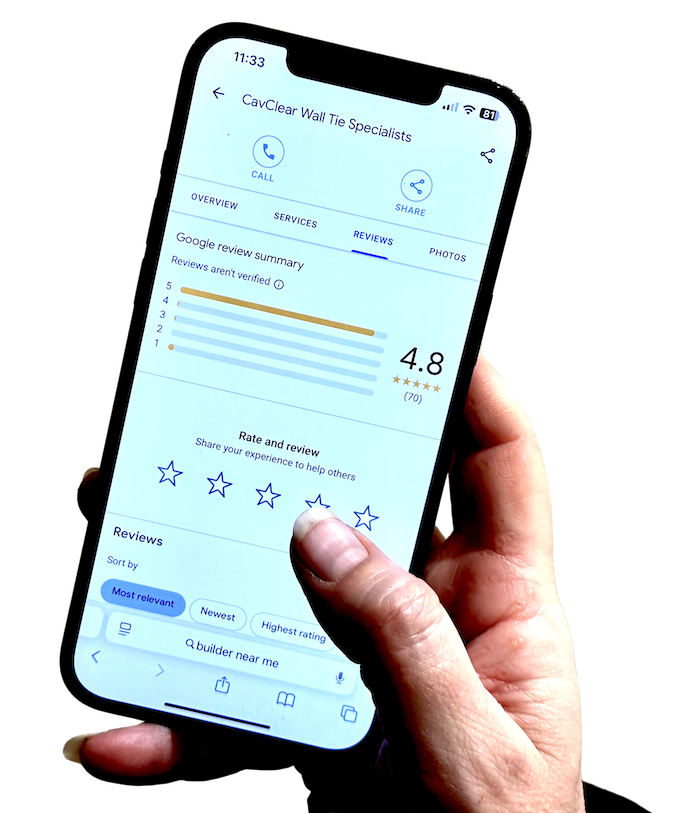
The cost of missed reviews is straightforward: reduced search visibility, lower conversion rates, and a steady competitive disadvantage that can translate into substantial lost clicks, enquiries, and revenue for local businesses that do not collect reviews systematically. For UK business owners and service providers comparing reputation management services and broader online reputation agencies, that matters because a strong service reputation offline does not automatically become a strong reputation online.
Without systematic review collection, only a small fraction of satisfied customers ever leave feedback voluntarily. The result is a significant gap between actual customer satisfaction and online reputation. Businesses delivering consistently strong experiences often appear mediocre in search results because satisfied customers remain silent while dissatisfied ones voice complaints. This imbalance is not accidental or unavoidable — it is the predictable consequence of treating review generation as optional rather than systematic.
This article looks at what missed reviews actually cost, how voluntary collection compares with a consistent review process, how lost review volume affects rankings and conversion, where the competitive disadvantage builds, and what local businesses can do to recover visibility without adding more admin. For busy owners, the issue is practical rather than theoretical: relying on occasional reviews can leave you looking weaker than competitors who actively manage review growth, even when your real customer experience is better.
The mathematics of voluntary review behaviour
The fundamental problem begins with how customers behave around leaving reviews unprompted. Industry experience consistently shows that only a small minority of satisfied customers will leave a review without being asked — and those who do are disproportionately likely to have had a strongly positive or, more commonly, a negative experience.
If you serve 100 satisfied customers in a month, a small fraction — typically somewhere in the single digits — will proactively post positive feedback. The remainder, despite being satisfied, simply move on without leaving any trace of their positive experience.
💡 Key Insight
Customers with negative experiences tend to be more motivated to leave reviews unprompted than those with positive ones. When no systematic collection exists, this creates a natural bias where negative experiences are over-represented and positive experiences are under-represented — distorting the accuracy of your online reputation regardless of your actual service quality.
This disparity creates a mathematical inevitability: without intervention, your review profile will skew more negative than your actual service quality warrants. A business with high customer satisfaction might have an online profile that suggests something considerably lower — simply because dissatisfied customers are more motivated to speak up publicly.
The impact compounds over time. Each month that passes without systematic review collection adds more missed positive reviews to the gap between reality and perception. Meanwhile, the occasional negative review that does appear carries disproportionate weight because it is not offset by the volume of positive feedback that should exist if satisfied customers participated at the same rate, especially where businesses lack a practical, structured approach to building Google reviews in the UK.
How silence in Google reviews translates to lost visibility in search results
Review volume directly influences search visibility, particularly in local results and Google Maps, where Google weights review count and recency when determining which businesses appear prominently. Businesses with few reviews are systematically disadvantaged regardless of their actual quality, especially when they have not yet implemented simple tools like a direct Google review link and QR code process to make leaving feedback effortless.
This means two businesses offering identical services at identical quality levels will rank differently based on review signals alone. The business with 50 reviews at 4.7 stars will typically outrank the business with five reviews at 4.8 stars — despite the latter having a marginally higher rating. Volume provides the credibility signal that a thin profile, however positive, cannot replicate.
🧭 Framework
Review volume and its impact on local search visibility
0–10 reviews — minimal local search presence. Unlikely to appear in top map pack positions. Prospective customers question legitimacy and credibility even when the business does appear.
10–30 reviews — marginal visibility. May appear in map pack for less competitive searches. Still significantly disadvantaged compared to competitors with robust review profiles.
30–50 reviews — competitive baseline. Enough volume to establish credibility and compete for visibility in moderately competitive markets. Review recency becomes increasingly important.
50+ reviews — strong competitive position. Sufficient volume to rank well in most local searches. Focus shifts to maintaining rating quality and review freshness.
The visibility gap created by low review volume directly reduces inbound traffic. When your business appears lower in local results because competitors have more reviews, you lose a material proportion of potential clicks — the top positions in local search capture the substantial majority of clicks, with lower positions receiving a fraction of that attention.
This visibility disadvantage persists regardless of other factors. You could have superior service quality, better pricing, and a more convenient location — and still lose the majority of prospective customer attention because your review volume signals lower authority and credibility to both search algorithms and human readers.
The conversion cost of appearing mediocre despite being excellent
Beyond search visibility, missed reviews damage conversion rates among customers who do find your business. When prospective customers compare a sparse review profile against competitors with robust feedback, potential buyers often use review volume to decide between similar providers, leaning on social proof rather than actual quality.
Review quantity influences trust and purchase decisions independently of rating. A business with 40 reviews averaging 4.5 stars will typically convert more prospective customers than a business with eight reviews averaging 4.8 stars. A profile with 1,000 reviews often feels more reliable than one with five, even when the score is slightly lower. The higher-rated business with fewer reviews appears less proven, less established, and therefore riskier — despite objectively stronger feedback quality, which is why designing the perfect review request and timing matters just as much as delivering good service.
🔧 Example
Two plumbing companies — illustrative comparison. Company A has 95% customer satisfaction and 12 Google reviews averaging 4.6 stars. No systematic review collection. Company B has 85% customer satisfaction and 78 Google reviews averaging 4.3 stars. Review requests sent to all customers within 48 hours of job completion.
Despite superior actual service quality, Company A converts materially fewer enquiries than Company B. Prospective customers perceive Company B as more established, more proven, and lower risk — based purely on review volume. The gap in perceived credibility translates directly into a gap in conversion rate, which translates into a gap in monthly revenue.
The underlying principle is consistent across service categories: at equivalent or similar price points, the business with the stronger review profile wins the majority of conversions — regardless of which business actually provides the better service.
The conversion disadvantage amplifies in competitive markets where multiple businesses offer similar services at similar price points. When prospective customers have limited basis for differentiation, they default to social proof as the primary decision factor. The business with the most robust review profile wins the majority of conversions, and even a half-star difference in ratings can affect sales outcomes.
Quantifying the gap between reality and perception
Understanding the economic cost of silence requires translating abstract concepts like visibility and conversion into numbers using simple business data that reveal the magnitude of the missed opportunity. The following framework illustrates how to calculate what inaction costs your specific business. The percentages used are indicative — your own figures will vary depending on industry, satisfaction levels, and current review state.
🗒 Step
Calculating your review gap
Calculate satisfied customer volume — determine how many customers you serve monthly who would rate their experience positively if asked. If you serve 100 customers and achieve around 90% satisfaction, you have approximately 90 satisfied customers monthly.
Apply voluntary review rate — multiply satisfied customers by a realistic voluntary rate (industry experience suggests 5–10% as a working estimate). 90 satisfied customers × 8% = approximately 7 reviews monthly from voluntary behaviour.
Calculate potential with systematic collection — multiply satisfied customers by a realistic rate with consistent requests (typically 30–60% depending on channel and timing). 90 satisfied customers × 40% = approximately 36 potential reviews monthly.
Identify your monthly review gap — subtract voluntary reviews from systematic potential. 36 - 7 = approximately 29 missed reviews monthly, or around 350 missed reviews annually.
Assess visibility timeline — determine how long it would take to reach a competitive review threshold (30–50 reviews). At voluntary rates: several months. With systematic collection: a matter of weeks.
Estimate conversion impact — consider the conversion rate difference between your current state and a competitive profile. Apply that difference to your monthly enquiry volume to indicate the revenue gap.
These calculations reveal that the cost of inaction is not small or abstract. Even conservative estimates tend to show material revenue impact — particularly when the calculation accounts for customer lifetime value rather than individual transaction values, and when gaps in simple reputation monitoring and feedback review routines allow issues to persist unnoticed.
Why negative experiences dominate when positive reviews stay silent
The perception problem created by missed positive reviews extends beyond simple volume disadvantage. When satisfied customers remain silent while dissatisfied ones speak up, the proportion of negative reviews in your profile dramatically exceeds the proportion of negative experiences in reality.
Consider a business with 90% satisfaction serving 100 customers monthly. Of the 90 satisfied customers, perhaps seven leave positive reviews voluntarily. Of the 10 dissatisfied customers, a higher proportion — motivated by frustration — leave negative reviews. The resulting profile might show seven positive reviews and three to four negative reviews — suggesting significantly lower satisfaction than the actual 90%, especially to potential customers viewing that skewed profile.
📌 Important
Research consistently shows that a small number of negative reviews can exert disproportionate influence on consumer perception relative to a much larger number of positive ones. Without systematic positive review collection, a single negative review can define your visible reputation for months — because there is insufficient positive volume to contextualise it as an outlier.
This imbalance creates situations where excellent businesses appear mediocre or problematic purely because their review profiles misrepresent actual experience distribution. Prospective customers reading these profiles make rational decisions based on the available evidence — concluding the business is riskier than it actually is and choosing competitors with more balanced or positive profiles instead.
The damage compounds because negative reviews tend to attract more attention and carry more weight in the reader's memory than positive ones, even when proportionally balanced. Consumers actively seek out critical reviews to identify potential problems — reading them more carefully and weighing them more heavily than positive feedback of equal quantity, particularly where weak review volume undermines consumer trust.
The competitive disadvantage of passive review generation
Markets rarely contain only passive businesses. Competitors who understand review economics implement systematic collection, creating relative disadvantage for businesses that rely on voluntary feedback — regardless of actual quality differences, and most businesses now recognise review collection as part of staying competitive.
When competitors actively collect reviews while you do not, the perception gap widens month by month. Each month they add a consistent flow of new reviews while you add only a handful. Within six months, the volume differential can be substantial. The visibility and conversion advantages they accumulate compound continuously, shaping their future competitive position and making it progressively harder to compete on equal terms.
🔧 Example
Two competing restaurants — illustrative comparison. Restaurant A has excellent food quality and high customer satisfaction, but no review collection process. Current position: 23 Google reviews, 4.4 star average. Restaurant B has good food quality and slightly lower satisfaction, but sends systematic review requests 24 hours after dining. Current position: 156 Google reviews, 4.3 star average.
When customers search "restaurants near me", Restaurant B appears prominently in map pack results. Restaurant A appears well below the map pack fold. Restaurant B receives the substantial majority of search-driven clicks — despite Restaurant A having superior actual quality and a marginally higher rating. The revenue gap between these two positions is material and widens every month the imbalance persists.
This competitive dynamic means inaction is not neutral. Choosing not to systematically collect reviews is effectively choosing to cede market share and revenue to competitors who may not provide superior service but who better understand reputation economics and act on that understanding. Businesses that take review collection seriously are more likely to win share of attention and enquiries, as seen in sectors like moving and storage where proactive reputation management for UK removals and storage firms directly influences enquiries and bookings.
Why "doing nothing" actively damages revenue
The cumulative effect of missed reviews, search visibility disadvantage, conversion rate gaps, and competitive positioning creates ongoing revenue damage that compounds over time. This is quantifiable and observable in business performance metrics — not hypothetical.
A service business receiving a steady volume of enquiries with a moderate conversion rate operates at one revenue level. If systematic review collection improves search visibility enough to increase enquiry volume, and improves credibility enough to support stronger conversion and revenue performance, the combined effect can be substantial. These are not extreme scenarios — they represent the kind of improvement businesses typically see when transitioning from passive to systematic review collection.
The revenue damage from inaction extends beyond lost sales to include higher customer acquisition costs. When your conversion rate is lower due to a weak review profile, you must generate more enquiries to achieve the same number of customers — requiring more marketing spend. That creates a double penalty: lower conversion efficiency and higher acquisition cost running simultaneously.
External studies have also linked a one-star increase on Yelp to a 5% to 9% revenue increase, reinforcing that ratings can influence what customers are willing to pay and overall revenue.
The window of opportunity for recovery
The encouraging aspect of review economics is that the effects are largely reversible through systematic action. Businesses that implement structured review collection can close perception gaps within months rather than years by collecting feedback from genuine clients consistently, recovering lost visibility and conversion rates in compressed timeframes when executed consistently.
A business currently receiving a handful of voluntary reviews monthly could realistically achieve a multiple of that with a consistent request process — reaching competitive review thresholds within weeks rather than months. 70% of UK consumers trust verified reviews more than others. This rapid accumulation can transform search visibility, credibility perception, and conversion rates meaningfully when the process runs without gaps, which is particularly critical for high-trust sectors such as online reputation management for UK private healthcare providers.
The recovery process requires sustained consistency rather than sporadic campaigns. Monthly review accumulation creates compounding visibility and credibility that periodic bursts cannot replicate. A business generating 30 reviews monthly through a consistent process will outperform one generating 100 reviews in a single month and nothing for the next three — because recency, regularity, and ongoing customer experience all carry independent weight.
Moving from silence to systematic visibility
Understanding the economics of missed reviews clarifies that inaction carries measurable, ongoing costs that compound monthly. Businesses delivering strong service but relying on voluntary review behaviour systematically underperform their potential because online reviews are a commercial visibility factor that affects search visibility, conversion rates, and competitive positioning.
The solution is not complex: implement systematic review requests that reach all satisfied customers, use clear communication for private follow-up on concerns while ensuring all customers can still leave a Google review, and maintain consistency over time to accumulate the volume that translates into visibility and credibility across key review platforms. Collected feedback can also strengthen credibility on your website, not just on Google.
The alternative — continuing to rely on voluntary behaviour while knowing it produces distorted perceptions and competitive disadvantage — is choosing ongoing revenue damage over a straightforward operational change. When quantified properly, the economics make that choice difficult to justify.
Up to £23 billion of UK consumer spending is influenced by online reviews.
Want to See What a Managed Review Process Looks Like for Your Business?
Trusted Reviews 4U builds your personalised review page and manages the entire request process on your behalf — so satisfied customers find it easy to share their experience, and every opportunity to collect feedback is captured consistently. Try the demo →