Most businesses put real effort into marketing. They refine their messaging, improve their websites, invest in photography, and try to present a clear, confident case for why a customer should choose them.
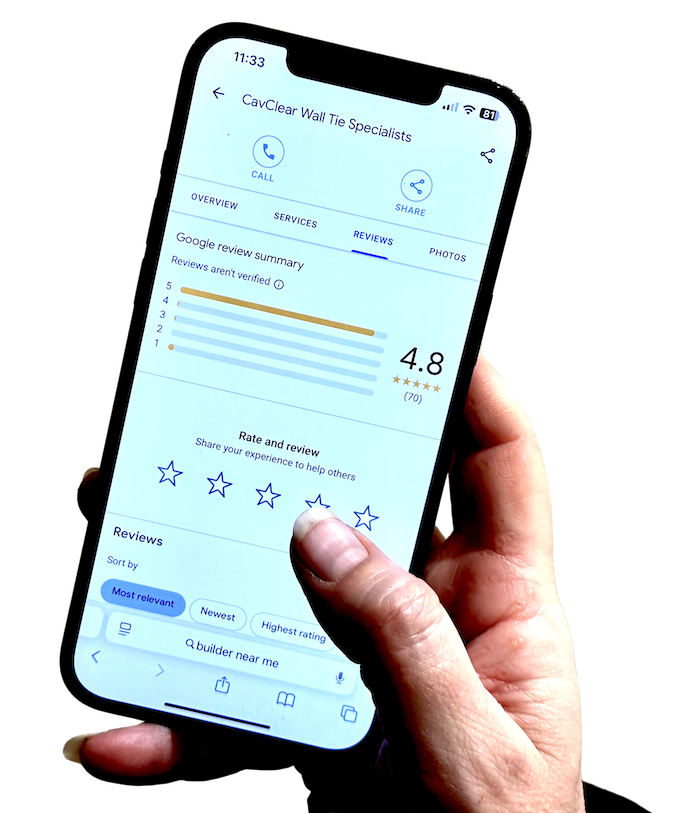
Then the buyer does what buyers now routinely do: they scroll past the claims and look for the evidence. They read reviews. They scan star ratings. They check recency. They look for patterns.
Buyers don't ignore marketing because it's untrue — they discount it because it's self-authored
Reviews feel like independent evidence. That distinction is not about cynicism or distrust of advertising. It is about how the brain processes information under uncertainty — and it applies across age groups, income levels, and local service categories.
For business owners and marketers, especially in local service businesses, this matters because customers use reviews to make lower-risk decisions about who to contact, who to trust, and who to avoid. This is not a trend limited to younger customers or online-only purchases. It is now normal behaviour across local categories — from trades and home services to clinics, professional services, hospitality, and local retail.
In this article, we unpack the psychology behind that behaviour, explain why reviews reduce risk more effectively than marketing, look at the role of social proof and independent validation, and show what prospects are really looking for when they scan feedback. You will also see how to shape an authentic online reputation without manipulating reviews or resorting to gimmicks.
Trust is a psychological shortcut, not a moral judgement
When buyers say "I trust reviews more than adverts", they are not making a moral statement about honesty. They are making a decision under uncertainty.
Most local buying decisions happen with incomplete information. The buyer cannot fully predict the outcome. They cannot guarantee quality in advance. They can only choose the option that feels least risky.
Trust as a decision mechanism
Trust is a psychological shortcut that allows a person to act without complete information by relying on signals that suggest safety, competence, and consistency. It reduces cognitive load — the mental effort required to make a decision — by substituting confidence for certainty.
This is why trust signals matter so much in local markets. Your buyer is not just choosing your service. They are assessing the likelihood of hassle, delays, poor communication, unclear pricing, or an awkward resolution process if something goes wrong. Trust is the shortcut that makes the decision feel safe enough to take.
Why marketing claims feel weaker than customer stories
Marketing has an unavoidable structural problem: it is written by the business. Even when it is accurate, buyers assume it represents the best-case version of reality. Research regularly shows that 88–92% of consumers are skeptical of polished marketing.
That assumption is not cynical. It is rational. If a business is presenting itself publicly, it will naturally highlight its strengths, emphasise its differentiators, and remove context that might create doubt.
The brain treats self-authored information as inherently biased — even when it is truthful
Reviews bypass that bias because they feel external. They are framed as experience, not persuasion. And experience reads like evidence in a way that a marketing claim, however accurate, simply cannot.
A polished claim like "We deliver outstanding service" may be true, but it is vague. A customer story like "They arrived when they said they would, explained the options clearly, and left the place tidy" is concrete. It allows the buyer to simulate what choosing you would feel like — which is far more persuasive than any superlative.
Social proof: why "people like me" matters more than "best in class"
One of the strongest psychological principles behind review trust is social proof, a psychological phenomenon where people use other people's behaviour as a guide. When people are uncertain, they look to others for cues about what is safe, normal, and reliable. In plain English, that is informational social influence: relying on other people's reactions when the right choice is not obvious.
In local buying decisions, social proof answers a simple question: "Have others made this choice and been glad they did?" Repeated public feedback also helps establish social norms, shaping what feels normal and safe to choose.
The five dimensions of social proof in local reviews
Similarity — buyers trust reviewers who sound like them or share similar needs and circumstances.
Volume — a larger number of reviews feels more representative and less likely to reflect random good fortune.
Consistency — repeated themes across reviews create confidence that the experience is reliable, not occasional.
Specificity — details feel harder to fabricate and easier to believe than generic praise.
Recency — recent feedback signals the business is performing well now, not just historically.
This explains a pattern that many business owners find counterintuitive: a business with a modest website and simple branding can outperform a polished competitor if the first business has strong, recent, specific reviews. The buyer is not choosing the best brand. They are choosing the safest outcome, and reviews influence consumer behaviour by showing what people similar to the buyer have already done.
Risk reduction: the real reason reviews influence consumer behaviour and decisions
Most buyers are not trying to maximise upside. They are trying to minimise regret.
This matters because local services often come with hidden costs if the decision goes wrong: time wasted, repairs needed, follow-up visits required, uncertainty about what was actually done, or the stress of chasing answers from someone who has already been paid.
Reviews are powerful because they reduce perceived risk faster than any marketing claim can
Buyers read reviews to avoid a bad choice, not to confirm a good one. They are looking for evidence that if something goes slightly wrong — as it sometimes does — the business will behave professionally and resolve it without drama.
That also explains why reviews that mention how the business handled a problem can be more persuasive than reviews that simply say "Great service". A buyer wants to know: if something is unclear, late, or imperfect, will this business respond? Will they take ownership? Will it be resolved without a battle?
Third-party validation and user-generated content: why independence beats polish
Reviews beat marketing in part because of third-party validation. Independent signals carry more weight than self-authored claims because they feel less controllable — and therefore more credible. Authenticity, transparency, and balance are usually what make that outside validation believable to a buyer.
A business can write "trusted", "reliable", and "professional" on a website. It cannot force a customer to describe their experience in a credible, specific way. That is also why fake reviews do damage beyond one business: they reduce confidence in the wider review platform or marketplace where they appear, making improving trust harder for everyone who relies on ratings.
Even the imperfections of reviews add credibility. Minor criticisms, mixed language, and varied writing styles remind buyers that the feedback is human. A profile that reads like it has been carefully curated often undermines confidence rather than building it.
The "perfect" profile is not always the most persuasive one
A spotless but sparse profile can feel curated. A realistic profile with genuine volume — including some variation in tone and detail — feels authentic. Buyers interpret authenticity as a proxy for honesty, which is what they are looking for when they read reviews in the first place.
Why a few negative reviews can increase trust
Most buyers do not expect perfection. They expect reality. A profile with only five-star reviews and very low volume can feel suspicious, especially in service categories where outcomes naturally vary, because potential buyers usually want a balanced picture rather than flawless praise.
Counterintuitively, a small number of negative reviews can strengthen credibility if the overall pattern remains positive. They signal that the reviews are genuine and that satisfied customers are not the only ones being asked.
More importantly, negative reviews reveal something marketing rarely shows: how a business behaves when things do not go to plan.
What a handled complaint actually communicates to future buyers
A buyer sees a critical review about a delay. They then read a calm response acknowledging the issue, explaining what changed, and confirming the resolution. The buyer does not conclude "this business is unreliable." They conclude "this business is accountable." That is often more reassuring than a profile that has never appeared to face a challenge.
This is why review response behaviour is part of trust psychology. Your response is not primarily for the reviewer. It is for the future buyer watching how you handle pressure.
The anchoring effect: why first signals shape everything that follows
Before a prospective customer reads a single word of a review, they have already formed a preliminary judgement. The star rating, review count, and the date of the most recent review are visible in search results — before any click, before any profile visit, before any consideration of the actual content.
This is anchoring: the psychological tendency to rely heavily on the first piece of information encountered when making a subsequent judgement. In local search, that first piece of information is almost always a number — your star rating.Your star rating sets a frame that every subsequent signal is interpreted through
A buyer who sees a 4.6 star rating reads the reviews looking for confirmation. A buyer who sees a 3.8 reads them looking for disqualifying evidence. The same review content, viewed through those two different frames, produces very different conclusions — which is why the anchor matters as much as the content it precedes.
Recency reinforces or undermines the anchor. A strong rating supported by reviews from the past few weeks suggests the business is performing at that level right now. The same rating with reviews from 18 months ago raises a question the rating itself cannot answer: "Is this still true?"
Response behaviour adds a third dimension. When a buyer can see not just what customers said but how the business responded — calmly, specifically, and promptly — it adds a layer of evidence that no rating figure can supply on its own. The combination of a strong anchor, recent activity, and visible accountability is what produces the "easy to choose" profile that converts browsers into enquiries.
This is why recency and response discipline matter as much as star rating for trust psychology. The anchor draws attention. Recency validates it. Response behaviour deepens it.
What prospects actually do when they scan reviews
Most prospects are not reading reviews like a book. They are scanning for signals and patterns. Their behaviour is typically a rapid sequence of checks:
First scan — star rating, total review count, and the most recent dates.
Pattern scan — repeated themes: communication, punctuality, quality of work, professionalism.
Risk scan — negative reviews and how the business responded to them.
Relevance scan — do reviewers mention the specific service they need, or circumstances similar to theirs?
This scanning behaviour explains why a small number of detailed, specific reviews can outperform a larger number of vague ones. It also explains why recency matters: the buyer is trying to predict your likely performance today, not form a historical assessment of your past.
How to shape your trust signals without manipulating reviews
The goal is not to game reviews. That approach tends to fail, and it creates real risk. 45% of people will not purchase without reviews, which is why consistent feedback collection matters, and why many businesses benefit from an automated review system for timely, consistent requests. The goal is to ensure your reputation accurately reflects reality by prompting representative feedback from the full range of customers you serve — not just the outliers.
If you do not ask consistently, only the most emotionally motivated customers will speak up unprompted. In practice, that skews toward the frustrated end. A consistent process corrects that imbalance by ensuring that satisfied customers — who form the majority — are represented in proportion to their actual experience.
Building a trust profile that reflects your actual service
Ask consistently — so that typical satisfied customers are represented, not just outliers in either direction.
Ask at the right time — when the service is still fresh and the customer feels a natural sense of completion.
Remove friction — a direct link and a simple, genuine prompt is all that is needed. The easier it is, the more likely a satisfied customer follows through.
Follow up once — to reach the customers who genuinely intended to leave a review but forgot in the moment.
Respond professionally — to reinforce accountability in public view, especially when feedback is critical.
None of this requires scripting reviews or pressuring customers. It simply creates the conditions for genuine, representative feedback to appear at a consistent rate.
Why "spotless but sparse" often underperforms "realistic and active"
Buyers interpret sparse profiles as uncertain, which can weaken brand reputation because buyers lack enough independent evidence to form a confident view. They cannot tell whether the business is new, inconsistent, or simply not widely used. A spotless rating with very low volume does not answer those questions — it compounds them, which is why simple reputation monitoring routines for local businesses focus on spotting these gaps early.
Active profiles — regular reviews, varied detail, and professional responses — communicate something sparse ones cannot: "This business is used frequently, and the pattern is positive." Visible activity also plays a significant role in shaping perception of reliability. That underlying message is more persuasive than any individual five-star review, because it speaks to consistency rather than occasional excellence.
This is why building a sustained review process matters. It is less about chasing five-star perfection and more about demonstrating ongoing reliability — which is exactly what buyers are looking for when they scan a profile before making a decision.
How marketing and reviews should work together
Marketing is still important. It sets expectations, frames your offer, and attracts attention. But it should not carry the burden of credibility alone. In fact, 84% of buyers trust online reviews they read, which is why reviews should support marketing rather than sit apart from it.
A strong strategy aligns marketing and reviews so they reinforce one another. Marketing describes what you do and who you help. Reviews validate that you deliver it reliably and consistently. Choosing straightforward reputation management services that prioritise trust over complex vanity metrics helps keep that alignment practical. When those two elements point in the same direction, conversion becomes easier — and less dependent on price.
Marketing opens the door. Reviews give buyers permission to walk through it.
When that permission is established before a buyer picks up the phone, the conversation starts from a different place. Prospects arrive reassured rather than sceptical, which shortens sales cycles and reduces the pressure on pricing to do the persuasion work.
Understanding why buyers believe reviews over marketing
Buyers believe reviews more than marketing because reviews satisfy the brain's need for independent evidence under uncertainty. As user generated content, they provide social proof, reduce perceived risk, and allow prospects to simulate what choosing you will feel like — before they commit to a conversation, which is why a healthy Google reviews profile for UK local businesses often does more for trust than additional advertising spend.
A realistic, active review profile — including occasional criticism handled professionally — often outperforms a spotless but sparse one because it feels authentic, representative, and current, especially in high‑stakes categories like moving and storage where reputation management and review growth directly influence enquiry volume — but that only holds when feedback looks genuine rather than manipulated or fake.
If you want to shape trust, focus less on polishing claims and more on building a consistent process that helps genuine customer experience become visible at the moments buyers are looking for it, especially in sensitive sectors like private healthcare where online reputation management for UK providers can meaningfully influence who patients choose to contact.
Want to See How a Managed Review Process Builds Buyer Trust?
Trusted Reviews 4U builds your personalised review page and manages the entire request process on your behalf — ensuring your profile stays current, representative, and converting. See how it works →