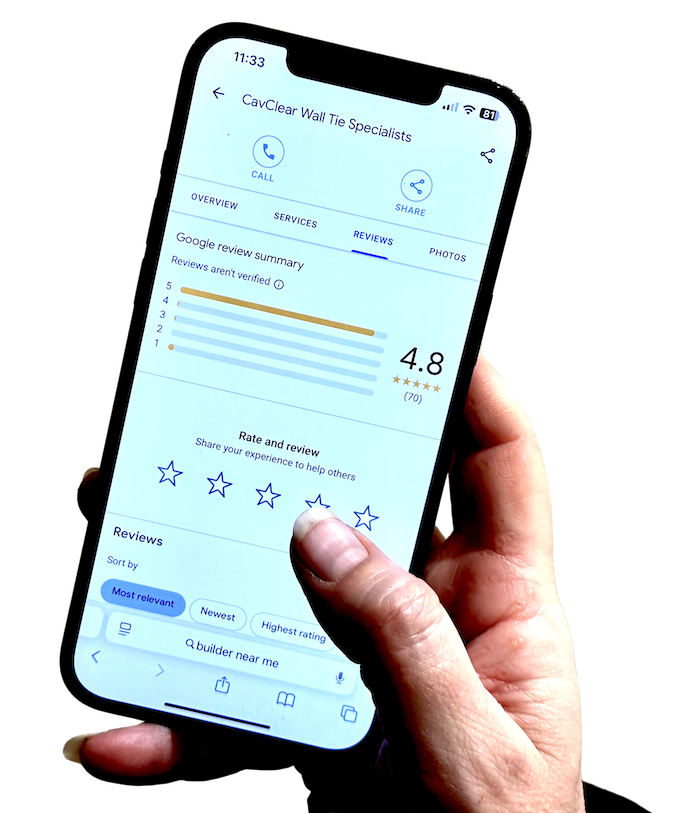
Most local businesses treat reviews as a by-product of good service. A customer is happy, they might leave a review. If they do not, the business moves on and focuses on the next job.
A review flywheel takes a very different view. It treats every completed job not just as revenue, but as the starting point for the next customer. The difference is not effort — it is structure.
💡 Key Insight
Growth accelerates when reviews stop being an outcome and start being an input. The businesses that grow their review count steadily are rarely working harder than their competitors. They have simply built a system that runs consistently, regardless of how busy things get.
This article explains what a review flywheel is, how it works in practice, and how small, consistent improvements at each stage can compound into a powerful growth engine over time.
What is a review flywheel?
A review flywheel is a self-reinforcing system where each completed job generates feedback that increases visibility, builds trust, and attracts new customers — creating more opportunities for reviews in return.
Unlike one-off campaigns, a flywheel relies on momentum. Each part strengthens the next, making growth easier as the system matures.
📖 Definition
Review flywheel — a compounding system where customer feedback continuously fuels visibility, credibility, and enquiry growth. Each review makes the next customer slightly easier to win, and each new customer creates the next opportunity for a review.
The power of a flywheel lies in consistency. Even modest improvements, applied repeatedly, will outperform sporadic bursts of effort. The compound effect is slow to start and surprisingly powerful once it builds.
Why flywheels outperform campaigns
Campaigns have a beginning and an end. When activity stops, results fade. Flywheels work differently.
Once established, a review flywheel continues to generate value with minimal additional effort. Each review improves the environment for the next one. The system does not need to be restarted — it simply needs to be maintained.
📌 Important
A flywheel does not rely on motivation. It relies on structure. That distinction matters enormously for small businesses. Motivation fluctuates with workload, staffing, and the demands of the week. A well-designed system does not.
This is why review flywheels are especially effective for local businesses. They align with how buyers actually choose — using trust signals to reduce perceived risk before making contact. A business with recent, consistent reviews simply looks like a safer choice than one with a static or outdated profile.
The four stages of a review flywheel
A review flywheel breaks down into four stages. Each feeds the next. If any stage is weak or missing, momentum slows. When all four work together, growth compounds.
🧭 Framework
The four stages of a review flywheel
- Deliver value — complete the job professionally and reliably.
- Capture feedback — ask for a review at the right moment, through the right channel.
- Increase visibility — consistent reviews improve trust signals and search presence.
- Convert enquiries — higher trust leads to higher conversion, more jobs, and more opportunities to restart the cycle.
Stage one: delivering value consistently
The flywheel always starts with delivery. Reviews amplify what already exists — they do not fix broken service.
Consistency matters more than perfection. Customers are more likely to leave reviews when their expectations are met clearly and reliably. A business that turns up on time, communicates well, and finishes the job as agreed has already done most of the work before anyone sends a review request.
This stage is operational, not marketing-driven. Clear communication, punctuality, and professional conduct create the baseline. Without it, no review system will perform well for long.
Stage two: capturing reviews at the right moment
Timing is the most important factor in review capture. Requests work best when the experience is still fresh — ideally within 24 to 48 hours of the job completing.
This is where many businesses lose momentum. They rely on memory or ad-hoc follow-up, which introduces inconsistency. Some customers get asked immediately. Others are contacted days later, or not at all.
❌ Common Mistake
Waiting too long to ask. Leaving days or weeks before requesting a review allows the emotional engagement of a good experience to fade. The customer still has a positive impression — they just no longer feel moved to write about it.
The most effective approach is to tie review requests to clear trigger points, such as job completion or appointment attendance. When the request goes out at a consistent, predictable moment, response rates improve — not because customers are pressured, but because they are asked while the experience is still vivid.
Channel matters too. SMS typically produces higher open rates than email for review requests, but the best approach for most local businesses is to use both — email as the primary contact and SMS as a follow-up for non-responders. This respects communication preferences without relying on a single channel performing perfectly every time.
Stage three: increasing visibility and trust
Once reviews are captured consistently, visibility begins to improve. Profiles look active, current, and representative. Buyers scanning search results respond to momentum — recent reviews signal relevance and reliability in a way that older ones cannot, regardless of how positive they are.
💡 Key Insight
Recency matters as much as volume. A business with 12 reviews from the past three months will often convert more enquiries than one with 80 reviews from two years ago. Buyers interpret recent activity as a sign the business is still trading well and customers are still satisfied.
This stage is where compounding begins. Each review builds the credibility that makes the next visitor slightly more likely to choose your business. Over months, that incremental improvement reshapes the entire profile — and the quality of enquiries that come from it.
Stage four: converting new enquiries
Higher trust changes the quality of enquiries. Prospects arrive reassured rather than sceptical. Sales conversations shorten because credibility is established before any contact is made.
A strong review profile does part of the selling before you ever speak to the customer. The buyer has already read what previous customers thought, resolved their main objections, and decided the business looks trustworthy. By the time they get in touch, they are closer to a decision than a cold prospect.
As more enquiries convert, more jobs are completed — feeding back into stage one and accelerating the flywheel further.
What slows a flywheel down
Understanding what causes a flywheel to lose momentum is as important as knowing how to build one. Most businesses experience slowdowns at one of three points.
The first is inconsistent timing. If review requests go out at different intervals — sometimes the same day, sometimes a week later, sometimes not at all — response rates drop and the profile grows unevenly. The fix is simple: standardise the trigger point and never rely on someone remembering to send a request manually.
The second is no follow-up. A significant proportion of customers who intend to leave a review simply forget. A single, well-timed follow-up to non-responders can recover a meaningful share of those lost reviews. Most businesses skip this step and leave it on the table.
💭 Tip
One follow-up is enough. A single follow-up to non-responders, sent three to five days after the initial request, is sufficient. More than that risks feeling pushy. One well-timed reminder strikes the right balance between persistence and respect.
The third is periods of high workload. When a business is busy, review requests tend to drop. This is counterproductive — high-output periods are exactly when consistent review capture matters most, because they represent the highest volume of satisfied customers. Any process that relies on manual effort will always underperform during the weeks it is needed most.
The role of responding to reviews
Responding to reviews is an underused part of the flywheel. Most businesses focus entirely on generating reviews and give little thought to what happens after one is posted.
Responses serve two functions. The first is trust — prospective customers reading reviews pay attention to how a business responds, not just what customers say. A business that replies thoughtfully to both positive and negative feedback comes across as attentive and professional. One that never responds can appear indifferent.
The second function is practical. Google treats response activity as a signal of an engaged business profile. Regular responses contribute to the overall health of a Google Business Profile in a way that quietly supports visibility over time.
🧭 Framework
A simple approach to review responses
- Positive reviews — thank the customer specifically. Reference something from their experience if possible. Keep it brief and genuine.
- Neutral reviews — acknowledge the feedback, note what you will take on board. Avoid defensiveness.
- Negative reviews — respond calmly and professionally. Offer to discuss the matter directly. Do not argue in public.
The goal is not to write a perfect response — it is to respond consistently. A business that replies to every review within a few days demonstrates reliability in a way that even the most positive review profile cannot fully convey on its own.
How to measure flywheel health
You do not need a complex dashboard to understand whether your flywheel is working. Three straightforward measures tell most of the story.
Review velocity — how many new reviews are being added each month? Steady or increasing velocity is a healthy sign. A plateau or decline suggests something in the capture stage needs attention.
Review recency — when was the most recent review posted? A profile where the most recent review is more than four to six weeks old is starting to look stale. For active businesses, this should never happen if the flywheel is running correctly.
Request response rate — of the customers who receive a review request, what proportion leaves a review? This is the most useful metric for identifying where the flywheel is losing efficiency. If response rates are low, the issue is usually timing or channel rather than customer satisfaction.
💭 Tip
Review these figures monthly. Monthly check-ins are sufficient for most local businesses. You are not looking for daily precision — you are looking for trends. Gradual improvement across all three measures is the sign of a healthy flywheel.
How small improvements compound over time
The review flywheel does not require a dramatic overhaul. Small gains at each stage multiply across months and years.
Improving review request timing can meaningfully improve response rates. Over several months, that single change reshapes the entire profile. Add a follow-up for non-responders, and velocity increases further. Begin responding consistently to all new reviews, and trust signals strengthen. Each change is modest in isolation — together, they accelerate the system.
🔧 Example
A sole-trader plumber starts using a managed review request process after each job completion. Review volume picks up gradually over the first two months. By month four, the Google Business Profile shows consistent recent activity. Enquiries from Google Search begin increasing — not dramatically, but noticeably. By month six, the profile has enough review volume that occasional neutral feedback no longer affects the overall impression. The flywheel has built its own resilience.
Momentum builds quietly. The business simply feels easier to choose — and that perception, compounded over time, is one of the most durable competitive advantages a local business can build.
Using review volume as protection
Higher review volume creates resilience. Individual negative reviews have significantly less impact when balanced by consistent positive feedback. A business with three negative reviews in a profile of 80 looks completely different from a business with three negative reviews in a profile of 12.
📌 Important
A flywheel does not eliminate negative reviews. It prevents them from defining your reputation. No service business will ever achieve a perfect record. The goal is not to avoid negative feedback — it is to ensure that the overall picture, built consistently over time, accurately represents the quality of the business.
This protection is an often-overlooked benefit of a sustained review process. Businesses that invest early in building volume are much better placed to absorb the occasional difficult customer without it becoming a reputation problem.
Checklist: is your review flywheel complete?
🗒 Checklist
Review flywheel health check
- Review requests are sent consistently at a defined trigger point — not from memory.
- Requests go out promptly after job completion, while the experience is still fresh.
- A single follow-up is in place for customers who do not respond to the first request.
- Customers who raise concerns are offered a direct feedback channel alongside the Google Review option.
- New reviews receive a response within a few days.
- Review velocity, recency, and response rate are reviewed monthly.
Any missing element slows the flywheel. The good news is that each gap is straightforward to address — and fixing one often improves the performance of the stages around it.
A review flywheel turns everyday work into compounding growth. Each completed job fuels visibility, trust, and future demand. The key is consistency. Small improvements, applied systematically, build momentum over time. For local businesses, a review flywheel is not a marketing trick. It is a growth engine — and one that improves the longer it runs.
Want to See What a Managed Review System Looks Like for Your Business?
Trusted Reviews 4U builds your personalised review page and shows you exactly how the managed process works — coordinating email and SMS requests, follow-ups, and smart routing on your behalf, before you commit to anything. Try the demo →