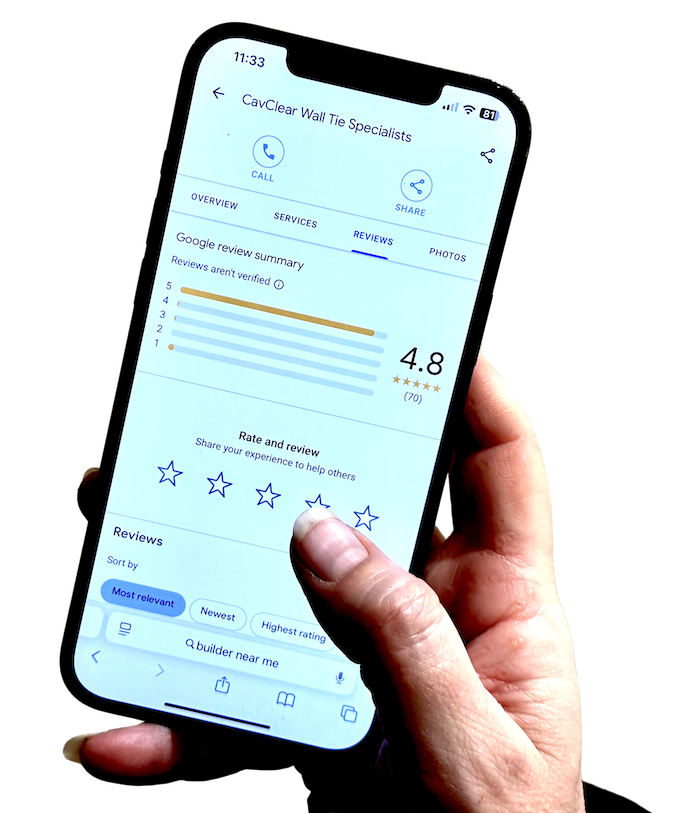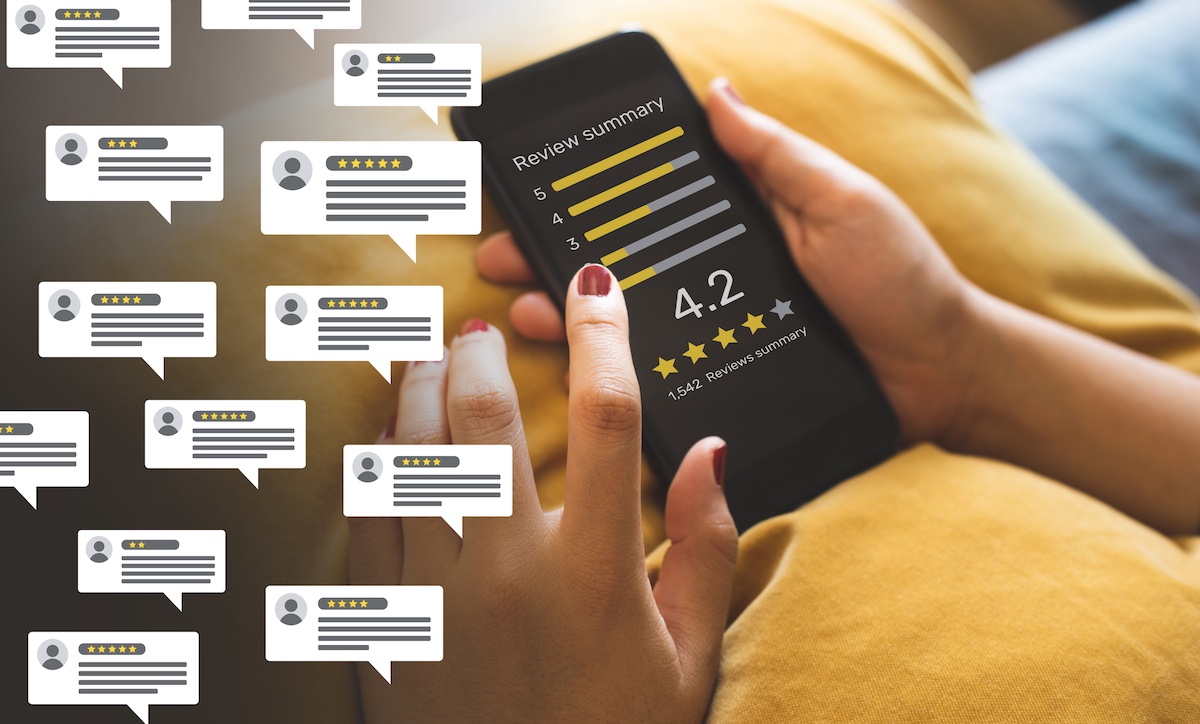
Most local businesses quietly delight customers every day. Yet when you check Google, you might see only a handful of stars and a stray negative near the top. This mismatch is the silent majority reviews problem — satisfied customers rarely leave online reviews on their own, so your profile can end up shaped by a small number of unhappy voices unless you use a simple, timely review process that prompts happy customers to share their experience.
For local businesses and service providers comparing reputation management services, that matters for two reasons: your review profile influences trust before a customer ever calls, and it affects how visible you are in local search. If your best customers stay quiet, your online reputation can look weaker than the service you actually deliver.
This guide looks at what practical online reputation management services should do to fix that gap: improve how review requests are made, build a workable review funnel, help teams follow up consistently, handle negative feedback properly, and keep the whole process ethical, compliant, and manageable for a busy local business. The point is not more software or more admin. It is to help you judge which support will steadily increase authentic reviews, protect your reputation, and make the job easier to run.
Satisfied customers default to silence
Publication bias means negative experiences travel further and faster than positive ones. A customer who had a great experience has no unresolved feeling pushing them to write about it. A customer who had a poor experience often does. If you want your online profile to reflect the quality of your work, you need a process that makes sharing a positive experience easy and timely — not something customers have to remember to do on their own.
Why happy customers rarely leave reviews
It is not that satisfied customers do not care. It is that their journey ends at the outcome they paid for. They received the boiler service, the dental appointment, the garden renovation, the kitchen fit — job done. Posting a review is additional effort with no personal gain. Meanwhile, a poor experience produces a psychological itch to warn others. In behavioural terms, losses loom larger than gains, which skews public commentary towards the negative unless the system is designed to counteract it.
Four forces drive this skew:
Friction — finding the right review page, signing in, choosing a rating, and typing a comment demands time the customer never set aside.
Forgetting — the intention to leave a review decays quickly after the moment of service. Within 24 hours, most people's attention has moved back to their own lives.
Uncertainty — many customers are unsure where a review is most useful (Google, Facebook, a trade directory), so they do nothing.
Negativity bias — humans are more compelled to share warnings than praise, so dissatisfied customers self-select into posting.
This explains why small businesses can have strong word-of-mouth but a weak online profile. The fix is not cheerleading or begging customers to leave reviews. It is design — a process that removes friction, preserves timing, and gives every customer a clear and easy path to share their experience.
What asking differently actually means
If you ask for a review once, weeks after the job, using a generic message with a long link, you will not get many responses. Asking differently means changing the channel, the timing, and the experience of leaving feedback — so the positive path is obvious and any concerns have a constructive route.
1. Optimise the moment
Strike while the experience is fresh and the positive emotion is still present. For most service businesses, the ideal window is within 24 to 48 hours of job completion. In hospitality it may be shorter. For home services, the same day the job finishes is typically right. Requests sent within this window consistently outperform those sent a week or more later — not because the customer's satisfaction has changed, but because the memory is vivid and the inclination to act is higher.
2. Meet customers where they already are
SMS achieves significantly higher open rates than email and prompts more immediate action. Email still plays a role for customers who prefer it, and for follow-ups to non-responders, so it makes sense to think deliberately about whether to ask for reviews by email, SMS, or both. The key is short, friendly messages with a single direct link — one tap to rate, one tap to review. A two-touch sequence (SMS first, email a few days later if no response) works well for most local service businesses without feeling intrusive.
3. Make routing appropriate
3. Make routing appropriate
A simple 1–5 scale gives customers a quick, user-friendly way to respond, especially when it is part of a well-designed review request. Customers who rate their experience highly are invited directly to your Google review page with a single tap, which helps steady businesses collect more Google reviews without adding friction. Customers who indicate a concern are offered a private feedback channel for direct customer feedback as well as resolution — alongside the same Google Review option that remains available to everyone. This is not review gating. No customer is prevented from posting publicly. The private route simply gives customers with concerns a faster path to a resolution than posting a public review and hoping someone reads it.
A neighbourhood coffee shop
A café set review requests to send one hour after a visit. Within two weeks they had collected more five-star reviews than in the previous six months, which lifted their position in local search results and drove an increase in morning footfall. The change was not in the quality of the service — it was in the consistency of the ask.
A neighbourhood coffee shop
A café set review requests to send one hour after a visit. Within two weeks they had collected more five-star reviews than in the previous six months, which lifted their position in local search results and drove an increase in morning footfall. The change was not in the quality of the service — it was in the consistency of the ask.
Designing the review funnel
A review funnel is the guided path from "job complete" to "public proof" and is easiest to run using an automated review system. Every step is designed to be fast, respectful, and compliant.
Trigger — job marked complete, invoice paid, or appointment finished.
Personalised request — a short message sent via SMS or email, addressing the customer by name and referencing the specific service.
Quick rating — a single tap to rate on a 1–5 scale.
Smart routing — customers who rate 4–5 stars are shown a prominent Google Review invitation with a direct link, ideally using a clear link to your Google reviews. Customers who rate 1–3 stars are offered a private feedback route and the same Google Review option.
Follow-up — a polite reminder after 24 hours, then one more a few days later if still no response.
Showcase — strong reviews can be displayed on your website, proposals, and sales materials as fresh social proof.
Customers never have to hunt for where to leave a review. The process is consistent regardless of how busy things get — which is precisely when most manual approaches break down.
Minimum viable review system
A trigger tied to service completion — not someone's memory
SMS as the primary channel, email as follow-up
One-tap 1–5 rating
Google Review invitation for higher ratings; private feedback route plus Google option for lower ratings
Two gentle follow-up reminders if no response
Review quotes displayed on website and in proposals
From more google reviews to more revenue
For many UK local businesses, building a strong Google reviews profile is one of the most direct ways to turn everyday good work into online proof customers can see.
More reviews change more than the appearance of your profile. On Google, review signals — volume, recency, and average rating — contribute to local prominence, with review volume helping shape how often your business appears in local search results, map pack positions, and local search rankings. Businesses in the Local Pack receive 126% more traffic than those ranked below. A business with 25 recent reviews at a 4.3-star average can often outrank a competitor with 150 older reviews at 4.1 stars. A stronger profile earns more impressions and higher click-through rates, which compounds into more enquiries for the same level of marketing spend.
The benefits extend beyond search. Reviews provide persuasive copy you did not have to write. Authentic quotes placed on landing pages, proposals, and follow-up emails lift conversion throughout the sales process because prospective customers trust what previous customers say more than what you say about yourself. Over 90% of customers read reviews before purchasing.
Ask for a short attribute tag alongside the rating
Prompting customers to add a brief tag — "on time", "clean and tidy", "great communication" — produces review content that helps prospective customers scan what you are consistently known for. These short phrases also serve as dynamic proof blocks on your website, reinforcing specific quality signals rather than generic five-star praise.
In practice, businesses with stronger review profiles tend to see higher conversion rates on enquiries, fewer pricing objections, and shorter decision cycles — because the prospective customer has already resolved their main concerns by reading what previous customers experienced.
Handling negative feedback constructively
No business gets everything right. The purpose of a structured review process is not to prevent criticism — it is to make criticism useful.
When a customer indicates a low rating, they are offered a private feedback route so you can respond quickly and address the concern before it compounds. An immediate alert goes to the right person in your team, and a prompt, professional response acknowledges the issue, includes a genuine apology where appropriate, especially if the business is at fault, and offers a clear next step. When concerns are resolved quickly and genuinely, many customers who initially felt let down become more loyal than those who never had a problem.
When negative reviews do appear publicly, a calm and thoughtful response demonstrates accountability rather than defensiveness. Prospective customers reading your reviews pay attention to how you respond to criticism, not just the criticism itself. Over half of customers expect a response to reviews within seven days. Responding to reviews can increase customer trust by 72%. This is one reason it matters to respond promptly to public feedback, including good reviews, rather than leaving comments unanswered for weeks. A near-perfect profile with a handful of well-handled negatives is often more credible than a profile with no negative feedback at all.
Never discourage low-rated customers from reviewing publicly
A compliant review process gives customers with concerns a private route to raise issues directly — it never blocks or discourages them from posting publicly. The Google Review option must always be available to every customer regardless of their rating. The private channel is an additional option, not a gate.
A message pattern that works
Greeting and context — "Hi Sarah, thanks again for choosing us for your [service]."
Simple ask — "Could you spare a moment to rate your experience?"
Single action — one direct link, no menu of choices.
Warm sign-off — "Really appreciate it — Ben at [Business]. If you have any concerns, you can reach us at [contact]."
This first message is followed by one polite reminder after 24 hours and, if needed, one more a few days later. The copy stays human — no capital letters, no exclamation marks, no pressure. The aim is for the request to feel like a natural end to the service, not a campaign.
A local plumbing firm
A sole-trader plumber switched from ad-hoc requests to a coordinated process tied to invoice payment. In 90 days they added over a hundred new reviews, lifted their average rating, and found that more enquiries were arriving already convinced — reducing the time spent on sales conversations before customers committed.
Operationalising reviews inside your team
A well-structured process does the consistent work, but people still matter at the edges — particularly when concerns need a human response. It also helps protect and improve your online reputation. For sectors where trust is particularly sensitive, such as moving and storage, dedicated reputation management support can reinforce this internal process. A simple internal approach keeps everything running smoothly.
Ownership — one person checks incoming feedback each day and routes concerns to the right person promptly.
Response templates — prepared responses for common scenarios (praise, delays, quality concerns, pricing questions) that can be personalised quickly without starting from scratch each time, helping the team handle positive reviews and complaints consistently.
Escalation path — a clear process for urgent situations so the customer can be contacted the same day rather than waiting for a routine check.
Showcase routine — a short weekly habit of sharing positive feedback across the website and relevant social media channels, so social proof stays current.
Team awareness — new staff understand how and why the process works, particularly that public responses should stay calm, factual, and helpful regardless of how the original review was worded.
Review patterns can also offer valuable insights for service, communication, or operational improvements, which is why simple, consistent reputation monitoring services often focus on recurring themes and signals rather than raw volume alone.
Ethics and compliance in plain English
A review process only works long-term if it is fair. Keep requests neutral — invite honest reviews rather than steering customers towards positive responses. Ensure all customers can leave a public Google review regardless of their rating. Avoid offering incentives that could bias the outcome; if you run a gift-with-feedback approach, make the gift unconditional and ensure the wording makes clear it is offered for honest participation, not for a positive rating. Avoid fake reviews and any practice that selectively steers outcomes.
In the UK, review practices are subject to CMA guidance and ASA rules on incentivised endorsements. Ensuring your process is genuinely open to all customers — not just those you expect to rate you well — is both the compliant approach and the right one, especially for local business reviews where trust and visibility are closely linked. A review profile built on genuine reviews is more durable, more credible, and more useful than one that has been selectively curated.
Starting this week
You do not need a large project to see results. Choose one service with frequent completed jobs, set up a review request tied to job completion or payment, and let the process run for two weeks. By the end of that period you will have clear data on response rates, new reviews, and any concerns raised privately that your team can address. Asking every customer for a review can often produce response rates of around 20%. As a practical benchmark, many UK local businesses need roughly 15 to 50 quality reviews to stay competitive.
Pick the service with the highest job volume.
Set a review request to trigger at job completion or invoice payment.
Use short, personalised SMS copy with a direct Google Review link, and consider a QR code as an optional offline-to-online shortcut.
Set one follow-up reminder for non-responders at 24–48 hours.
Add fresh review quotes to your website so new visitors see current proof.
Check incoming feedback daily and respond to concerns promptly.
The businesses that build strong review profiles consistently over time are not those that run occasional review campaigns. They are the ones that have made the process a routine part of how every completed job ends — quietly and without relying on anyone remembering to do it manually. That kind of review strategy helps satisfied local customers speak up regularly instead of leaving feedback to chance.
Want to See What a Managed Review Process Looks Like for Your Business?
Trusted Reviews 4U builds your personalised review page and manages the entire request process on your behalf — coordinating timing, routing, follow-ups, and concern alerts so every customer gets the right experience at the right moment. Try the demo →