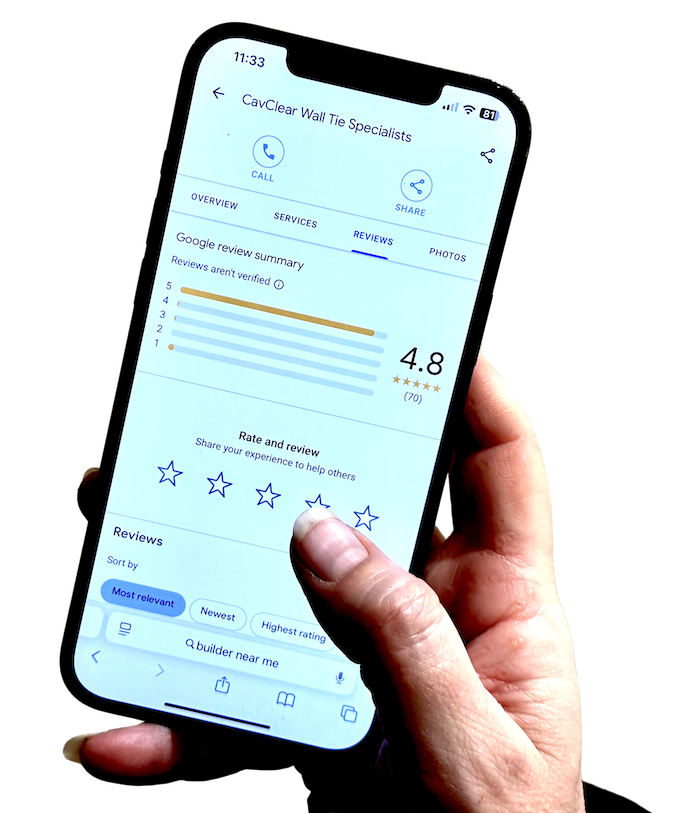
Handling negative reviews well means responding promptly, empathetically, and responsibly, so criticism becomes a visible sign of professionalism rather than a lasting reputational problem. For business owners, customer service teams, and anyone responsible for managing online reputation and customer feedback, that matters because a well-handled complaint can protect trust, show accountability, and reveal operational issues worth fixing in the business itself.
Most businesses view negative reviews as reputational threats to be minimised or defended against. This perspective misses a critical opportunity. A well-handled negative review can demonstrate professionalism, accountability, and commitment to improvement in ways that a string of positive comments never could. The difference lies not in avoiding criticism but in responding to it with clarity, composure, and genuine intent to resolve the underlying issue.
Negative reviews are inevitable for any active business. What separates businesses with strong, durable reputations from those that struggle is not the absence of criticism — it is the consistency and quality of how they respond when it arrives. This guide explains the principles behind effective replies, the difference between helpful and damaging responses, how to deal with unfair or inaccurate reviews, when to escalate an issue, and how to use recurring feedback to strengthen both operations and long-term reputation.
Why negative reviews are not the disaster they appear to be
A profile consisting entirely of five-star reviews often triggers scepticism rather than confidence. Prospective customers recognise that no business operates flawlessly all the time, and a lack of visible criticism can suggest either fabrication or selective presentation. Negative reviews, when present in reasonable proportion and handled professionally, actually enhance credibility by demonstrating authenticity.
This does not mean businesses should welcome negative feedback indiscriminately. It means understanding that criticism, when it arrives, serves multiple functions beyond simply pointing out failure. It provides operational intelligence about where processes break down. It creates an opportunity to demonstrate customer care in response to a public complaint. It offers a chance to correct misconceptions or explain context that the reviewer may have lacked.
The real damage from negative reviews comes from silence, not the criticism itself
An unanswered complaint signals indifference — reinforcing the reviewer's negative experience and leaving prospective customers with only one side of the story. A thoughtful response, by contrast, demonstrates that the business takes feedback seriously and operates with accountability. Many prospective customers pay more attention to how a business handles complaints than to the complaints themselves.
The practical implication is clear: responding to negative reviews is not damage control. It is reputation building. Every response is visible to every future customer who reads that review, which makes the quality of your response more consequential than the content of the original complaint.
The core principles of effective review response
Responding to negative reviews effectively requires clear principles rather than improvisation in the moment. These principles create consistency, reduce emotional reactivity, and ensure that responses serve the customer and the business rather than just the reviewer.
Four principles for professional review responses
Speed — respond within 24 to 48 hours. Delays allow negative impressions to solidify and leave prospective customers reading the complaint without any context or counterbalance.
Empathy — acknowledge the customer's experience without dismissing their feelings, even if you believe the criticism is unwarranted or contains inaccuracies. The customer's feeling of dissatisfaction is real regardless of the specific facts.
Responsibility — take ownership of the issue without deflecting blame onto staff, suppliers, or circumstances. Businesses that offer excuses undermine their own credibility. Taking ownership positions the business as accountable and solution-focused.
Offline transition — move detailed discussions away from the public review platform to email or phone, where resolution can happen privately without devolving into a public dispute.
Speed matters because the longer a complaint sits unanswered, the more time prospective customers have to read it without context. Responding promptly signals that the business takes customer concerns seriously and is paying attention.
Empathy requires separating the customer's emotional experience from the factual accuracy of their complaint. Even when a review contains inaccuracies or unreasonable expectations, acknowledging the feelings creates space for constructive dialogue. Leading with argument or correction, even when you are factually right, escalates rather than resolves.
Moving detailed discussions offline protects both parties. Public review platforms are not designed for nuanced conversation or sensitive resolution. Inviting the customer to continue the discussion privately shows respect for their concern and prevents the exchange from becoming a spectacle that reflects poorly on both sides.
What good and bad responses look like in practice
Understanding principles is useful; seeing them applied makes the difference between theory and consistent execution.
The same complaint — two very different responses
The review: "Waited 45 minutes past my appointment time. No apology, no explanation. Will not be returning."
Ineffective response: "We were very busy that day and running behind schedule. Most of our customers are understanding about occasional delays."
Why this fails: defensive, dismisses the customer's frustration, and implies the reviewer is unreasonable. It prioritises self-justification over resolution — and every future customer reading this exchange sees that.
Effective response: "Thank you for taking the time to share this, and I sincerely apologise for the wait you experienced. Running this far behind schedule is not acceptable, and I understand your frustration entirely. We are reviewing our booking procedures to prevent this from recurring. I would welcome the chance to discuss this further and make it right — please contact me directly at [email/phone]."
Why this works: it acknowledges the problem, takes responsibility, indicates corrective action, and offers to resolve the issue privately. It demonstrates professionalism and care without excuses.
The contrast illustrates how tone and structure determine whether a response mitigates damage or compounds it. The first response prioritises the business's perspective. The second prioritises the customer's experience — and in doing so, builds confidence for every future customer who reads it.
Handling reviews that contain inaccuracies or feel unfair
Not every negative review is a fair or accurate account of what happened. Occasionally a review describes an experience that cannot be verified in your records, attributes blame incorrectly, or contains factual errors. How you handle these situations matters as much as how you handle legitimate complaints.
The first step is always to respond professionally, regardless of whether the review is accurate. Readers do not know which side is correct — they see the review and they see your response. A calm, professional reply that gently notes a discrepancy without becoming defensive will always read better than an aggressive correction.
Do not argue publicly with a reviewer, even if they are wrong
Public disputes rarely end well for the business, regardless of who is factually correct. A prospective customer reading a heated exchange between a business and a reviewer is unlikely to form a positive impression of either party. If you believe a review contains a genuine factual error, address it briefly and calmly in your response, then invite the customer to discuss it directly offline.
For reviews you believe are genuinely fake — posted by someone who was never a customer, or by a competitor — Google provides a reporting mechanism to flag reviews that violate their policies, and there are clear limits on when you can remove Google reviews rather than simply respond to them. Reviews can be flagged for removal if they are spam, contain false information posted with clear malicious intent, or violate Google's content policies. This process takes time and does not always result in removal, but it is the appropriate avenue when you have good reason to believe a review is fraudulent.
A few practical points on handling unfair reviews:
Always respond briefly and professionally before deciding whether to report — a public response with no reply looks worse than one you have addressed, even if the review is later removed
Keep the response brief when the review is clearly inaccurate — a long defensive reply draws more attention to the complaint
Document suspected fake reviews with any evidence you have before reporting, as this supports your case if Google requests clarification
A single unfair review has very little impact on a profile with consistent, recent positive reviews — the best long-term protection against unfair criticism is a strong volume of genuine feedback
Using patterns in negative feedback to improve operations
Individual negative reviews provide insight into specific failures. Patterns across multiple reviews, however, reveal systemic issues that require structural correction rather than ad-hoc apologies. When the same complaint appears repeatedly, it signals a process flaw that no amount of individual responses will resolve.
Identifying patterns requires consistent attention to incoming feedback rather than sporadic review. This might involve categorising complaints by type — service delays, product quality, communication failures, pricing confusion, or access and directions — and tracking key review metrics that turn feedback into operational insight. Over time, these categories reveal which aspects of the operation are underperforming and where attention is most needed.
Patterns in negative reviews are operational intelligence, not just reputation problems
Businesses that act on feedback patterns tend to see fewer complaints over time — not because they have suppressed criticism, but because they have addressed the underlying issues. Customers notice when businesses genuinely improve in response to feedback, and that responsiveness builds trust that extends beyond the resolution of individual complaints.
For example, if multiple reviews mention difficulty finding the premises or parking, the issue is not individual customer error — it is inadequate directions or signage. If several customers mention unclear pricing, the problem lies in how information is communicated rather than in customer misunderstanding. Addressing these systemic issues reduces future complaints and eliminates recurring friction points that are costing you customers and reputation simultaneously.
This approach transforms negative reviews from isolated incidents into valuable insights. Rather than viewing each complaint as a problem to be managed, treat patterns as diagnostic information that identifies where processes need refinement and where recurring complaints can feed a feedback loop for operational changes, supported by simple reputation monitoring processes for local businesses.
A practical playbook for handling criticism constructively
Knowing what to do in theory is useful; having a clear procedure to follow in practice is essential. The following playbook provides a consistent approach to handling negative reviews as part of a reliable review management process that can be documented, shared with your team, and applied reliably without depending on individual judgement in the moment, and it sits alongside building a strong Google reviews profile for UK small businesses.
Eight steps for handling negative reviews
Read the review fully before responding — resist the urge to reply immediately. Read the entire review carefully to understand the specific complaint, the customer's tone, and any factual details that need verifying before you respond.
Verify your internal records — check your booking system, transaction history, or service records to confirm the details of the customer's experience. This gives you accurate context and helps you respond precisely rather than generally.
Draft your response using the four principles — speed, empathy, responsibility, offline transition. Write a response that acknowledges the issue, takes ownership, and offers to resolve it privately.
Review the response before posting — have another team member read it before it goes live. This reduces the risk of emotional reactivity influencing the final message and catches anything that might read as defensive.
Post the response and follow up privately — publish the response on the review platform, then reach out to the customer directly via the contact method you included. Do not wait for them to come to you.
Document the complaint and its resolution — record the complaint, your response, and the outcome. This creates a reference for future situations and helps identify recurring patterns over time.
Implement corrective action where needed — if the complaint reveals a process flaw, address it. Share relevant feedback with the people in your team who can act on it and adjust procedures to prevent recurrence.
Escalate appropriately for complex situations — complaints involving allegations of illegal activity, threats of legal action, defamatory statements, or safety concerns should be escalated to the appropriate person before any response is posted.
A simple internal review response policy also helps teams stay consistent when different staff members are replying.
This playbook provides structure without rigidity. The steps stay consistent, but the content of each response adapts to the circumstances of each review. Over time, following this process becomes second nature — reducing the effort required to handle criticism professionally and ensuring responses stay calm and constructive even when the review itself is not.
When to respond and when to escalate
Not all negative reviews require the same level of response. Most complaints about service delays, quality, communication, or pricing can be handled by any team member who has been briefed on the playbook above. Others involve circumstances that require escalation before any response is drafted.
Escalation triggers
Reviews that should be escalated to a senior decision-maker before responding include: allegations of illegal or unsafe conduct, threats of legal action, reviews containing potentially defamatory statements, complaints involving a safeguarding or safety concern, and situations where the customer is making abusive statements or unreasonable demands. A well-intentioned but poorly judged response to any of these can significantly worsen the situation.
Documenting your escalation criteria — even briefly — prevents junior team members from inadvertently worsening a sensitive situation. Clear criteria mean routine complaints are handled efficiently at the right level, while complex situations receive appropriate attention without delay.
The long-term reputational benefit of handling criticism well
The immediate goal of responding to negative reviews is to address the dissatisfied customer and provide context for prospective customers reading the exchange. Responding consistently can also improve your search engine rankings over time. The longer-term benefit lies in building a public record of professionalism, accountability, and genuine customer care.
When potential customers see a business responding thoughtfully to criticism, they gain confidence that any issues they encounter will be handled seriously. This matters more than a flawless review profile, because it reflects realistic expectations. Customers know that problems occur — what they want to see is evidence that the business takes responsibility and makes things right when they do.
Over time, a consistent pattern of professional, empathetic responses builds trust that extends well beyond individual reviews. It demonstrates that the business operates with integrity, values feedback, and commits to improvement. This reputational asset compounds over months and years in a way that no marketing spend can replicate.
Review response checklist
Responses go out within 24–48 hours of a negative review appearing.
Every response acknowledges the customer's experience before anything else.
Responses take ownership without deflecting blame onto staff or circumstances.
Detailed resolution is offered offline — email or phone — not argued out in public.
Responses are reviewed by a second person before posting where possible.
Complex or sensitive reviews are escalated before any response is drafted.
Complaint patterns are reviewed monthly to identify recurring operational issues.
Corrective action is taken and communicated internally when patterns emerge.
Negative reviews, handled well, support both your online reputation and wider reputation management efforts. The shift from viewing criticism as a problem to be minimised to treating it as an opportunity to demonstrate accountability changes how your business is perceived — not just by the original reviewer, but as a public record visible on major review sites that shapes how other customers judge the business afterwards.
Want to See How a Managed Review System Handles This for You?
Trusted Reviews 4U manages the entire review request process on your behalf — including concern alerts that reach you the moment a low rating is submitted, so you can respond before a dissatisfied customer turns to a public review. See how it works →