Most businesses understand that reviews matter. Yet when it comes to actually collecting them, the approach often remains reactive, inconsistent, and reliant on memory rather than method. A team member remembers to ask one customer, forgets another, and the pattern repeats week after week. This creates an unpredictable flow of feedback that makes it difficult to build momentum, spot service patterns, improve visibility, or strengthen your online presence in any systematic way.
A sustainable review system is a structured process for collecting customer reviews at defined points in the customer journey, so requests happen consistently without relying on memory or manual effort. For local businesses and service providers that want a steadier way to improve review collection, this matters because regular, authentic feedback builds trust, reflects ongoing service quality more accurately, and gives you a stronger base for search visibility and customer insight.
The shift from ad-hoc requests to a sustainable review system is not about asking more aggressively. It is about designing a structure that operates consistently without adding burden to your team. When done properly, a well-designed process removes friction from feedback collection while preserving the authenticity and trust that make reviews valuable in the first place. This guide looks at why inconsistent review requests fail, what a sustainable system needs to work in practice, how to set trigger points and structured requests, where personalisation helps, what GDPR and PECR mean for the process, and how to put it in place in manageable stages.
Why ad-hoc review requests fail to scale
The problem with manual review requests is not a lack of intention. Most teams genuinely want to collect feedback. The issue lies in competing priorities, inconsistent execution, and the simple reality that human memory is unreliable under pressure. When asking for reviews depends on someone remembering to do it at precisely the right moment, the system will inevitably produce gaps.
These gaps compound over time. A business that asks sporadically ends up with an uneven review profile that does not accurately reflect the quality or volume of work being delivered. Potential customers see a handful of reviews from months ago and draw conclusions about recency, activity, and relevance. Meanwhile, dozens of satisfied customers who were never asked remain silent, their positive experiences unrecorded.
The difference between sporadic and systematic review collection is structural, not motivational
Research consistently shows that the majority of satisfied customers will not leave a review unless prompted — and that a timely, well-designed request significantly increases the proportion who follow through. The gap between businesses with strong review profiles and those without is rarely a gap in service quality. It is almost always a gap in process.
Without a consistent process, review generation competes for attention alongside service delivery, administrative work, and customer support. In that competition, it consistently loses. Designing a sustainable system means removing the decision from the moment entirely and embedding feedback collection into the natural rhythm of your business operations, so your team can keep its focus on service delivery rather than remembering to ask for reviews.
The core components of a sustainable review system
A sustainable review system is built on three foundational elements: trigger points, a structured request process, and minimal friction. Each component plays a distinct role in ensuring consistency without creating additional workload.
Trigger points are the specific moments in the customer journey when a review request should be sent. These are not arbitrary — they correspond to moments of completion, satisfaction, or natural closure. For a service business, this might be 24 to 48 hours after an appointment or job completion. For a product business, it could be a few days after delivery. The key is identifying when the experience is still fresh, but the customer has had time to form a considered view.
Trigger point
A pre-defined event or milestone in the customer journey that initiates a review request. Common triggers include job completion, appointment attendance, invoice payment, or product delivery. Effective trigger points balance recency with reflection — requests should arrive when customers can provide meaningful feedback, while the experience is still vivid.
A structured request process means the review request goes out at the right time, through the right channel, without anyone on your team having to decide or remember. In practice, managing the request flow consistently matters more than adding more tools or extra steps. Whether that is managed through a dedicated service, a CRM integration, or a connected booking system with an automated review system, the outcome is the same: every completed job results in a review request, consistently.
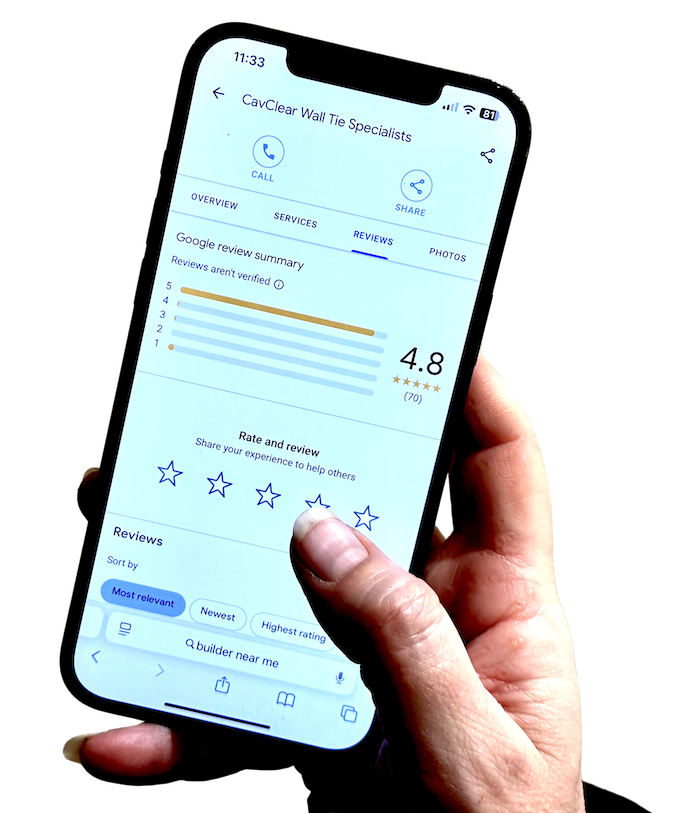
Minimal friction means making it as easy as possible for customers to complete the review. Reviews should be simple to leave from Google Search or Google Maps. This includes direct links to your Google Business Profile, such as a simple link to your Google reviews page, clear and concise messaging that respects the customer's time, and a follow-up for non-responders at an appropriate interval. The fewer steps required, the higher the proportion of customers who follow through, and the easier it is to improve response rates over time.
Choosing the right trigger points for your business on Google Maps
Not all trigger points are equally effective. The best ones align with moments when customers have both the context and the inclination to provide feedback. For businesses with transactional relationships — trades, hospitality, retail — the trigger typically follows immediately after service completion or delivery. For businesses with ongoing engagements — consultancy, professional services, managed contracts — the trigger might correspond to project milestones or a defined interval after onboarding.
Testing different trigger points is essential. What works for one business model may not translate to another. A plumber might find that requests sent within 24 hours of job completion produce strong results, while a solicitor might achieve better outcomes by waiting until key project milestones are reached. The pattern emerges through observation and refinement, not assumption.
Trigger point types and when to use them
Completion triggers — sent promptly after service delivery or product receipt, capturing feedback while the experience is fresh. Best for trades, home services, hospitality, and any business where a discrete job or visit marks a clear end point.
Milestone triggers — activated when a customer reaches a significant point in their journey, such as completing a project phase or renewing a service agreement. Best for professional services, consultancy, and longer-term contracts.
Satisfaction triggers — initiated following a positive interaction, such as a resolved concern or a positive check-in response. Best used as a secondary trigger when a customer has already indicated they are satisfied through another channel.
Re-engagement triggers — timed around anniversaries or return visits to request updated feedback from existing customers. Useful for building review recency across a long-established customer base.
The most important rule is that trigger points should be tied to defined, recordable events — not to someone's judgement about whether the moment feels right. Consistency requires that every customer who meets the trigger criteria receives a request, not just those who happen to be on someone's mind that day.
Building a process that feels personal without relying on memory
One concern businesses often raise about systematic review collection is whether it feels impersonal. This is a legitimate question, but the answer lies in how the process is designed rather than whether it follows a consistent structure. Personalisation and consistency are not mutually exclusive — in fact, a well-designed process enables a level of personalisation that would be impractical to achieve manually.
Each review request should include the customer's name, reference the specific service they received, and reflect the tone your business uses in all customer communications. A message that says "Hi Sarah, thanks for having us out on Tuesday to sort the boiler — we hope everything is working well" feels genuine because it is specific. The same information, sent to every customer who triggers the process after a boiler job on that day, is both consistent and personal.
A dental practice — systematic requests that feel considered
A dental practice began sending review requests 48 hours after every appointment. Each message included the patient's first name, the type of appointment they attended, and a direct link to the practice's Google Business Profile. Patients described the messages as thoughtful rather than generic — because the content referenced their specific visit. The practice saw review volume grow steadily over several months, with the consistency of recent reviews improving their visibility in local search results.
Tone matters too. The language used in review requests should mirror the voice your business uses in all customer communications. If your brand is conversational and approachable, the request should reflect that. If your tone is more formal, the messaging should align accordingly. A review request that sounds like it was written by a different business to the one that delivered the service undermines the credibility of both.
The risk of feeling impersonal arises when a system is treated as a shortcut rather than a process. A generic message sent to every customer at random intervals feels mechanical because it is mechanical. A carefully designed message sent at a logical moment in the customer journey feels appropriate because it respects context and timing.
A sustainable review system is a structured process for collecting customer reviews at defined points in the customer journey, so requests happen consistently without relying on memory or manual effort. For local businesses and service providers that want a steadier way to improve review collection, this matters because regular, authentic feedback builds trust, reflects ongoing service quality more accurately, and gives you a stronger base for search visibility and customer insight.
GDPR, PECR, and building your system compliantly
Any systematic approach to review collection must be built on a compliant contact and messaging foundation. In the UK, sending marketing messages — including review requests — by email or SMS is governed by the UK GDPR and the Privacy and Electronic Communications Regulations (PECR). Getting this right from the start protects your business and ensures your system can run sustainably without regulatory risk.
SMS review requests require explicit consent under PECR
Unlike email (where the soft opt-in rule may apply to existing customers receiving messages about similar services), SMS marketing to individuals requires prior explicit consent. This means your contact list for SMS review requests must be built on genuine opt-ins — collected at the point of booking, purchase, or service. Failure to obtain proper consent before sending SMS messages is a breach of PECR and can result in regulatory action from the ICO.
For email review requests, the soft opt-in rule under PECR generally allows businesses to contact existing customers about similar services, provided the customer was given a clear opportunity to opt out when their contact details were collected. Whether a review request qualifies depends on how it is framed — a request for feedback on a service the customer has already received is typically considered a legitimate use of the soft opt-in.
Practical compliance steps that support a sustainable system:
Collect explicit SMS consent at the point of booking or service — a simple opt-in checkbox with clear wording is sufficient
Make opt-out straightforward for both channels and process requests promptly
Keep contact records clean — remove hard email bounces, honour STOP requests for SMS, and review inactive contacts regularly
Retain a record of consent method and date for SMS contacts
Do not send review requests to contacts who have previously opted out, regardless of how long ago that was
Building compliance into the structure from the start is significantly less disruptive than retrofitting it later. A contact list built on genuine consent consistently performs better anyway — the people on it actually want to hear from you, which improves response rates and reduces opt-outs.
Implementing your review system: a phased approach
Building a sustainable review process does not require months of planning or a complex technology setup. The most effective implementations start with a single, well-chosen trigger point, test assumptions with a small volume of contacts, and expand based on results.
A phased implementation approach
Map your customer journey — identify the key moments where customers interact with your business and mark the points of highest satisfaction or natural completion. These become your candidate trigger points.
Select one trigger to test first — rather than building the full process at once, choose the single trigger point that appears most promising for your business. Run it for four to six weeks before expanding.
Design your message template — write a clear, concise review request that includes the customer's name, the specific service, a direct link to your Google Business Profile, and a genuine expression of appreciation. Keep it brief.
Set up a follow-up for non-responders — a single follow-up sent three to five days after the initial request recovers a meaningful proportion of customers who intended to respond but forgot. One follow-up is sufficient.
Review response rates after four to six weeks — how many customers received the request? How many completed a review? Are the reviews appearing on your profile? Use this data to refine timing, channel, and messaging before adding the next trigger.
Add additional triggers gradually — once the first trigger is performing consistently, introduce a second. Continue this pattern until the full customer journey is covered without overwhelming recipients.
Establish a regular review cadence — set a monthly rhythm for checking response rates, responding to reviews, and refining the process. This ensures the system remains effective as your business evolves.
This staged approach reduces risk and allows you to learn as you build. Each phase provides data that informs the next, reducing the likelihood of launching a full process that requires significant rework. Sustainability is not just about the structure — it is about creating a process that your team can maintain without constant attention.
The results of a systematic approach
When a review process operates consistently, the outcomes extend well beyond simply accumulating more reviews. A steady flow of feedback creates compounding benefits across visibility, credibility, and operational insight. In the UK, 91% of businesses believe positive reviews affect revenue growth, which is one reason consistency matters over the course of a year rather than in short bursts.
From a visibility perspective, regular reviews signal to search engines that your business is active and relevant. Google's local search algorithm weighs review recency as a meaningful factor, which means a profile with consistent recent feedback tends to outperform one with higher overall volume but irregular activity. Google reviews influence up to £23 billion of UK consumer spending, so stronger local visibility can directly affect enquiries as well as clicks. This translates into improved placement in local results and map pack positions, driving more enquiries without additional marketing spend — outcomes that depend on managing Google reviews for UK small businesses in a structured, consistent way.
Recency is a more reliable signal than total volume
A business with 15 reviews posted in the past three months will often outperform one with 80 reviews spread over three years. Prospective customers interpret recent activity as evidence that the business is still trading well. An outdated profile — regardless of how positive it looks — raises questions that a consistent, current one does not.
Credibility benefits from consistency too. A systematic approach ensures your profile accurately reflects your ongoing service quality rather than creating an impression of past success followed by apparent decline. Prospective customers treat recency as a proxy for current standards. A profile that is being actively maintained tells a different story from one that appears to have been abandoned.
Operationally, consistent feedback provides a clearer picture of what is working and what requires attention. When reviews arrive sporadically, patterns are difficult to identify. When they flow steadily, recurring themes emerge quickly — allowing you to address service issues, recognise strong performance, and refine processes based on actual customer experience rather than assumption, supported by simple reputation monitoring practices that keep you focused on meaningful signals.
A sole-trader electrician — from sporadic to systematic
An electrician had been in business for six years but had fewer than 20 Google reviews, most of them from the first two years. Jobs were excellent — word of mouth was strong — but no one had ever set up a consistent request process. After establishing a review request tied to invoice payment, reviews began appearing steadily. Within four months the profile looked active and current. Enquiries from Google Search increased noticeably, and the electrician reported that new customers frequently mentioned the reviews as the reason they got in touch.
From "we should ask more often" to a system that works
The gap between knowing you need more reviews and having a process that reliably delivers them is bridged by structure, not effort. Most businesses already have the customer relationships and service quality to support a strong review profile. What they lack is a mechanism that captures feedback without relying on memory, good intentions, or manual follow-up.
Designing that mechanism requires an investment of time upfront, but the return is a process that operates consistently once established. Your team no longer needs to remember to ask. Customers no longer slip through. Feedback flows in the background, generating the social proof and operational insight that support growth over time.
This is not about chasing volume for its own sake. It is about creating a predictable, manageable asset that reflects the quality of work you already deliver, combining steady review collection with consistent responses and follow-through. When a review process runs sustainably, feedback becomes something you can plan around, respond to consistently, and use strategically — rather than something that happens occasionally by chance.
Sustainable review system checklist
Trigger points are tied to defined, recordable events — not to someone's memory.
Review requests go out within 24–48 hours of the trigger event for most service types.
Messages include the customer's name and reference the specific service received.
SMS contacts have provided explicit consent — records are retained.
A single follow-up is in place for non-responders.
Response rates and new review volume are reviewed monthly.
New reviews receive a response within a few days.
The process continues to run at full volume during busy periods — it does not depend on team capacity.
Want to See What a Managed Review Process Looks Like for Your Business?
Trusted Reviews 4U builds your personalised review page and manages the entire request process on your behalf — coordinating timing, follow-ups, routing, and concern alerts so feedback collection runs consistently without adding to your team's workload. Try the demo →