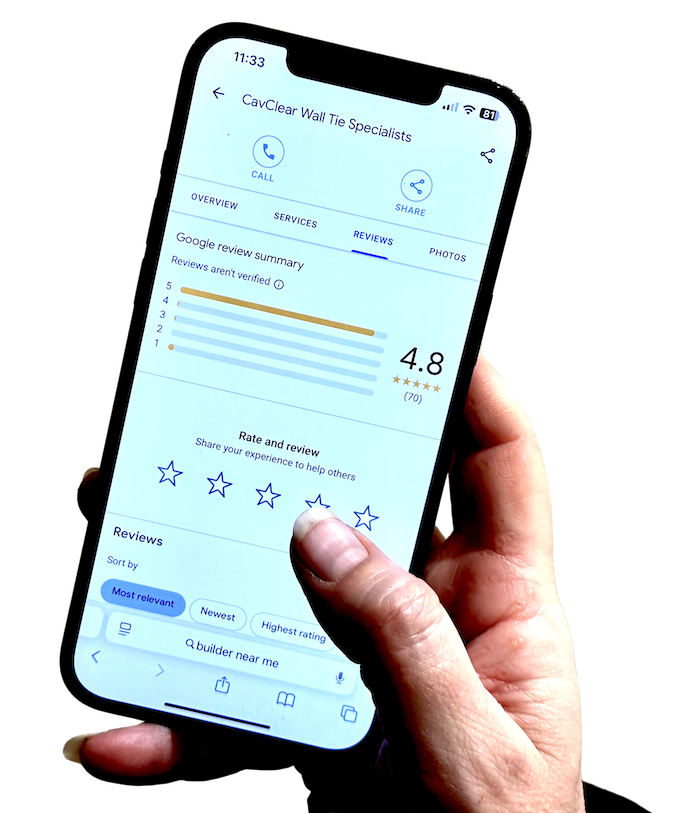
Traditional advertising used to do two jobs for local businesses: it created awareness, and it created a sense of credibility. That second job is now largely gone. Buyers still see adverts, but they no longer treat them as proof. They treat them as a claim that needs checking.
This is why local businesses can spend more on ads and still struggle to convert. The bottleneck is not visibility. It is trust readiness — the ability to look credible at the exact moment a buyer validates you.
Online Reputation Management (ORM) is the system that makes that trust predictable. It ensures your business looks current, professional, and safe to choose across the platforms buyers rely on — especially Google.
For local businesses, ORM has become the new first impression
If your reputation signals are weak or outdated, advertising simply sends more people to the same conclusion: "not sure I trust them."
In this guide, we will define ORM in practical terms, explain the shift in buyer behaviour that makes reputation more powerful than advertising, and show why a structured review process sits at the foundation of any modern reputation strategy.
What is online reputation management for local businesses?
Online Reputation Management is the structured process of shaping how your business is perceived when people search for you, compare you, and decide whether to contact you.
For local businesses, ORM is not an abstract branding exercise. It is operational. It is the day-to-day discipline of building and maintaining trust signals where they matter most — typically your Google Business Profile, key directory listings, and review platforms relevant to your category.
Online Reputation Management (ORM)
ORM is the system used to generate, maintain, and strengthen trust signals — reviews, ratings, recency, responses, and visibility — so your business is consistently easy to choose online.
A useful way to think about ORM is that it sits between marketing and operations. Your marketing can attract attention, but your reputation determines whether attention turns into enquiries. Your operations can deliver quality, but ORM determines whether quality becomes visible proof.
Done properly, ORM covers five practical areas:
Review generation — consistently collecting customer feedback.
Review management — responding, routing concerns, and keeping standards professional.
Visibility control — ensuring your best proof appears where buyers look.
Narrative protection — stopping isolated negative experiences from defining you.
Compounding trust — building an asset that improves conversion over time.
If those elements are left to chance, the market will still form an opinion — it just will not be an opinion you have shaped.
Why ORM now beats traditional advertising
Traditional advertising still works for awareness. The issue is that awareness is no longer the hard part. The hard part is converting sceptical buyers who have endless options and very little patience.
Local buying decisions are increasingly risk-avoidant. Even when the spend is modest, the buyer's concern is the same: "What if I choose the wrong business and it becomes a hassle?"
Advertising creates attention. Reputation creates permission.
In most local categories, permission is the limiting factor — and no amount of additional ad spend resolves a trust deficit.
This is why reputation often delivers stronger returns than advertising. Ads stop when spend stops. Reputation compounds. Each new review, response, and credibility signal makes the next customer easier to win.
In practice, ORM outperforms advertising because it improves the part of the funnel that advertising cannot fix:
It increases enquiry conversion without increasing traffic.
It reduces sales friction because prospects arrive reassured.
It improves local search visibility over time, lowering reliance on paid clicks.
It protects against the volatility of ad platforms and rising costs.
This does not mean you should never advertise. It means advertising is most effective when it amplifies a strong reputation, rather than trying to compensate for a weak one.
The shift in buyer behaviour: from claims to proof
Buyer behaviour has shifted because information is now instant. In the past, a buyer might see a local advert, ask a neighbour, and make a call. Today, a buyer can validate a business in seconds — and they do.
The modern buyer journey is not linear, but it is predictable. It revolves around rapid filtering. Buyers use reviews to eliminate perceived risk before they commit time to a phone call or enquiry form.
The local buyer validation sequence
Search — a "near me" query or category search starts the shortlist.
Scan — star rating, review count, and recency are checked quickly.
Validate — buyers look for patterns in reviews and how issues are handled.
Contact — only the safest-looking options receive enquiries.
This is the critical point: most buyers do not "choose the best business." They choose the business that looks most reliable with the least effort.
That is what ORM is designed to deliver. It reduces the buyer's cognitive load. It makes the decision feel straightforward.
What local buyers actually look for when checking reputation
Most local buyers are not reading every review. They are pattern-matching. They want reassurance that the business is consistent, responsive, and active.
In practical terms, buyers look for:
Rating quality — a strong average rating that suggests reliability.
Review volume — enough reviews to feel representative, not accidental.
Recency — recent feedback that signals the business is active now.
Specificity — reviews that mention outcomes, service quality, and professionalism.
Response behaviour — calm, professional replies, especially to critical reviews.
ORM is the discipline of ensuring those signals are present and improving over time.
Why a structured review process is the foundation of a wider reputation strategy
Many businesses treat reviews as an outcome of good service. In reality, reviews are an outcome of a system. Without a system, even great businesses end up with thin, outdated profiles.
The core problem is consistency. Manual review requests depend on memory, motivation, and time. Those are not reliable inputs in a busy local business.
Relying on "we will ask when we remember" is not a review strategy
This approach creates occasional bursts of reviews, long dry spells, and a reputation profile that looks inactive — regardless of how good the underlying service is.
A structured review process solves that problem by turning feedback collection into a consistent operational workflow. Every completed job, appointment, delivery, or project becomes a defined opportunity to request feedback — without anyone on your team having to decide or remember.
This is why consistent review generation is the foundation. It is the input layer that powers everything else in ORM:
More reviews increases credibility.
More recent reviews increases trust.
Consistent review flow improves local visibility over time.
More feedback improves operations by surfacing issues early.
With a reliable process in place, reputation stops being a fragile, memory-dependent task and becomes a compounding asset.
How a structured review process works in practice
A well-designed review process is not complicated. It is a small number of well-chosen steps that run reliably in the background — creating a predictable flow of reviews without placing additional burden on your team.
The core steps of a structured review process
Define trigger points — for example job completion, appointment attended, delivery confirmed, or invoice paid.
Send requests consistently via email and/or SMS when the trigger occurs.
Follow up once if there is no response, using a polite reminder.
Route concerns privately — negative feedback goes into a private handling process to resolve issues before they escalate publicly.
Check and respond to reviews consistently, with a professional tone.
Once this process is running consistently, it does more than collect reviews. It creates a governance layer: you can note volume trends, identify patterns in feedback, and improve service quality based on what customers are actually saying.
Introducing the review flywheel: how reputation compounds
Once review generation runs consistently, a compounding loop emerges. Each new customer becomes more than revenue. They become proof that attracts the next customer.
This is often described as a "review flywheel" — the mechanism that turns reputation into a growth asset rather than a marketing task.
A local home services business — from inconsistent to compounding
A home services business begins sending review requests after every completed job. Reviews arrive steadily each month. The Google profile looks more active, click-through rates improve, enquiries increase, and the team completes more jobs — creating more review opportunities. The business no longer needs to push as hard for new customers because trust is doing more of the selling.
The flywheel effect is why ORM often outperforms traditional advertising over the long term. Advertising buys attention. A flywheel builds momentum.
How reviews support local SEO and "near me" visibility
For local businesses, reputation and visibility are linked. Search engines want to surface businesses that appear reliable and active. Reviews contribute meaningfully to that picture.
While no single factor guarantees rankings, reviews influence local performance in practical ways:
Recency — steady new reviews signal an active business.
Volume — a strong baseline of reviews signals market presence.
Content signals — detailed reviews often include service terms and location context naturally.
Engagement — responses demonstrate active management and professionalism.
Reviews are not just conversion proof. They support discovery. A structured review process that keeps the profile current is one of the most cost-effective ways to improve local search visibility over time.
What to do about negative reviews
Negative reviews are not always avoidable, and a perfect profile can look unrealistic. The goal is not "no criticism" — it is credibility and professionalism.
Effective ORM treats negative reviews as a process matter, not a crisis. The best response is calm, structured, and consistent.
A negative review is rarely about persuading the reviewer
It is about signalling professionalism to future buyers reading the exchange. Defensive or emotional responses tend to do more damage than the original review.
A straightforward response structure works for most situations:
Acknowledge the issue without arguing.
State your intention to resolve it.
Move the conversation offline with a clear next step.
Keep the tone brief and professional.
Over time, a consistent flow of positive reviews makes individual critical reviews far less influential. This is another reason that maintaining review volume matters — it creates a strong baseline that prevents outliers from dominating the profile.
A practical ORM checklist for local businesses
If you want ORM to work as a system rather than a vague intention, a small set of repeatable standards is all you need.
ORM fundamentals checklist
Review requests go out consistently from defined trigger points.
Request messages are polite, specific to the job or visit, and include a direct link.
One follow-up is sent if there is no response.
Concerns raised before a review is submitted are routed into a private resolution process.
New reviews are checked weekly, with professional responses posted promptly.
Reputation signals — volume, velocity, rating, recency — are reviewed monthly for gaps or decline.
If you can maintain that rhythm, your reputation stops being unpredictable. It becomes a managed asset that improves over time.
What results you can expect from a structured reputation strategy
A well-run ORM process tends to improve performance in three areas: conversion, visibility, and operational feedback.
Local businesses that run a consistent review process typically see:
Higher enquiry conversion — buyers feel reassured before they contact you.
Lower acquisition costs — less reliance on paid channels to sustain demand.
Shorter sales cycles — prospects arrive with credibility concerns already resolved.
Better resilience — isolated negative reviews have less impact against a strong baseline.
Improved service quality — feedback patterns highlight what to fix or standardise.
The key is to treat reputation as part of your operating system, not a marketing afterthought.
ORM is now the trust layer of local growth
Online Reputation Management is the discipline of making trust visible. It ensures buyers see credible proof, not just claims, when they check your business.
This matters because buyer behaviour has changed. People validate local businesses through reviews, ratings, and recency before they ever pick up the phone. In that environment, ORM consistently outperforms traditional advertising because it reduces risk and friction at the point of decision.
A structured review process sits at the foundation of that strategy. Consistency is what turns reputation into a compounding asset — and compounding is what turns reputation into growth.
If you are building your reputation from scratch, start with consistent review collection first
Everything else in ORM becomes easier once review volume and recency are moving in the right direction. A strong, current profile changes the conversion equation for every other channel you invest in.
Want to See How a Managed Reputation Service Works?
Trusted Reviews 4U builds your personalised review page and manages the entire request process on your behalf — handling timing, follow-ups, concern routing, and response coordination so your reputation grows consistently without adding to your workload. See how it works →