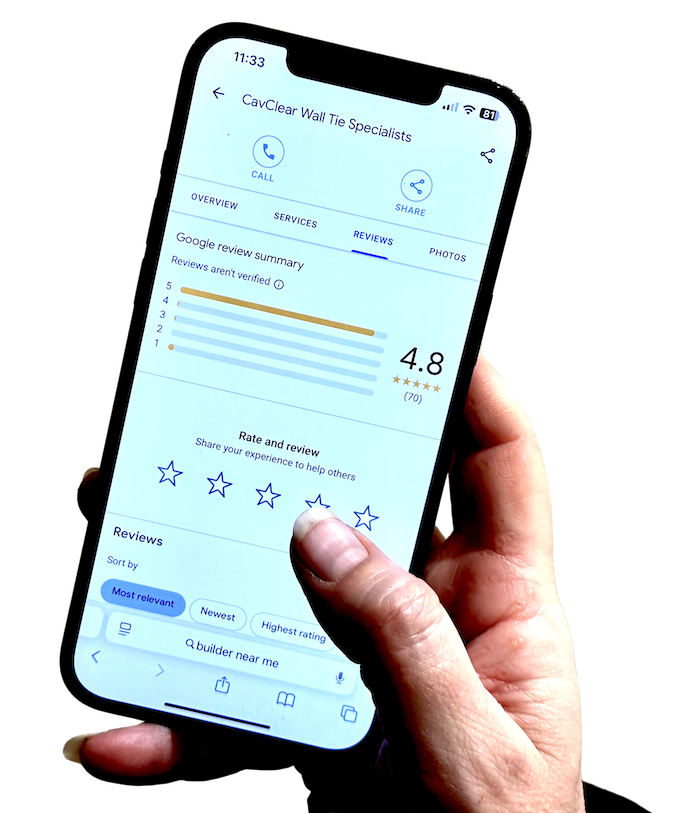
When someone is deciding where to go for a private consultation, an MOT check on your practice happens before they ever pick up the phone. They search, they look at your Google listing, and they read what other patients have said. UK online reputation management is the discipline of making sure what they find builds confidence rather than doubt.
For private healthcare providers, this is not a marketing nicety. It is a practical part of how your practice is found, evaluated, and chosen - or passed over in favour of someone with a stronger review profile.
What online reputation actually means for a private healthcare provider
Online reputation is not just your star rating. It is the full picture a prospective patient assembles when they search your name or your clinic - your Google Business Profile, the number and recency of your reviews, how (and whether) you respond to them, and the overall impression those elements create together.
Online reputation management is the active process of monitoring, influencing, and maintaining how your practice appears online. That includes how you collect patient reviews, how you handle feedback, how you respond publicly to what patients say, and how you keep that activity consistent over time.
Online reputation management - what it covers
Monitoring: knowing what patients are saying and where. Influencing: giving satisfied patients a clear, easy route to leave a review. Maintaining: keeping review activity consistent, responding professionally, and handling concerns before they become problems.
For a private healthcare provider, this matters in a specific way. Patients choosing private care are often making a significant financial and personal decision. They are not just looking for the cheapest option - they are looking for someone they can trust with their health. That trust assessment starts online, and your review profile is one of the first things they use to make it.
Most providers already understand, in a broad sense, that reviews are important. Where many fall short is in treating review growth as something that just happens - rather than something that needs to be actively managed.
Why Google reviews carry more weight than any other trust signal
Your website, your brochure, and your social media presence are all created and controlled by you. Prospective patients know this. Google reviews are different - they are written by people who have actually used your service, and they appear in a format that feels independent and unfiltered.
That independence is precisely why Google reviews carry so much weight. When a patient reads a review describing a calm, professional consultation experience, it lands differently than anything you could write about yourself. The voice is the patient's, not yours - and that authenticity is what makes it credible.
Why reviews outperform other trust signals
Websites and brochures are controlled by the business. Reviews are not. Patients naturally give more weight to what other patients say - particularly when the reviews are recent, specific, and responded to professionally.
Google reviews also connect directly to local search visibility. A practice with a strong, active review profile is more likely to appear prominently when someone nearby searches for the service you offer. This is not a guaranteed outcome - many factors influence search visibility - but an active, well-maintained review profile is a meaningful part of how Google assesses local relevance.
For private healthcare specifically, there is another layer. Patients choosing between a clinic with eight reviews from three years ago and one with forty recent reviews are not making a neutral comparison. Recency signals that the practice is active, that it is seeing patients, and that it is the kind of business others trust right now - not just at some point in the past.
How your review profile shapes patient decisions before they ever contact you
The decision to book - or not - is often made before a patient reaches out. Your review profile functions as a first impression, and the detail of that impression matters more than many providers realise.
Patients are not just counting stars. They are reading the content of reviews, noting how specific or vague they are, checking whether the practice has responded, and forming a view of what the experience of being a patient there would actually feel like.
- Review recency - patients want to know the practice is active and currently seeing patients, not just well-reviewed at some point in the past.
- Review volume - a larger number of reviews reduces the weight any single review carries, making the overall picture feel more reliable.
- Review content - specific, detailed reviews about the patient experience carry more weight than short, generic comments.
- Response behaviour - how (and whether) you respond to reviews signals professionalism and care for patient experience.
- Rating consistency - a practice holding a consistent rating over time feels more trustworthy than one with high variance.
Responding to reviews - both positive and negative - is a visible, practical part of managing online reputation. When a prospective patient sees that you have responded thoughtfully to a concern left by a previous patient, it does not damage your credibility. Done well, it strengthens it. It shows that you are attentive, that you care about patient experience, and that you engage with feedback professionally.
AI-assisted Google review replies can help practices maintain consistent, professional responses without the time burden of composing each reply from scratch. With proper oversight, this keeps responses appropriate and human - which matters when the subject is patient care.
The risks of leaving your online reputation unmanaged
The most common reputation problem for private healthcare providers is not a wave of bad reviews. It is a static profile that slowly loses relevance while competitors with more consistent review activity pull ahead.
Consider a private physiotherapy clinic. Patients complete their course of treatment, they are satisfied, and most would leave a positive review if asked clearly and at the right moment. But no one asks. The front desk is busy, the practitioner moves to the next appointment, and the follow-up never happens. The patient leaves, the opportunity passes, and the review profile stays exactly where it was.
The quiet cost of doing nothing
An unmanaged review profile does not just stay still - it falls behind. When competitors collect reviews consistently and your profile stays static, the gap in perceived credibility widens steadily, even if your actual patient outcomes are just as strong.
There is also the question of negative feedback. Without a structured process for handling concerns, dissatisfied patients have one clear option: Google. A patient who felt unheard or frustrated - even about something minor - may post a review that stays visible for years with no context, no response, and no counter-narrative from the practice.
Instant negative feedback alerts are one way to close this gap. When a patient uses a managed feedback route and leaves lower-rated feedback, the practice is notified quickly. That creates the opportunity to respond and resolve the issue before it escalates - rather than discovering a negative Google review days or weeks later.
Illustrative example based on a representative review-growth scenario
Consider a private dental practice where the principal dentist knew patients were happy but had not asked for reviews consistently. A small number of older reviews left the profile looking dated alongside busier competitors nearby. A managed approach would involve setting up a personalised review page, preparing the patient contact list, and sending structured SMS and email review requests after completed treatment. Patients with concerns could share private feedback directly before any decision to post publicly. The result would be more consistent review activity, a clearer process for handling concerns, and a profile that reflected the real standard of care being delivered.
What a managed approach to Google review growth looks like
Managed review campaigns remove the dependence on memory and goodwill. Rather than hoping a satisfied patient thinks to leave a review, a managed approach builds a consistent process for asking - at the right time, in the right way, with follow-up where needed.
For private healthcare providers, timing matters. A review request sent too soon after an appointment may feel rushed. Sent too late, the patient has moved on. A managed campaign identifies the right moment — typically after a completed appointment or a course of treatment — and delivers a clear, respectful invitation to share their experience.
Smart feedback routing is an important part of this. It gives patients a simple way to share how their experience felt. Patients who had a positive experience are guided towards Google. Patients with concerns can share private feedback directly with the practice. Crucially, all patients retain access to Google regardless - this is not a system that blocks or screens who can leave a public review. It simply gives every patient a clear, easy route for their feedback.
Smart feedback routing is not review gating
Review gating - directing only happy patients to Google while blocking others - is against Google's policies. Smart feedback routing works differently: all patients can access Google. The routing simply gives every patient a clear path suited to their experience. Concerned patients get a direct route to share feedback privately. Happy patients get a clear route to Google. The choice remains with the patient.
Follow-up is where many unmanaged approaches fall short. A single review request is often not enough. A structured follow-up sent after a reasonable interval substantially improves the proportion of patients who follow through. Without this built into the process, review collection relies on patients acting on the first message alone.
Our TR4U process
Our TR4U process
Assess
We review your current Google Business Profile - checking review volume, recency, rating consistency, and response behaviour - and look at how your profile compares to nearby competitors offering similar private healthcare services. We also check how patients are currently being asked for reviews, whether any follow-up process exists, and where the gaps are.
Build
We set up your personalised review page and prepare your patient contact list for managed campaign use. The SMS and email review request templates are shaped around your practice and the type of care you provide, so the tone feels appropriate and professional. We also configure smart feedback routing, so patients with concerns have a clear private route, and integrate instant negative feedback alerts so you are notified quickly when a concern is raised.
Launch
We send managed SMS and email review requests to your recent patients, timed to reach them after their appointment or course of treatment is complete. Volume is intentionally controlled to keep the campaign safe and sustainable. Our Managed Service handles the campaign process, including follow-up messages, so the asking happens consistently without adding to your front desk workload.
Manage
We stay involved throughout - not just at the start. If review momentum slows, we step in. We support AI-assisted Google review replies with oversight so your responses stay professional and on-brand. Your dedicated account manager monitors campaign performance and keeps the process moving, so your review profile continues to grow as a genuine reflection of the patient experience you deliver. Our 14-day free trial with 10-review guarantee means you can see the Managed Service working before making a longer commitment.
Where to start if your review profile needs attention
The starting point is an honest look at where your profile currently stands. Not just your star rating, but the full picture - how many reviews you have, how recent they are, whether you are responding, and how your profile looks compared to the practices a prospective patient would find alongside yours in a local search.
If the profile looks dated, inconsistent, or quiet, the issue is rarely that patients are unhappy. More often, the process for asking simply does not exist, or it depends on a busy team member remembering to do it. A managed approach removes that dependency.
Signs your review profile needs attention
- Your most recent review is more than a few weeks old.
- You have fewer than twenty reviews overall.
- You are not responding to reviews - positive or negative.
- You have no consistent process for asking patients to review after appointments.
- Nearby competitors have noticeably more reviews or more recent activity.
- You have received a negative review with no response from the practice.
UK online reputation management for private healthcare does not need to be complicated. What it does need to be is consistent. Asking at the right time, following up, handling concerns properly, and responding to what patients say — done repeatedly over time — builds a review profile that genuinely reflects the standard of care you deliver.
A Google-compliant managed service handles all of this in the background, so the practice stays focused on patients while the review profile steadily reflects the experience they are having.
Ready to Build a Review Profile That Reflects Your Care?
Start Building a Review Profile That Reflects Your Practice
Try TR4U free for 14 days. We'll set everything up, run your first review campaign, and aim to get you at least 10 genuine Google reviews - or you pay nothing.
Review Growth