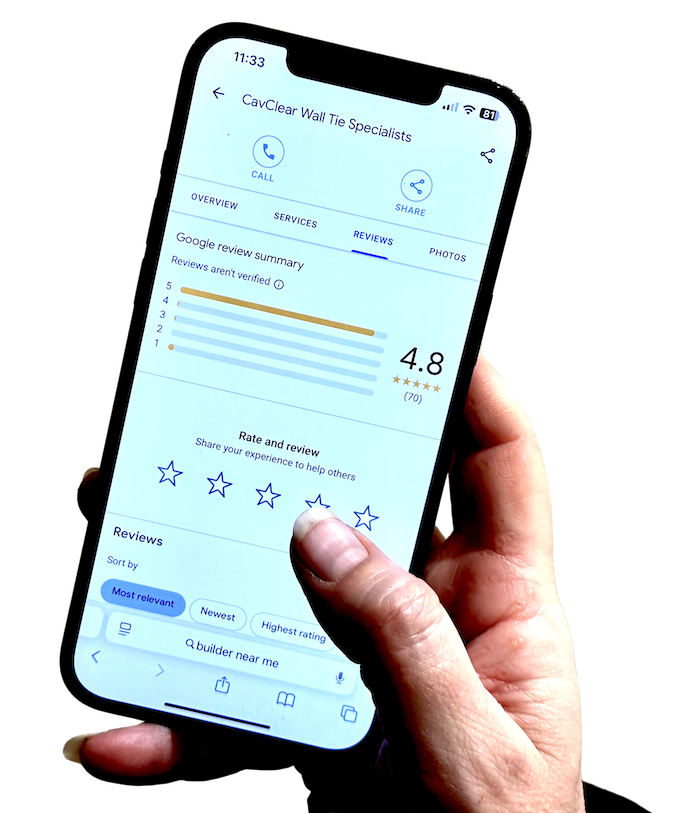
Review request best practices come down to three things: send the request at the right time, use genuine and personalised wording, and choose the right channel with a direct review link so replying feels quick and easy. Most review requests fail not because customers are unwilling to provide feedback, but because the request arrives at the wrong moment, uses the wrong channel, or employs language that feels transactional rather than genuine.
For local service businesses and any company trying to improve how it generates customer reviews, that difference matters. A well-timed, well-worded request can turn a positive experience into a public review that strengthens your online reputation; a clumsy one gets ignored and wastes the opportunity. The anatomy of an effective review request is simpler than most businesses assume, but it requires attention to detail that ad-hoc approaches consistently miss.
This guide looks at the parts that make online review requests work in practice: when to ask, whether email or SMS is the better fit, how to write language that sounds human, how direct links reduce friction, which mistakes to avoid, and how to build templates, systems, and measurement into a process you can keep improving. The difference between a request that generates reviews and one that gets ignored often comes down to timing, wording, and channel selection. Get all three right, and response rates improve significantly. Get any one wrong, and even genuinely satisfied customers will not follow through. Understanding how these elements interact allows you to design requests that feel natural, require minimal effort, and arrive when customers are most inclined to respond.
Why timing determines response rates more than wording
The timing of your review request influences whether customers engage more powerfully than any other variable. A perfectly worded message sent at the wrong moment will underperform a mediocre message sent at the right time. This holds consistently across industries and customer types.
The optimal window varies by business type, but the principle remains constant: requests should arrive when the experience is recent enough to be memorable but not so immediate that the customer has not had time to form a considered view. For a restaurant, this might be 24 hours after the meal. For a tradesperson completing a home repair, 48 hours after the job. For online orders, 14 days after order fulfilment is a widely used benchmark, though the right timing still depends on when the customer has actually had enough time to use the item.
The window of peak responsiveness is narrow
Customer willingness to leave a review drops off noticeably after the first week or two following a service or purchase. The emotional engagement of a positive experience fades faster than most businesses assume — which makes consistent, timely requests a structural requirement, not an optional extra.
Timing also interacts with time to value. The right delay depends on product type. A phone case delivers value immediately upon use, so sending review requests 3–5 days after purchase can boost responses when the customer has already experienced the core value. Fashion products often hit the sweet spot at 7 to 10 days post-purchase. With skincare, waiting 14 to 21 days makes sense because results take longer to appear. A fitness programme might need 30 days before customers can meaningfully assess its effectiveness. Your request timing must account for how long it takes customers to experience the core benefit of what you provide.
Businesses that ignore these nuances send requests based on arbitrary schedules rather than customer readiness. This creates friction, reduces response rates, and wastes the limited attention customers are willing to give. Proper timing respects the customer's journey and maximises the likelihood that they have both the context and inclination to respond.
Email versus SMS: when to use each channel
Email and SMS serve different purposes in review generation, and treating them as interchangeable undermines effectiveness. In 2025, email accounts for 60% of all review requests. Each channel has distinct strengths and optimal use cases that should inform your approach rather than defaulting to whichever is most convenient to implement.
Email works best when you need space to provide context, include visual elements, or communicate with customers who prefer considered, asynchronous communication. It gives a business more ability to explain why the review matters and share the practical details of how to leave one without the message feeling intrusive. Email tends to perform well when sent mid-morning on weekdays, though your specific audience may differ.
SMS achieves very high open rates and prompts more immediate action than email. It works well for service businesses where feedback is straightforward and the request can be kept brief. The constraint of SMS — messages must stay within the standard character limit — is often an advantage, because it forces clarity and removes the temptation to over-explain. Under GDPR and PECR in the UK, SMS marketing requires explicit consent, so ensure your contact list has been built correctly before using this channel.
Email vs SMS — when to use each
Email advantages – supports longer messages, includes branding, feels less intrusive, allows for detailed context, works well for B2B and complex services.
SMS advantages – very high open rates, prompts immediate action, cuts through inbox clutter, works well for simple transactional requests requiring a single click.
Email best for – complex services requiring explanation, customers who prefer detailed communication, requests that benefit from visual context.
SMS best for – trade and service businesses needing timely feedback, straightforward interactions, follow-ups for customers who did not respond to email.
The most effective approach for most local service businesses involves both channels in sequence. Send an SMS promptly after service completion to capture feedback while the experience is fresh, then follow with an email for customers who did not respond. This two-touch approach respects different communication preferences without being intrusive — provided the follow-up timing is thoughtful and frequency limits are observed, and it mirrors broader email and SMS marketing for review generation strategies.
Crafting language that feels genuine rather than transactional
The language you use in review requests determines whether customers perceive the message as a genuine request for feedback or a mechanical marketing tactic. Transactional language triggers scepticism; conversational language builds engagement. The difference often comes down to tone, personalisation, and whether the message demonstrates that you actually remember the interaction.
Generic requests fail because they feel like mass communication. A message that says "We value your feedback" without context feels impersonal. A message that says "We hope the new boiler installation is working well and keeping you warm this winter" demonstrates that you remember what was provided and care about the outcome. It should also clarify why you are asking now so the request feels like a natural conversation, not a broadcast. This distinction matters more than most businesses recognise.
Generic vs personalised — the difference in practice
Generic (low response): "Thanks for your recent purchase. Please leave us a review."
Personalised (higher response): "Hi Sarah, thanks for choosing us for your kitchen renovation. We hope you are enjoying the new worktops. If you have a moment, we would really appreciate your feedback on the experience."
The second version includes the customer's name, references the specific service, and uses language that feels conversational rather than robotic. These small differences meaningfully improve response rates.
Tone should match your brand voice while remaining appreciative and straightforward. Avoid language that feels entitled to a review or that steers customers toward a specific rating. Do not offer incentives in exchange for positive reviews. Phrases like "If you were happy with our service" create an implicit expectation that only satisfied customers should respond — which undermines authenticity and conflicts with the policies of most review platforms.
The call to action should be clear but gentle. "We would love to hear your thoughts and opinion" tends to outperform "Please leave a 5-star review" because it invites honest feedback rather than prescribing a specific outcome. Authenticity matters to customers and to the platforms hosting reviews — requests that feel genuine perform better across every metric.
For email requests, the subject line deserves the same care as the message body. A clear, specific subject line — one that references the service or the customer's name — performs better than a generic "Share your feedback" because strong subject-line writing signals immediately that the message is personal rather than broadcast.
The critical role of direct links in reducing friction
Even customers who intend to leave a review often fail to follow through if the process requires multiple steps or unclear navigation. Direct links that take customers exactly where they need to go represent one of the simplest and most effective improvements you can make to review request performance.
A direct link means the customer clicks once and arrives at the review form, ready to write. This eliminates the need to search for your business, navigate an unfamiliar platform, or remember login credentials, reducing friction for users without adding work for the customer. Every additional step you remove meaningfully increases completion rates.
Direct links make a significant difference to completion rates
Review requests that include a direct link to the review form substantially outperform those that ask customers to find the business themselves. The difference between "search for us on Google and leave a review" and a single tap that opens the review form directly is not marginal — it determines whether casual intent translates into a completed review.
For Google, this is your Google Business Profile review URL — available from your profile dashboard. Once you have these links, integrate them into your review request templates and test them regularly to confirm they remain functional and go directly to the review form rather than a search results page, following best practices for using a direct link to your Google reviews.
Mobile optimisation matters here as well. Most customers will click review links from their phones, so ensure links open correctly in the mobile browser and navigate directly to the review form without requiring additional steps, whether the customer is coming from your website or mobile browser. This attention to the user experience translates directly into higher completion rates and supports building a stronger Google reviews profile for UK small businesses.
Common pitfalls that undermine otherwise solid requests
Even businesses that understand timing, channel selection, and wording often undermine their own efforts through avoidable mistakes. Identifying these pitfalls should be part of your review request design process.
The first pitfall is message length. Customers do not read long review requests. If your email requires scrolling or your SMS runs long, you have lost most recipients before they reach the call to action. Aim for brevity in both channels — 100 to 150 words in email is typically sufficient; SMS should be kept to a single, readable message. If you add a survey or feedback step before the review link, it should take about 1 minute to complete. Brevity signals respect for the customer's time and increases the likelihood of engagement.
Common review request mistakes to avoid
Asking too early, before customers have had time to experience the full benefit of the service
Asking too late, after the detail and emotion of the experience has faded
Using generic language that feels automated rather than personal
Requiring multiple clicks or navigation steps to reach the review form
Sending requests at inconvenient times — early morning, late evening, or during typical working hours
Failing to personalise with the customer's name or a reference to the specific service
The second pitfall is an unclear call to action. A prompt feedback request should appear early and be easy to understand. Customers should know exactly what you are asking them to do within the first sentence. Burying the request in the third paragraph or assuming they will infer what you want creates unnecessary confusion. Lead with the ask, then provide context.
The third pitfall is poor link placement. The review link should appear close to the call to action, as a clearly labelled button or hyperlinked phrase. Customers should not have to search for how to respond — the path forward should be immediately obvious.
The fourth pitfall is poor send timing. For email, mid-morning on a weekday typically performs well. For SMS, respect a reasonable window in the customer's timezone — early morning and late evening requests feel intrusive and reduce goodwill, and one practical tip is to avoid those hours altogether. What you are asking for is a favour. Treat the timing accordingly.
Building request templates that adapt to different scenarios
No single review request template serves every situation. Customer types, service contexts, and interaction histories require different approaches. Building a small library of templates that address common scenarios allows you to maintain consistency while adapting to specific circumstances.
Template library — starting points for common scenarios
Immediate post-service (SMS) – "Hi [Name], thanks for choosing [Business] today. We hope everything went smoothly. If you have a moment, we would love your feedback: [Link]"
Post-completion follow-up (email) – "Hi [Name], we hope you are pleased with the [service/work]. We would really appreciate hearing your thoughts — your feedback helps us a great deal: [Link]"
Follow-up reminder (email) – "Hi [Name], we sent a message last week about your recent [service]. If you have a spare minute, we would still love to hear your feedback: [Link]"
Long-term customer (email) – "Hi [Name], you have been with us for [time period] and we genuinely value that. Would you mind sharing what keeps you coming back? Your insight means a lot: [Link]"
Two-touch sequence (SMS + email) – SMS on Day 1: "Thanks for your visit, [Name]. Quick question — how did we do? [Link]" Email on Day 3 if no response: follow with template 2 or 3.
These templates are starting points, not scripts. Adapt the language to match your brand voice and the nature of your service. What works for a relaxed hospitality business may feel too informal for a professional services firm. The key elements remain consistent across all templates: the customer's name, a reference to the specific service, a clear and gentle ask, and a direct link that removes friction — the same foundations used when designing the perfect review request. Used politely, a reminder can improve review count and lead to more reviews.
Test different approaches over time to understand what resonates with your particular customers. Let the results inform which templates become your standards rather than assuming your first versions are optimal.
Building consistency through a systematic process
Manual review requests do not scale. Even with well-crafted templates, relying on someone to remember to send requests at the right moment introduces inconsistency. Busy periods — which are precisely when review capture matters most — are when manual processes break down most reliably.
A systematic review request process removes human memory from the equation. Trigger points tied to job completion, appointment attendance, or delivery confirmation ensure every eligible customer receives a request at the right time, regardless of how busy things are. A well-timed reminder can sometimes help lift overall review count, though results vary by business. This consistency is what separates businesses that build steady review momentum from those that see occasional bursts followed by long gaps, and is exactly what an automated review system is designed to deliver.
Exclusions matter as much as inclusions
Any systematic process needs clear exclusion rules. Customers who cancelled, requested a refund, or raised a complaint should not receive a standard review request. These situations require individual attention first. Sending a review request to a customer who is still waiting for a resolution compounds a problem rather than managing it.
Frequency limits are equally important. Customers who interact with your business regularly should not receive a review request after every transaction. A sensible limit — one request per customer over a reasonable period — prevents fatigue while maintaining a steady flow of fresh feedback. It should also prioritize requests around meaningful interactions rather than every routine touchpoint, making it easier to pair with simple, ongoing reputation monitoring routines. The goal is a sustained, manageable stream of reviews, not a single burst followed by silence.
Measuring and refining your approach
Review request effectiveness should be measured and improved systematically rather than assumed to be working based on intuition. Without measurement, you cannot distinguish what is working from what is not, or get a better sense of where in the process customers are dropping off.
The primary metric is response rate: the proportion of requests that result in a completed review. Your baseline will depend on your business type, customer relationship depth, and the quality of your request design. The goal is not to match an external benchmark — it is to improve your own rate over time through deliberate refinement, especially in sectors where consistent reviews drive trust, such as reputation management for moving and storage businesses.
Secondary metrics include click-through rate on review links, time from request to completed review, and the distribution of ratings received. These provide context about whether your requests are reaching customers, whether they act promptly or delay, and whether any patterns in feedback signal operational issues worth addressing, while reading review text and optional comments can surface valuable feedback beyond the star rating.
Test one variable at a time
When refining your approach, change one element at a time — send timing, message length, subject line, or channel sequence. If you change multiple things at once, you cannot attribute performance differences to any specific factor. Slow, deliberate testing produces more useful learning than rapid experimentation.
Review request effectiveness compounds over time. Small improvements to timing, wording, and channel selection accumulate into meaningfully better results across months. Ongoing measurement also helps identify what customers find helpful and which requests produce the most useful responses. The businesses that build strong review profiles are not those with the cleverest templates — they are those that apply these principles consistently, measure what happens, and refine steadily rather than treating review requests as an afterthought.
The blueprint for requests that convert
Designing effective review requests requires balancing several elements, but the core approach is straightforward. Send requests at the right time based on the customer's journey and the nature of your service. Choose the appropriate channel based on message complexity and customer preference. Use language that feels genuine, personalised, and appreciative. Include direct links that remove friction. Build in consistency so every eligible customer receives a request — not just the ones someone remembered to follow up with. Measure results and refine based on what the data tells you.
This approach works across industries and business models when adapted thoughtfully to context. The underlying principles do not change: timing matters, words matter, channels matter, and friction determines whether intention translates into action.
The customers who would happily leave you a review outnumber those who actually do — by a significant margin. The difference is almost never reluctance. It is the absence of a well-designed, timely, frictionless request that makes it easy for them to follow through.
Want to See What a Managed Review Request Process Looks Like for Your Business?
Trusted Reviews 4U builds your personalised review page and manages the entire request process on your behalf — coordinating timing, channel selection, follow-ups, and direct links, so every customer gets the right ask at the right moment. Try the demo →