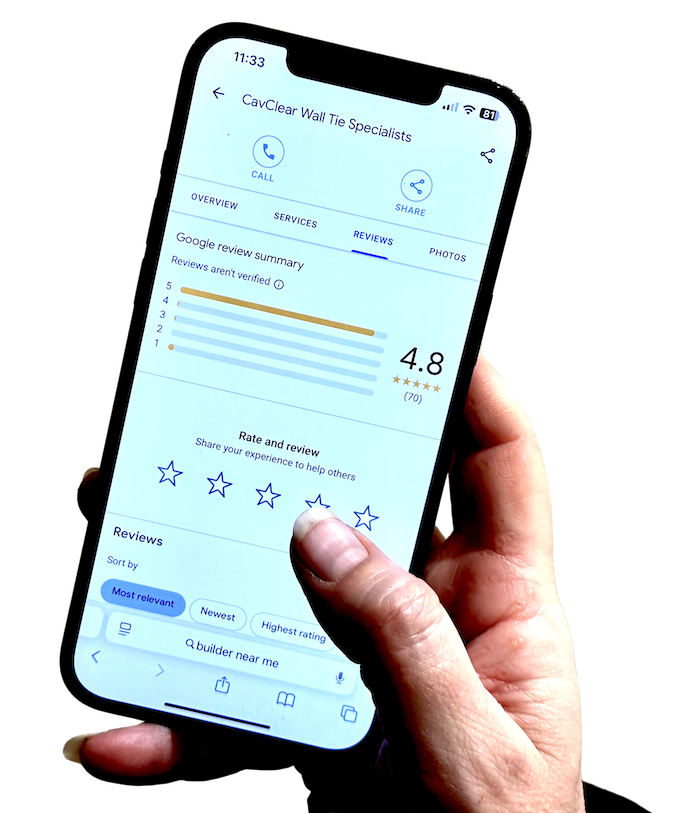
If you have been looking into ways to improve your online reputation, you have probably seen a lot of similar-sounding terms.
Some businesses talk about reputation management services. Others talk about an online reputation management agency or a reputation management company. Then there are businesses offering review support, listing help, response handling, broader digital marketing, and visibility work under the same general label of reputation management.
It is no surprise that this feels confusing at first.
For a local business owner, especially in a garage, MOT centre, or trade business, the real question is usually much simpler. You are not trying to learn every category in the market. You are trying to work out what kind of help would actually suit your business without creating more complexity than you need.
This article explains the difference in plain English. It looks at what reputation management services usually mean, what an online reputation management agency often does, where review management fits in, and which kind of approach tends to make more sense for local service businesses.
Why reputation management can feel confusing at first
Part of the confusion comes from the fact that reputation management is a broad phrase.
It can mean helping a business get more reviews. It can mean responding to negative feedback or handling customer concerns privately. It can mean keeping business details accurate across the web, watching public mentions, or improving how a business appears in search results and on review sites.
In some cases, it can also include content work, social media support, and help with wider reputation issues beyond customer reviews.
That is a wide range.
When very different services all use similar language, it becomes harder to compare them properly. Two businesses might both say they offer reputation management, but one may be focused on review growth and local trust signals, while another may be focused on broader visibility work, content support, or reputation repair.
This is where local business owners often get stuck. The labels sound close enough that they blur together, but the reality behind them can be very different.
📖 Definition
“Reputation management” is not one fixed thing. It is a broad label that can cover review growth, feedback handling, visibility work, and wider brand protection depending on who is using the term.
That matters because the best option is not the one with the most impressive wording. It is the one that fits how your business actually works day to day.
What “reputation management services” usually refers to
In most practical terms, reputation management services usually focus on helping a business improve, protect, or stay on top of how it appears online.
For a local business, that often means things like:
- building a stronger flow of Google reviews
- improving consistency in how reviews are requested and handled
- helping manage customer feedback before it becomes public
- supporting a stronger online reputation over time
- strengthening visibility in local search
- improving trust signals for potential customers
The word “services” tends to suggest something more focused and outcome-led. It is often narrower than a full agency relationship. Instead of wrapping your reputation into a much bigger marketing strategy, the support is centred on a specific need.
For example, a garage may not need a broad reputation plan covering multiple channels and layers of reporting. It may simply need a better way to stay visible on Google, build genuine customer reviews, and avoid the stop-start pattern that happens when the team gets busy.
That is where reputation management services can make sense. They are often closer to a clear operational problem with a clear practical outcome.
In other words, the question is less “how do we manage every part of our digital presence?” and more “how do we make sure our reputation online is looked after properly and consistently?”
What an online reputation management agency does
An online reputation management agency usually works more broadly.
That can include review support, but it may also cover things like:
- search visibility work
- content creation
- social media support
- handling negative content
- managing brand perception across channels
- supporting reputation recovery after a difficult period
For some organisations, that wider scope is useful.
A larger business may have multiple locations, more stakeholders, or a need to manage both customer reviews and wider public perception. In those cases, a broader agency model may be a sensible fit.
The key point is that agencies are often built to handle complexity.
That does not automatically make them better. It just means they are often set up for businesses with more moving parts, more reporting needs, and a wider definition of what reputation work should include.
The key differences between services and agencies
The clearest difference is usually scope.
A reputation management service is often narrower, more focused, and tied to a specific operational need. An online reputation management agency is often broader, covering multiple parts of a business’s online presence.
Another difference is complexity.
Services tend to work best when the business wants a clear problem handled consistently, such as improving reviews or maintaining a stronger local reputation. Agencies tend to work best when the business wants broader support across different channels and issues.
There is often a difference in day-to-day involvement too.
A focused service is more likely to follow a repeatable, practical process. An agency arrangement may involve more meetings, more reporting, and more coordination across different activities.
There can also be a difference in what success looks like.
With a focused service, success may look like:
- more consistent Google reviews
- stronger local trust signals
- fewer missed issues from customer feedback
- a more active, current reputation online
With an agency, success may include broader outcomes such as:
- better control over reputation across channels
- improved visibility beyond reviews alone
- support with more complex reputation problems
⚖️ Simple Comparison
- Service: narrower scope, clearer operational focus, usually easier to maintain
- Agency: broader scope, more moving parts, often better suited to more complex needs
Where review management fits into both approaches
Review management often sits inside both models, but not always in the same way.
In a focused reputation management service, review growth and review follow-through may be the core of the work. That means helping you build consistency, stay on top of customer feedback, and maintain trust where it matters most.
In an agency model, review management may be one part of a wider system that also includes content work, social media, and broader visibility support.
That distinction matters because reviews are often the most immediate signal of trust for a local business.
Most people do not study your full marketing setup before deciding whether to contact you. They look at your Google reviews, your rating, and whether the business feels current and credible.
So while both services and agencies may say they handle reviews, the level of focus can be very different.
Why many agency-led solutions are built for larger businesses
Agencies are often designed around businesses with more structure.
That might mean:
- dedicated marketing roles
- regular reporting cycles
- multiple approval layers
- broader goals around brand visibility and perception
None of that is wrong. It just reflects a different kind of client.
A local garage, electrician, roofer, or plumber often needs something simpler. Something that fits around real work without adding extra pressure.
This is one reason local businesses sometimes choose the wrong type of solution.
They sign up for something designed for scale, then find it creates more admin than expected.
The issue is not quality. It is fit.
💡 Key Insight
A solution can be well-built and still be the wrong fit. For many local businesses, the real risk is ending up with something more complex than the day-to-day job actually requires.
Common misunderstandings when comparing options
One common misunderstanding is assuming that broader automatically means better.
It does not.
A bigger agency offering lots of tailored support may include services you never use. Another misunderstanding is assuming that a focused service is less capable than an agency.
That is not true either. A focused service can often deliver stronger results simply because it is easier to follow consistently.
Some businesses also assume that more features mean more control.
In reality, more features often mean more to manage. If the process becomes harder, consistency drops.
Another misunderstanding is treating reputation management as something you only need when there is a serious problem.
For most local businesses, it is not mainly about crisis situations. It is about building trust steadily, keeping your reputation current, and making sure good work is reflected properly online.
What actually matters when choosing the right approach
When comparing reputation management services, it helps to focus on practical fit rather than labels.
Ask yourself:
- What problem are we actually trying to solve?
- Do we need broad support, or do we mainly need better review follow-through?
- Who will keep this going day to day?
- Will this still work when we are busy?
- Does this strengthen trust and visibility in a way that feels manageable?
For a local business, consistency is often more valuable than complexity.
A clear, manageable approach that strengthens your reputation over time is usually more effective than a complex system that is hard to maintain.
🗒 Checklist
When you compare options, focus on these three things:
- Fit: does this match the way your business actually operates?
- Consistency: will it still work when you are busy?
- Clarity: is the outcome obvious, or are you buying complexity for its own sake?
Which option suits local service businesses best
For most local service businesses, the better fit is usually the approach that is simpler and more focused.
That is especially true where your most valuable asset is trust.
A broader online reputation management agency may make sense if you are dealing with wider reputation problems, more than one layer of visibility work, or a more complex public profile.
But many businesses do not need that level of breadth.
They need a practical way to:
- build a stronger online reputation
- stay on top of reviews
- maintain visible trust signals
- make sure good work leads to a stronger Google presence over time
That usually points towards a focused reputation management service.
A simpler way to think about managing your reputation
A useful way to think about this is not really “service versus agency”.
It is about fit.
If your business needs broad strategic support across many channels, an agency may be the right shape.
If your business needs a clear, manageable way to improve and protect its reputation without adding more admin, a focused service is often the more practical route.
For local businesses, simpler is often stronger.
Not simplistic. Just clear enough to reduce friction, support consistency, and keep the important jobs moving even when the business is busy.
Because in the end, your reputation only improves when the process is actually followed.
The best approach is rarely the most complicated one. It is the one that fits your business, supports your workflow, and helps you build a strong, visible, and trusted reputation over time.
See What a Simpler Managed Approach Looks Like
Trusted Reviews 4U helps busy local businesses build and protect their Google reputation with managed review growth, steady follow-through, and a practical process that does not rely on you remembering to do everything yourself. See what this looks like for your business →