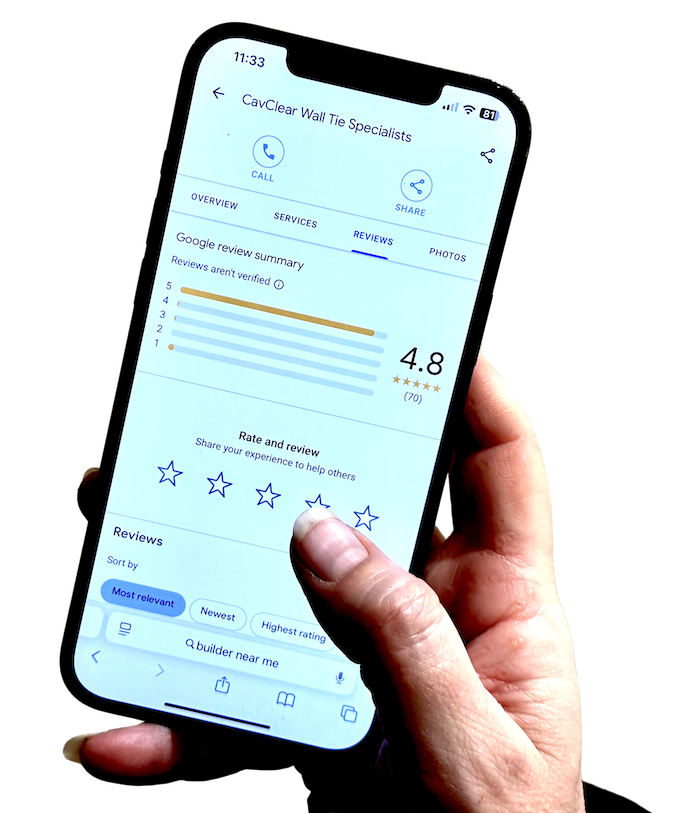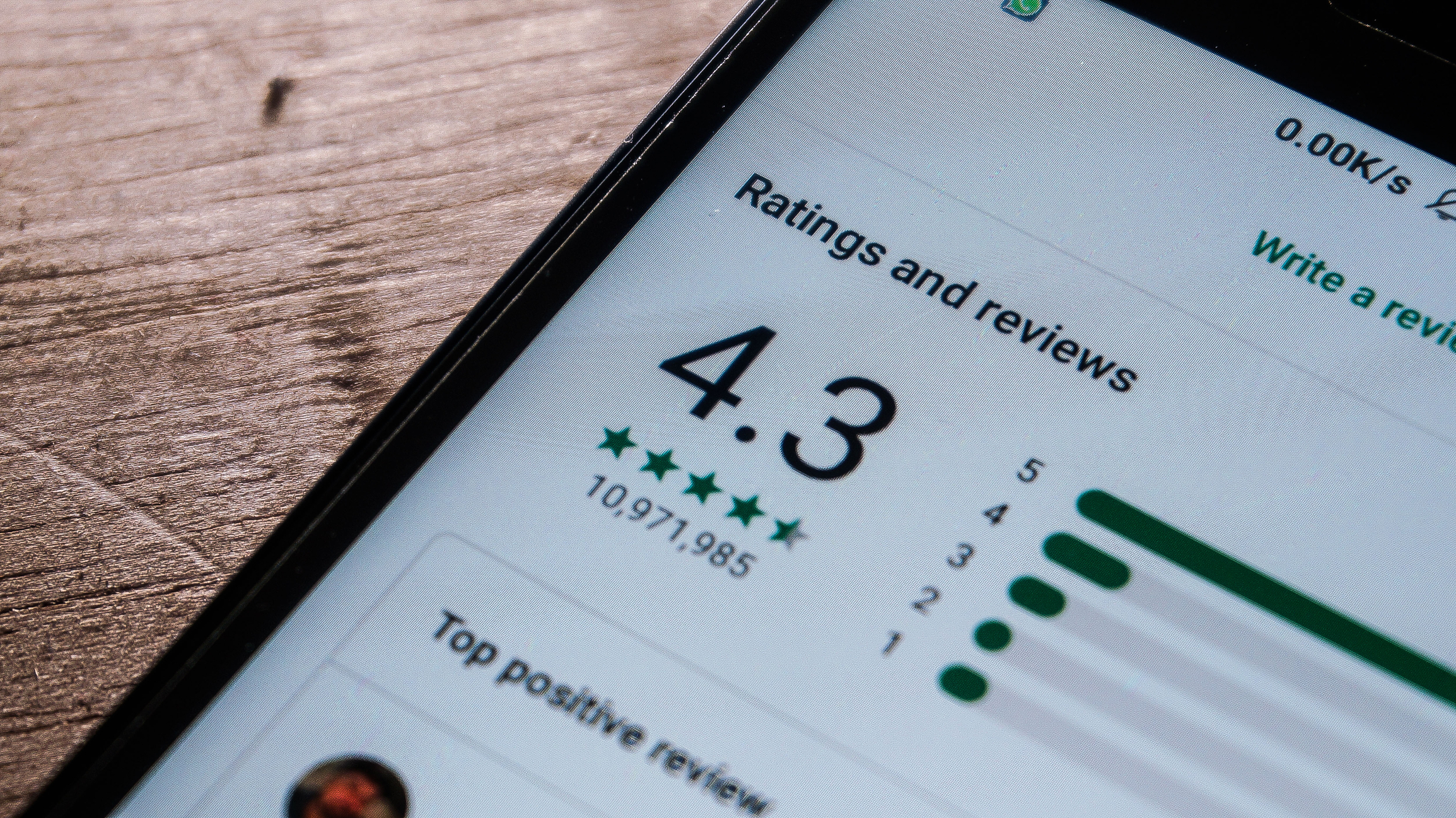
Most estate agencies lose new business quietly. Not because they delivered a poor service, but because their satisfied clients moved on without saying anything publicly. Online reputation management in the UK context is not about damage control - it is the active, consistent process of making genuine client satisfaction visible where prospective vendors and landlords are already looking.
That place is Google. And if your profile does not reflect the quality of service you actually deliver, you are handing the instruction to someone else.
The gap between a good service and a visible reputation
There is a consistent pattern in local service businesses: the gap between the quality of service delivered and the quality of reputation visible online. For estate agencies, this gap is particularly costly.
A vendor who felt well-guided through a sale, a landlord whose tenancy was handled cleanly, a buyer who appreciated the responsiveness of the team - these are exactly the clients whose experiences belong on your Google profile. They are also the clients least likely to go looking for a way to share that experience unless someone makes it easy for them.
The result is a profile that does not match the business. Recent reviews are sparse or missing entirely. The star rating looks thin. And a prospective vendor searching for an agent in your area sees a competitor with a stronger profile - even if that competitor is no better in practice - and shortlists them instead.
The visibility problem
A strong reputation that only exists in the memory of past clients does not help you win new instructions. Prospective vendors need to see proof before they pick up the phone - and Google is where they look first.
This is not a marketing problem. It is a visibility problem. And closing the gap between the service you deliver and the reputation you project is precisely what online reputation management addresses.
Why happy estate agency clients rarely leave reviews on their own
The instinctive assumption is that genuinely happy clients will say so. In practice, they rarely do - not because they are ungrateful, but because they are busy, and leaving a review was never part of their plan.
A vendor completing a house sale has just navigated one of the most significant financial and emotional experiences of their life. Once it is done, their attention moves immediately to what comes next - the move, the new property, the family arrangements. Logging into Google to write a review for their estate agent is not on that list.
The timing of any request matters enormously. Ask too soon and the client is still mid-process. Ask too late and the moment has passed, the goodwill has faded into the background of daily life, and the energy required to write something feels disproportionate to the task.
- Clients complete the transaction and move on mentally before any review request arrives
- The process of finding the review page, signing in, and writing something feels like unnecessary effort
- Happy clients rarely feel the urgency that unhappy clients do - dissatisfaction is a much stronger prompt to act
- When the agency is busy, asking consistently falls off the to-do list entirely
None of this reflects poorly on the client or the agency. It is simply how people behave. The solution is not to rely on goodwill alone - it is to prompt at the right moment, make it easy, and follow up when the first message goes unanswered.
What online reputation management actually means for a local agency
Online reputation management for an estate agency is not a software platform you monitor occasionally. It is the structured, ongoing process of making sure that genuine client experiences are captured, visible, and responded to in a way that builds trust with the next person reading your profile.
At a practical level, it covers several connected activities.
- Asking clients for reviews at the right moment through managed review campaigns that handle timing, messaging, and follow-up
- Routing feedback safely so clients with concerns have a private channel first, protecting the public profile without blocking anyone from Google
- Responding to reviews - positive and negative - in a way that signals professionalism and care to every future reader
- Keeping review activity consistent so the profile shows recent, steady engagement rather than a burst of old reviews followed by silence
What online reputation management means in practice
For a local estate agency, online reputation management is the active process of turning genuine client satisfaction into visible, trustworthy social proof on Google - consistently, safely, and without placing the burden on the agency team to remember.
The word 'managed' matters here. Most agencies make some attempt to ask for reviews when they remember to. A managed process means it happens consistently - regardless of how busy the branch is, how many completions happened that week, or whether the person who usually sends the request is on leave.
How missing reviews cost agencies listings they never knew they lost
The consequences of a thin Google profile are largely invisible to the agency - which makes them harder to take seriously.
A prospective vendor does not tell you they chose a competitor because your profile looked sparse. They simply do not call. You never find out. The instruction goes elsewhere, and you have no way of connecting that lost opportunity to the gap in your online reputation.
What the evidence consistently shows is that people searching for a local service - including estate agents - use Google reviews as a shortlisting tool. Review volume, star rating, and recency all contribute to whether a business appears credible enough to contact. A profile with ten reviews from three years ago reads as inactive. A profile with a steady stream of recent reviews, responded to by the agency, reads as professional and engaged.
Recency matters more than you might expect
A Google profile with ten strong reviews from three years ago is significantly less persuasive than one with regular activity over the past six months. Prospective clients read recency as a signal that the business is still performing well - not just that it performed well once.
Consider a landlord looking to instruct an agent for a new buy-to-let property. They search for agents in their area, compare two or three profiles, and spend perhaps three to four minutes reviewing what they find. The agency with twenty-eight recent reviews, thoughtful responses, and consistent activity across the last six months is the one that feels like a safe choice. The agency with nine reviews, the most recent from two years ago, creates uncertainty - even if the service is equally strong in practice.
That uncertainty is enough to lose the instruction before the first conversation ever happens.
The difference between asking once and running a managed review process
Most agencies that do ask for reviews rely on an informal approach - a message sent after completion, a verbal mention during a handover call, or a follow-up email that depends on the individual team member's habits. When that person is on leave, or the week is hectic, it does not happen.
A managed review campaign changes that dynamic entirely. Review requests go out through SMS and email at the right moment in the client relationship. Follow-up is built into the process so that a client who did not respond the first time receives a second, respectful prompt - rather than simply being forgotten.
Smart feedback routing adds an important layer of protection. When a client shares their experience through the agency's personalised review page, clients who have concerns are offered a private channel to share feedback directly with the business first. Those clients can still access Google whenever they choose - the routing simply gives the agency an earlier opportunity to hear about a concern and respond before it becomes a public complaint. Instant negative feedback alerts mean the agency is notified quickly when a concern is raised privately, so it does not sit unnoticed.
The value of early awareness
Knowing about a client concern before it reaches a public review gives the agency an opportunity to respond, resolve, and rebuild trust. Smart feedback routing is not about suppressing negative feedback - it is about giving the business a fair chance to hear it first.
Responding to reviews - both positive and negative - is itself a trust signal. AI-assisted Google review replies help agencies respond consistently without each response sounding generic or rushed. A thoughtful reply to a positive review acknowledges the client and reinforces the agency's values. A measured, professional response to a critical review signals to everyone reading the profile that the agency takes feedback seriously.
This is the distinction between asking once and running a managed process. One is a habit that depends on memory and available time. The other is a system that keeps working even when the team is stretched.
Our TR4U process
Our TR4U process
Assess
We start by reviewing the agency's current Google profile - looking at review volume, recency, star rating, and how responses have been handled so far. We also look at how client contact data is currently held and whether there is an existing process for asking for reviews after completions or let agreements. This gives us a clear picture of where the gaps are before anything is built.
Build
We set up the agency's personalised review page and configure the SMS and email review request sequences. Smart feedback routing is built in from the start, so clients with concerns have a private channel available alongside the direct route to Google. We format the client contact list and prepare the messaging so it feels appropriate to the agency's tone and client relationship.
Launch
Managed review campaigns go out to recent clients - vendors, landlords, and buyers whose transactions are complete and whose experience is fresh. We manage the timing carefully, keeping volume intentional and the approach respectful. Our 14-day free trial with 10-review guarantee means the agency can see genuine early results before committing to the full managed service.
Manage
We stay involved after launch. If review momentum slows - as it naturally does during quieter periods - we step in rather than leaving the agency to notice and chase it themselves. Instant negative feedback alerts keep the agency informed quickly when a concern is raised privately, and our dedicated account manager oversees the campaign so the agency is never left wondering what is happening next. AI-assisted Google review replies help maintain a consistent, professional response presence across the profile.
Illustrative example based on a representative review-growth scenario
Consider a mid-sized independent estate agency with a strong local reputation built over years of consistent service. Their Google profile has eleven reviews, the most recent posted eighteen months ago. They ask for reviews occasionally - usually when a completion goes particularly well - but there is no consistent process. A managed campaign is launched to recent vendor and landlord contacts. The personalised review page is set up with smart feedback routing so any concerns raised are flagged to the branch manager immediately. Within the first few weeks, review activity picks up, the profile shows recent, responded-to reviews, and the agency's Google presence starts to reflect what clients have always said privately. Prospective vendors searching in the area now see an active, credible profile rather than one that looks dormant.
What a stronger Google profile does for an estate agency's pipeline
A well-maintained Google profile does more than reflect well on the agency. It actively reduces the friction between a prospective client's search and their decision to make contact.
When a vendor is choosing between two agencies with similar fees and no obvious differentiator from the outside, the Google profile becomes the deciding factor. Strong recent reviews, professional responses, and consistent client feedback communicate something important: this agency is reliable, engaged, and trusted by people like me.
That is a competitive advantage that compounds over time. Each new review strengthens the profile. Each response reinforces professionalism. The cumulative effect builds a reputation that works for the agency even when no one on the team is actively selling.
- Prospective vendors and landlords search Google before shortlisting — a strong profile earns a place on that list
- Recent reviews signal that the agency is actively delivering good service, not just that it did so in the past
- Responded-to reviews show engagement and professionalism to every future reader, not just the original reviewer
- A consistent flow of genuine reviews builds cumulative trust that no single marketing message can replicate
- A Google Compliant managed approach — one that asks all relevant clients, routes feedback safely, and responds to every review — protects the agency from the risks that come with shortcuts or artificial review activity
The agencies winning more instructions are not waiting for satisfied clients to find their own way to Google. They have a managed process that makes it straightforward for those clients to share their experience — and keeps it working week after week.
Start Building a Google Profile That Wins Instructions
TR4U's 14-day free trial with 10-review guarantee gives your agency a managed start — review requests, smart feedback routing, and consistent follow-up handled for you, so your Google profile starts reflecting the service you already deliver.
Start Building a Google Profile That Wins Instructions
Try TR4U free for 14 days. We'll run your review campaign, set up smart feedback routing, and aim to get you 10 genuine Google reviews - or you don't pay.
Review Growth