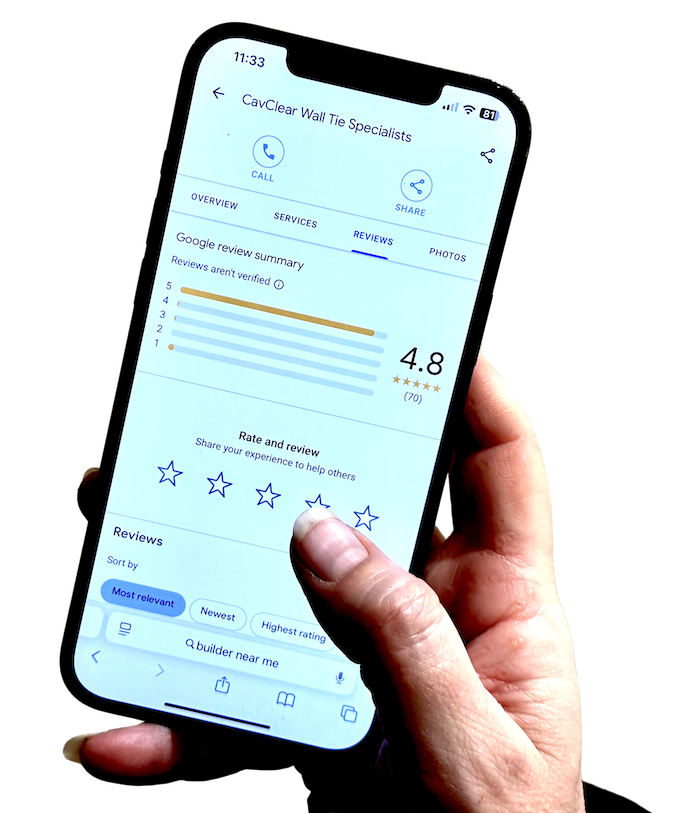
If you run a local service business, customer feedback can be incredibly useful, but only if it is collected in a way that is simple, clear, and actually actionable.
Good feedback helps you spot small service issues before they turn into repeated problems. It shows what customers value most and highlights where communication, pricing clarity, or job handovers could be improved.
However, many businesses make the process harder than it needs to be by asking too much, overcomplicating the form, or blurring the line between feedback and public reviews.
For garages, MOT centres, plumbers, electricians, roofers, and similar trades, a feedback form should feel quick and easy to complete. It should give you useful insight without feeling like effort for the customer.
This guide breaks down what a strong feedback form looks like, when to use one, and how to keep it practical for a busy local service business.
What makes a good feedback form for a local service business
A good feedback form strikes a balance. It should be short enough that customers will actually complete it, but specific enough to give meaningful answers.
If the form is too vague, you tend to get responses like “good service” or “all fine,” which do not tell you much. If it is too long, most customers will not bother, especially after a routine service, repair, call-out, or completed job.
That balance is what makes the difference between feedback you can use and feedback you ignore.
In practice, the best feedback forms usually share three key qualities:
they are easy to understand
they are quick to complete
they focus on useful information
That means using plain and direct questions rather than formal or overly polished wording. It also means asking about the parts of the customer experience that actually matter, such as service quality, communication, clarity, and whether the issue was resolved.
For most local businesses, a feedback form does not need to feel like a long survey. A short form with a few focused questions is usually more effective than a detailed questionnaire that customers do not finish.
📌 Key point: A useful feedback form is not the one with the most questions. It is the one customers are most likely to complete and you are most likely to act on.
When to use a feedback form instead of asking for a review
A feedback form and a public review serve different purposes, and it helps to keep that distinction clear.
Reviews are public. They help future customers decide whether to trust your business.
Feedback is usually private. It helps you understand what the customer actually experienced.
For example, a customer might be happy overall but still have something useful to say about communication, waiting times, pricing clarity, or how clearly the work was explained. They may not include that in a public review, but they may be more willing to share it privately if the form is quick and easy.
This is where a feedback form can be useful. It gives the customer a simple way to tell you what went well and what could be improved.
That said, feedback should not replace reviews. One helps you improve internally, while the other builds external trust. Both can work together as long as the process stays clear and fair.
A customer should still be free to leave a Google review if they want to. A feedback form should not be used to block, filter, or discourage customers from leaving a public review.
💡 Simple distinction: Feedback helps you improve the customer experience. Reviews help future customers trust your business. They are connected, but they are not the same thing.
What questions a simple feedback form should include
For most local service businesses, simple is better. You do not need to ask everything. You only need the questions that give you useful, realistic insight.
A strong basic feedback form usually includes a simple overall experience question. This gives you a quick signal of how the customer felt about the service.
It should also include a question about whether the work was completed to the customer’s satisfaction. For a garage, MOT centre, or trade business, this matters because the main purpose of the service is to solve a practical problem.
It is also worth including a question about communication or clarity. This often shapes how customers remember the experience, especially when the work involves technical explanations, unexpected costs, delays, or repair options.
An open comment box is also useful. This is where the most helpful detail often appears. Customers may explain what stood out, what confused them, or what they appreciated.
Finally, you can include an optional question asking whether the customer would like to be contacted about their feedback.
In most cases, that is enough. A short form with four or five sensible questions is usually far more effective than a longer one that very few people finish.
A basic feedback form sample for a local service business
Here is a simple feedback form sample that works well across many service-based businesses:
📝 Feedback form sample:
How was your experience with us today?
Excellent / Good / Fair / PoorDid we complete the work to your satisfaction?
Yes / Mostly / NoWas everything explained clearly?
Yes / Mostly / NoIs there anything we could have done better?
Open text boxWould you like us to contact you about your feedback?
Yes / No
This works because it is short, easy to answer, and gives you a mix of structured and open feedback.
The first question gives you a quick overall signal. The second tells you whether the customer felt the job was completed properly. The third highlights whether communication was clear. The fourth gives customers room to explain anything that needs more detail. The fifth gives them a simple route to request follow-up if needed.
You can also soften the tone with a short introduction before the questions.
For example:
We are always looking for ways to improve and would really value your feedback. This should only take a minute to complete.
That kind of introduction is simple, polite, and clear. It tells the customer why you are asking without making the form feel formal or heavy.
Feedback form examples for garages, MOT centres, and local trades
The basic structure can stay similar across most local service businesses, but small adjustments can make the form feel more relevant to the service the customer has just received.
Feedback form example for a garage or MOT centre
For a garage or MOT centre, questions around clarity and communication are particularly important. Customers may not always understand the technical details of a repair, advisory, or service recommendation, so the way things are explained can strongly affect the overall experience.
A simple garage feedback form could ask:
How was your experience with us today?
Was the work or MOT outcome explained clearly?
Were you happy with the communication from our team?
Is there anything we could have done better?
Would you like us to contact you about your feedback?
This keeps the focus on the customer experience without making the form feel too long.
Feedback form example for a plumber or heating engineer
For plumbers and heating engineers, the customer often wants reassurance that the issue has been resolved and that they understand what has happened.
A simple feedback form could ask:
How was your experience with us?
Was the issue resolved to your satisfaction?
Was the work explained clearly?
Did our team treat your home with care?
Is there anything we could improve?
This focuses on the parts of the service that customers are most likely to remember: whether the problem was fixed, whether they felt informed, and whether the work was handled respectfully.
Feedback form example for electricians, roofers, builders, and other trades
For trades such as electricians, roofers, builders, decorators, landscapers, and similar businesses, the form should stay practical and easy to answer.
A useful version could ask:
How satisfied were you with the work completed?
Was communication clear throughout the job?
Was the work completed as expected?
What did we do well?
Is there anything we could improve?
In each case, the aim is not to redesign the form completely. It is to make the questions feel aligned with the actual service experience.
🔧 Practical tip: Keep the core form simple, then adjust one or two questions so they match the type of work you do. A garage, plumber, and roofer do not need completely different forms, but the wording should feel relevant.
What to avoid when creating a feedback form
The most common mistake is making the form too long.
If a customer opens the form and sees too many questions, there is a good chance they will leave it for later and never come back.
It is also important to avoid asking questions you are unlikely to act on. Feedback should lead to insight, not just collect information for the sake of it.
Overly generic questions can also fall flat. A question like “Any comments?” may work sometimes, but many customers need a bit more direction to give a useful answer.
Tone matters as well. Questions should feel open and constructive rather than defensive.
For example, this feels natural:
Is there anything we could have done better?
This kind of question gives the customer permission to be honest without making the process feel uncomfortable.
It is also worth avoiding questions that push the customer toward a particular answer. A feedback form should help you understand the customer’s real experience, not guide them into saying what you want to hear.
Finally, avoid using feedback forms as a way to decide who should or should not be asked for a review. Customers should not feel that private feedback is being used to filter public opinion.
How to keep feedback useful without making the form too long
The simplest way to keep feedback effective is to decide what you actually want to learn before creating the form.
For most local service businesses, that usually comes down to a few key areas:
overall satisfaction
whether the problem was solved
whether communication was clear
whether anything could be improved
Trying to cover everything at once often leads to forms that feel bloated and overwhelming.
A better approach is to keep the core form simple and occasionally adjust one question depending on what you want to learn more about.
For example, if you have recently changed your booking process, you might add a question about how easy it was to book. If you have introduced a new handover process, you might ask whether the work was explained clearly when the customer collected their vehicle or when the job was completed.
This keeps the process manageable while still giving you focused insight.
You do not need a perfect feedback form. You need one that customers will answer and your business can learn from.
✅ Useful rule: If you cannot explain why a question is on the form, remove it. Every question should help you understand the customer experience or improve the way the business operates.
What to do with feedback once it comes in
Collecting feedback is only useful if something happens afterwards.
You do not need a complicated system, but you should pay attention to patterns. If multiple customers mention unclear communication, delays, or confusion around pricing, that is something worth addressing.
If customers consistently highlight a strength, that is equally valuable. It shows what people notice and appreciate about your business.
It can help to think of feedback in three simple groups:
positive feedback, where the customer is happy and highlights what went well
improvement feedback, where the customer points out something that could be better
follow-up feedback, where a response or further contact may be needed
The goal is not to overanalyse every comment. It is to make sure recurring themes are not ignored.
For example, if customers regularly say that everything was clear and easy, that tells you your communication is working well. If customers repeatedly mention that they were unsure what was happening next, that gives you a practical area to improve.
Feedback should help you make small improvements over time. It should not become another admin-heavy task that no one has time to manage.
How feedback and reviews work differently
Feedback and reviews are closely linked, but they are not the same.
Feedback is mainly for the business. It helps you understand what happened during the customer experience and where improvements could be made.
Reviews are mainly for future customers. They help people who have not used your business yet decide whether you seem trustworthy, active, and reliable.
That difference matters.
A private feedback form can help you learn from customer experiences. A public review can help build visible trust. Both are useful, but they should be handled transparently.
For a local service business, it is sensible to collect feedback in a way that improves the business while also having a consistent, fair process for asking customers for reviews.
The important point is that one should not be used to manipulate the other. Customers should not only be encouraged to leave a public review if they gave positive private feedback. That kind of filtering can create problems and does not support a healthy review process.
⚠️ Important: A feedback form should not be used to block unhappy customers from leaving a Google review. Keep feedback collection and review requests fair, clear, and separate.
A simple way to make feedback collection more consistent
The biggest challenge with feedback is consistency.
It often relies on someone remembering to send the form, and that is easy to miss on a busy day.
The simplest way to fix this is to tie feedback requests to a natural point in the customer journey. That could be:
after a job is completed
after a vehicle is collected
after an invoice is sent
after a call-out is finished
after a project handover
The exact timing matters less than making it part of a repeatable process.
When the form is simple and the timing is consistent, customers are far more likely to respond. That combination matters far more than trying to build the perfect form.
A basic feedback template, sent consistently at the right moment, will usually do more than a detailed form that only gets sent occasionally.
For most garages, MOT centres, and local trades, the best approach is simple: ask soon after the work is completed, keep the form short, make the wording clear, and review the responses regularly enough to spot patterns.
If you want to see how a more consistent managed approach to reviews and customer experience can support local trust without creating more admin, TR4U is built to help local businesses keep that process moving in a practical, manageable way. See what this looks like for your business →