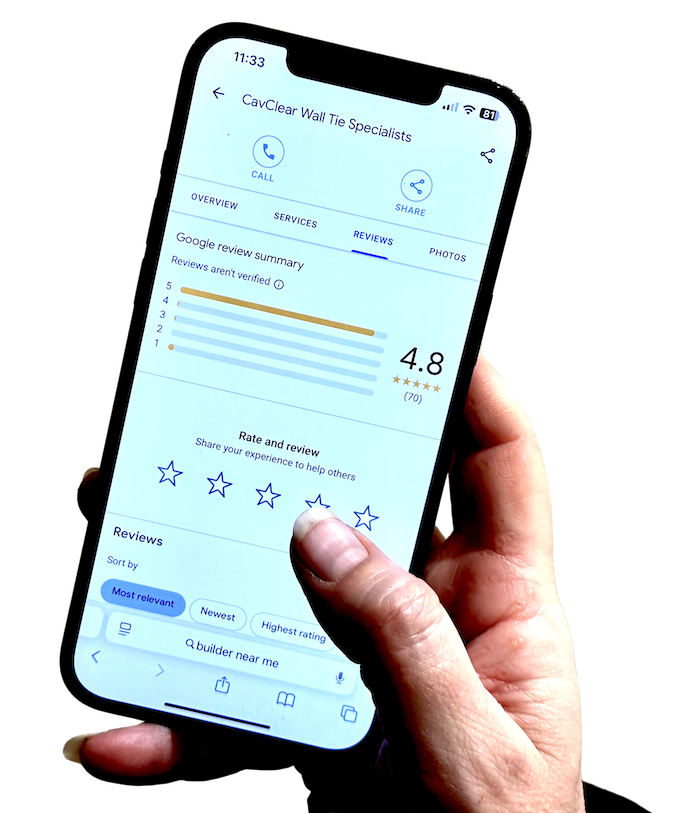
If your review profile feels weak, it is easy to see why buying Google reviews might look like a tempting shortcut.
You may be comparing your business with nearby competitors and wondering how they built a stronger review count so quickly. You may feel frustrated that you do good work but your online reputation does not reflect it yet. You may even feel that a few bought reviews would simply help you “catch up”.
That feeling is understandable. But for a local business, buying Google reviews is still a bad idea.
Not because this needs to become a dramatic lecture, and not because every business owner considering it is trying to do something reckless. Usually, it comes from pressure, impatience, or the sense that genuine review growth is slower than you would like.
The problem is that bought reviews do not really solve the trust issue underneath. They create a different one.
This article explains why some businesses consider buying Google reviews, what that usually means in practice, why it is a poor long-term choice, and what a safer alternative looks like if you want a stronger review profile without damaging credibility.
Why some local businesses consider buying Google reviews
Most businesses do not start here because they want to build a fake reputation for the sake of it.
Usually, they get here because something feels unfair.
They may know they do solid work, treat customers properly, and deserve to look stronger online than they currently do. Then they search locally and see competitors with more reviews, fresher reviews, or a stronger-looking profile, and the gap becomes hard to ignore.
For a garage, that might mean seeing another local workshop look more established in Google Maps. For a plumber or electrician, it might mean noticing that the businesses showing up well seem to have much more visible customer proof.
When that happens, buying reviews can start to look like a shortcut to the result they actually want, which is not fake praise. It is local trust and visibility.
That is what makes the idea tempting.
It feels faster than building genuine review momentum from scratch. It feels simpler than setting up a proper process. And if the review profile is quiet enough, a small boost can seem harmless.
But the fact that something feels understandable does not make it a good decision.
📌 Key point: Buying reviews can feel tempting when your profile looks quiet, but it does not fix the real problem. It creates the appearance of trust without building genuine customer proof.
What “buy Google reviews” usually means in practice
In practice, buying Google reviews usually means paying a third party to arrange public reviews that have not come naturally from real customer experience.
Sometimes that means bulk review sellers offering packages. Sometimes it means marketplaces or freelancers promising a certain number of reviews over a set period. Sometimes it is positioned in softer language, but the idea is the same: you are paying for public customer proof that has not been earned in the normal way.
That is the key issue.
The review stops being genuine customer feedback and becomes a purchased signal. Genuine reviews and authentic review content from real customers are what make a review profile trustworthy.
For a local business, that matters more than people think. Reviews do not just sit there as decoration. They influence how potential customers judge whether your business feels credible, current, and trustworthy.
That is why the source of the review matters, not just the presence of it.
A profile built on real customer experience tells a true story, even if it is imperfect. A profile padded with bought reviews tells a story that may look useful in the short term but becomes fragile the moment it is tested.
Why bought reviews create more risk than value
The biggest problem with bought reviews is that they create the appearance of strength without the foundation underneath.
That means you take on risk without building anything durable.
A bought review does not reflect a real visit, a real repair, a real call-out, or a real service experience. So it cannot strengthen your actual customer process. It cannot teach you anything useful. It cannot help you improve. And it does not create the kind of public trust that comes from a real customer speaking voluntarily.
All it does is create a number.
That number may look helpful at first, but it is weak support for a trust-led local business.
There is also a practical issue here. Businesses that start with “just a few” often end up feeling that the profile still does not look natural enough. Then the temptation becomes keeping the pattern going.
At that point, the shortcut starts behaving less like a one-off decision and more like an ongoing weakness.
That is why bought reviews rarely stay as neat and harmless as they seem at the start.
⚠️ Important: Bought reviews do not create real review strength. They add risk while leaving the underlying issue untouched: the business still does not have a consistent way to collect genuine reviews from real customers.
The trust problem: what fake reviews do to a local business reputation
Local businesses live and die by trust.
People do not just choose a garage, MOT centre, plumber, roofer, or electrician based on price alone. They choose based on confidence. They want to believe the business is genuine, dependable, and likely to do what it says.
Fake reviews work against that, even when they look polished.
If the pattern feels strange, the wording feels unnatural, or the profile suddenly looks inflated compared with the rest of the business presence, it can create doubt. The customer may not even be able to explain exactly why. They just get the sense that something feels off.
That is enough.
Trust is often lost in subtle ways before it is lost in obvious ones.
For a local business, that makes fake reviews a poor gamble. You may think you are improving your reputation, but what you are really doing is adding a weakness to the very thing customers are using to judge whether they should believe you.
And if your business depends on local word of mouth, repeat custom, and reputation in the area, that is not a small issue.
Why shortcuts usually weaken long-term visibility
A lot of business owners asking this question are not really asking, “Can I get away with it?”
They are asking, “Will this help me look stronger online?”
The better answer is that even if buying reviews gives the appearance of movement, it does not create the kind of long-term visibility most local businesses actually need.
That is because long-term visibility is not just about numbers. It is about credible momentum.
A healthy review profile tends to grow in a way that matches the life of the business. It reflects real jobs, real customers, real service experiences, and ongoing activity. Over time, that creates a profile that feels believable and current.
Bought reviews do not do that. They bypass the real customer layer and try to manufacture the output directly.
That usually leaves the business with a profile that looks more polished than it really is, but not more grounded.
💡 Simple reminder: The aim is not just to have more reviews. The aim is to have a review profile that feels believable, current, and connected to real customer experiences.
How Google review quality matters more than artificial volume
When businesses start feeling behind, they often fixate on volume.
That is understandable. More reviews can make a business look more established.
But the useful question is not just “how many?” It is also “how credible does this profile feel?”
Review quality matters because customers are not simply counting stars and moving on. They are looking for signs that the business serves real people, in real situations, and does it well.
That comes through in natural detail.
A genuine review often mentions what happened, how the business communicated, what kind of service was provided, or how the customer felt afterwards. It sounds grounded because it is grounded.
Artificial reviews often miss that. Even when they sound positive, they can feel generic, detached, or strangely similar.
That is why quality matters more than inflated volume. A business does not need a suspicious-looking jump in praise. It needs a believable pattern of genuine customer proof.
For a garage, that may be reviews mentioning MOTs, servicing, repairs, tyres, diagnostics, or staff helpfulness. For a trade business, it may be reviews reflecting punctuality, clear communication, tidiness, or problem-solving.
That kind of detail does more for trust than a pile of empty compliments.
What a safer and more credible review strategy looks like
A safer strategy starts with accepting one simple truth: reviews work best when they reflect real customer experience.
That means the goal is not to manufacture praise. It is to make it easier for genuine customers to leave honest feedback consistently.
For most local businesses, the real problem is not that they have no happy customers. It is that they do not have a dependable process for asking.
That is the better place to focus.
A credible strategy usually looks like this:
ask customers consistently rather than occasionally
ask close enough to the service that the experience is still fresh
keep the process simple
make it easy for all customers to leave a Google review if they want to
pay attention to recency and momentum rather than chasing a sudden spike
That last point matters. A natural, steady flow of reviews usually does more for trust than a sharp burst that looks out of place.
For a local business, that kind of steady review growth is what starts to change how your profile feels in search. It looks more current. It feels more active. It gives the next customer more reason to choose you.
How local businesses can improve reviews without cutting corners
There is no magic trick here, but there is a practical answer.
The businesses that improve reviews without cutting corners usually make the process more consistent, not more clever.
They do not rely on remembering whenever there is time. They do not leave it to chance. And they do not treat review asking as something to do only when the profile starts looking thin.
Instead, they tie it to the normal flow of work.
For example, a review request could be sent after a vehicle collection, after a completed job, after a service visit, or after the customer has had enough time to feel the outcome properly.
That kind of rhythm matters because it makes review growth part of how the business operates rather than an occasional campaign.
It also means the review profile starts to reflect the work that is already being done. If your team is delivering good service, explaining things properly, and treating customers well, a consistent review process helps more of that show publicly.
That is much stronger than trying to create a review profile that does not match the real business behind it.
✅ Better approach: Instead of buying reviews, build a simple process that asks real customers for honest reviews at the right moment. That creates a stronger review profile without cutting corners.
What to do if your review profile feels too quiet right now
If your profile feels too quiet, the answer is not to panic or force the appearance of momentum.
The better response is to look at what is actually missing.
Usually, it is one of these:
not asking often enough
asking too inconsistently
asking at the wrong point
making the process harder than it needs to be
relying on memory rather than process
That is frustrating, but it is also fixable.
It is a much more useful problem to solve than trying to buy your way around it.
Once the review process becomes consistent, your profile starts reflecting the real quality of the work rather than the luck of whether somebody remembered to ask this week.
It is also worth paying attention to the reviews you already have. If customers mention helpful staff, clear communication, reliable workmanship, or a good experience, those are strengths worth noticing. If customers mention confusion, delays, or poor communication, that is useful feedback too.
Real reviews are not just there to impress future customers. They can also help the business understand what customers actually value.
The better question to ask instead of “should I buy reviews?”
The better question is this:
How do I make it easier for genuine customers to leave honest reviews consistently?
That question points you towards something stable.
It moves the focus away from quick image-management and back towards the real commercial goal, which is stronger trust and visibility built on genuine customer experience.
For a local business, that is the only kind of review strength that really lasts.
It is more believable. It is more useful. And it supports the kind of reputation that actually helps when customers are comparing businesses locally.
Reviews on Google should reflect real customer experiences. Buying Google reviews creates risk because the reviews are not based on genuine service, genuine customers, or genuine feedback.
That can damage trust, weaken credibility, and create a review profile that looks less natural over time.
Simplifying the review process by giving customers a clear route to leave a Google review can encourage more genuine feedback because it reduces the effort required. But the foundation still has to be real customer experience.
Ultimately, focusing on good service, clear communication, and a consistent review process is the safer way to build a review profile that supports trust and long-term visibility.
🔎 Final takeaway: Do not ask, “Should I buy Google reviews?” Ask, “How can I make genuine review growth more consistent?” That is the question that leads to a stronger, safer review profile.
If you want a safer alternative to shortcuts, TR4U offers a managed review growth approach designed to help local businesses build stronger, more credible Google trust without cutting corners or turning review growth into another thing to manage. See what this looks like for your business →