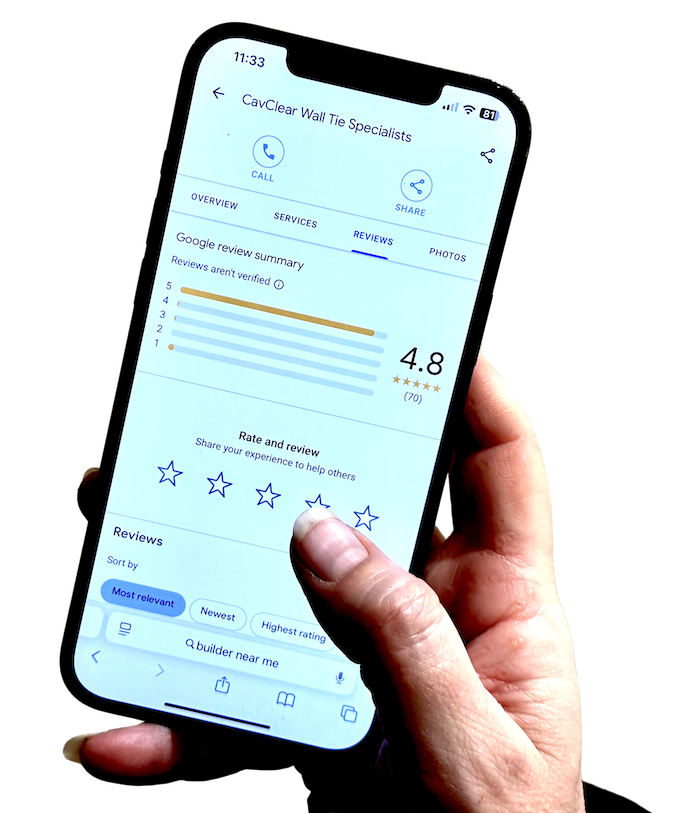
If you have just received a negative Google review, it is easy to go straight into damage-control mode.
You may feel angry, frustrated, or certain that the review is unfair. You may also be asking a very direct question: can you remove Google reviews, or are you stuck with them once they appear?
The practical answer is this: sometimes a Google review can be removed, but many cannot. Google may remove reviews that appear to break its policies, but it does not usually remove a review simply because it is negative, harsh, or uncomfortable to read.
That can feel frustrating in the moment, but it is also useful to know. Once you understand the difference between a review that may be removed and one that will probably stay live, you can stop wasting energy on the wrong fight and focus on what actually protects your reputation.
For a local business owner in the UK, that usually comes down to four things: respond calmly, report properly where there is a genuine policy issue, fix what can be fixed privately, and make sure one bad review is not carrying too much weight in the first place.
📌 Important
You cannot directly delete Google reviews from your own Business Profile. You can report them, but Google decides whether they stay live or are removed.
Can you remove Google reviews? The short answer for local businesses
In simple terms, no, a business owner cannot directly delete Google reviews from their own profile.
You can report a review to Google for removal, but Google decides whether it stays or goes. If the review does not appear to break Google’s rules, there is a strong chance it will remain visible.
That means there are really two separate questions hidden inside the phrase “can you remove Google reviews?”
The first is: does this review appear to break Google policy? The second is: if it does not come down, what is the best next step for the business?
That second question matters more than many owners realise. A lot of reputational harm does not come from a single critical review. It comes from a thin review profile, long gaps between reviews, no owner response, and no consistent process for generating fresh, genuine feedback.
So yes, removal is sometimes possible. But removal is rarely the whole answer.
Which Google reviews may be removed, and which usually stay up
The most important distinction is between a review that may breach policy and a review that is simply unfavourable.
Google’s review policies focus on whether content is genuine, relevant, safe, and unbiased. In practice, that means the strongest removal cases tend to involve reviews that do not reflect a genuine customer experience, include abuse or threats, contain personal information, or are clearly promotional or off-topic.
Reviews that may be removable
A review is more likely to be removed if it appears to involve one of the following:
Fake or non-genuine reviews
If the review is not based on a real experience, that is a genuine red flag.
A review from someone who was never a customer
A burst of suspicious reviews after a dispute with a competitor
A pattern that looks coordinated rather than genuine
Multiple reviews about the same experience, especially through multiple accounts, can support a fake reviews reporting case.
Conflict-of-interest reviews
Some reviews come from people who were never ordinary customers in the first place, such as current or former staff, competitors, or others with a direct interest in harming the business.
Harassment, threats, or abuse
Abusive or threatening content is a stronger removal case than ordinary criticism, particularly when it crosses into policy-violating inappropriate content such as profanity, obscenity, or hate speech. A review that crosses into harassment is different from a customer simply saying they had a poor experience.
Off-topic or promotional content
Reviews are supposed to relate to a real experience with the business. General political commentary, unrelated rants, or obvious advertising are more likely to be challenged than normal service criticism. Reviews that mention illegal activity or contain illegal content may also be stronger cases for removal.
Reviews exposing personal information
If a review contains personal or confidential information posted without consent, that may also be a stronger case for removal.
🔧 Example
A garage receives a one-star review from someone it cannot match to any booking, invoice, or enquiry. On its own, that does not prove the review is fake.
But if the business also spots that the reviewer appears connected to a local competitor, or the wording closely matches other suspicious reviews, that becomes a more credible reporting case than simply saying “this feels unfair”.
Reviews that usually stay live
This is the part many owners do not want to hear, but it is better to be clear.
A review will often stay live if it is:
Negative but based on a real customer experience
Emotional but still broadly relevant
Critical of service, price, communication, or delays
Written in a way you feel is unfair, but not obviously policy-breaking
That includes legitimate negative reviews based on a real customer's experience, even where the business strongly disagrees with how events were described.
A customer does not have to be right in every detail for a review to stay up. If Google sees it as part of an ordinary customer dispute rather than a policy issue, it may remain.
⚠️ Warning
A review being harsh does not automatically make it removable. A review being inaccurate in your view does not automatically make it removable either.
The closer it looks to a real-world disagreement, the less likely Google is to intervene.
How to report a Google review properly
If you believe a review breaks policy, it is worth reporting it. But it helps to do that in a calm, organised way.
The reporting path is usually straightforward: go to your Google Business Profile, find the review, select the reporting option, choose the most accurate reason, and submit it. The same review can also be reported in Google Maps. Google typically takes several days to assess a flagged review, so instant review removal is unlikely. If needed, you can then track the outcome and follow the appeal route where available, ideally as part of a broader approach that focuses on managing negative Google reviews properly rather than only chasing removals.
🧭 Framework
A calm reporting process works better than a reactive one.
Read the review once, then step back — avoid reporting it in the first minute while you are still angry.
Identify the strongest policy issue — fake experience, conflict of interest, harassment, off-topic content, personal information, or abusive language.
Keep your own evidence — save screenshots, dates, and anything you can verify internally.
Submit the report once, clearly — use the most accurate reason rather than the most emotional one.
Check status before escalating — avoid repeatedly checking the profile and hoping it disappears.
1. Read the review once, then step back
Do not report it in the first minute while you are still angry. That usually leads to vague reasoning like “this is unfair” rather than a proper policy-based report.
2. Identify the strongest policy issue
Ask yourself which of these is the clearest fit:
Fake or non-genuine experience
Conflict of interest
Harassment or threats
Off-topic content
Personal information
Profanity or abusive content
The more specifically the review maps to a policy issue, the better your chances of a meaningful review.
3. Keep your own evidence
Take screenshots. Make a note of dates. If you believe the reviewer was never a customer, note what you can verify internally. If you believe it is an ex-employee or competitor, note the connection.
This does not guarantee removal, but it helps you stay factual if you need to appeal or explain the issue internally.
4. Submit the report once, clearly
Use the most accurate reporting reason you can. Avoid trying to force a fit under the wrong category just because you want the review gone.
5. Check status before escalating emotionally
A more measured process is always better than repeatedly refreshing the profile and hoping the review disappears overnight.
What to do if Google does not remove the review
If Google leaves the review live, the worst move is usually to spiral.
At that point, the question changes from “how do I delete this?” to “how do I reduce the damage and handle this well?”
There are usually three practical routes.
Respond publicly, but calmly
A measured owner response can matter more than people think. Prospective customers often read the business response as closely as the original review.
A strong response usually:
Acknowledges the concern without arguing
Avoids blaming the reviewer
Invites an offline resolution where appropriate
Shows that the business is reasonable and accountable
A weak response usually:
Sounds defensive
Tries to win the argument publicly
Gives away too much detail
Makes the owner look more difficult than the original reviewer
Resolve the issue privately where possible
If it is a real customer complaint, there may still be something useful to do even if the review stays. You may be able to explain what happened, fix a misunderstanding, or put something right.
That does not mean offering incentives for changing or removing a review. It means trying to resolve the underlying issue properly.
Look at the wider review profile, not just the single review
A one-star review stands out far more on a profile with 12 reviews than on a profile with 212 reviews. Google is the most popular site for business reviews, which is why one visible review can shape perception quickly.
That does not make the review irrelevant. It means context matters. Around 90% of consumers read reviews before buying, and 59% trust Google reviews when researching local businesses. Building a strong Google reviews profile for UK local businesses through consistent, genuine feedback gives prospective customers a fuller picture and reduces the weight of any one unhappy experience.
💭 Tip
If a negative review stays live, judge it in context. One bad review on a thin profile hits much harder than one bad review surrounded by steady, recent, genuine feedback.
How to respond to a negative review without making it worse
A lot of local businesses do more damage in the reply than the original review ever could.
That usually happens because the owner is trying to defend their business in the moment rather than communicate for the benefit of the next potential customer reading the exchange.
A calmer structure is:
1. Acknowledge the experience
Start by recognising that the person had a poor experience or feels unhappy. You do not need to admit fault in sweeping terms. You just need to avoid sounding dismissive.
2. Keep it brief
Long replies often sound like rebuttals. A short, steady response tends to read better.
3. Avoid arguing over every detail
Even if the review is selective or one-sided, a public blow-by-blow usually makes the situation look messier.
4. Invite offline contact
Where appropriate, offer a clear route to continue the conversation privately.
5. Write for future readers
The real audience is often not the reviewer. It is the next prospect deciding whether your business seems fair, calm, and professional.
Example approach: “We’re sorry to read this and we’d like to understand what happened. This isn’t the experience we aim to provide. Please contact us directly so we can look into it properly.”
That is usually stronger than a paragraph explaining why the customer is wrong.
When a bad review is a one-off issue versus a wider reputation problem
One negative review is not always a reputation crisis.
Sometimes it is exactly what it looks like: one unhappy customer, one awkward situation, one unfair comment, or one case where expectations did not line up. That is frustrating, but it is manageable.
The bigger concern is when the review exposes a pattern.
You may have a wider reputation problem if:
Negative reviews are not rare anymore
The same complaint appears repeatedly
There are long gaps between positive reviews
Your overall review count is low enough that each bad review hits hard
No one in the business owns the follow-up process properly
This is where many local businesses get stuck. They treat each review as a separate incident instead of seeing the operating problem underneath.
That operating problem is usually inconsistency.
You do good work, but asking for reviews happens in bursts. Complaints are handled ad hoc. No one follows the same process every week. Momentum depends on how busy the owner is. And when life gets busy, the review profile goes quiet.
That is not a character flaw. It is a systems problem.
Why consistent review growth matters more than chasing single removals
Most business owners first think about reputation when something has gone wrong.
That is understandable. But the strongest form of reputation protection is usually not reactive removal work. It is consistent review growth.
A steady flow of genuine reviews helps in a few different ways.
First, it gives a fairer overall picture. One unhappy comment matters less when surrounded by recent, credible feedback from real customers.
Second, it helps reduce staleness. A profile that looks inactive for months can make one bad review feel like the latest truth about the business.
Third, it supports local trust. Reviews are not only about star ratings. They also shape whether a new customer feels comfortable getting in touch.
That is why reputation protection should not be treated as a one-off fix after a bad week. It works better as an ongoing process.
💡 Key Insight
Most local businesses do not have a review problem because they had one bad week. They have a review problem because the process only happens in bursts.
A practical reputation management and protection process for local businesses
If you want a calmer way to handle this going forward, think in terms of a simple operating rhythm that could be applied across sectors, from trades and professional services to reputation management for moving and storage businesses in the UK.
Step 1: Check whether the review is actually reportable
Do not assume every negative review should be flagged. Match it against policy first.
Step 2: Report properly if there is a genuine policy issue
Use the official reporting route and, where relevant, the review management tool and appeal path.
Step 3: Respond in a way that protects trust
Write for future readers, not for the adrenaline of the moment.
Step 4: Resolve real complaints privately where you can
A private fix will not erase every review, but it often improves the underlying customer situation.
Step 5: Build a steady stream of genuine new reviews
This is the part most reactive businesses skip, and it is the part that makes the biggest long-term difference.
Step 6: Put concerns into a managed process
For some businesses, the real issue is not this one review. It is the fact that nobody has a calm, repeatable way of handling review requests, private concerns, follow-up, and owner alerts. This becomes especially important for businesses with multiple locations that need a consistent way to manage reviews and follow-up, supported by simple reputation monitoring processes rather than complex dashboards.
That is where a managed service can help, provided it stays compliant. Choosing between different reputation management service options comes down to finding something straightforward that fits how your business actually works.
At TR4U, the goal is not to block negative reviews or remove criticism by default. All customers can access Google regardless of rating. Lower-rated customers may be offered a private feedback option, but Google access remains available. That model is protective, not restrictive.
Final thought
So, can you remove Google reviews?
Sometimes, yes. But only when the review appears to break Google’s rules.
If the review is simply negative, frustrating, or uncomfortable, it may well stay live. In that case, the better question is not “how do I force this down?” but “how do I handle this well and stop one review from defining the business?”
That is a calmer question, and usually a more useful one.
A strong reputation is rarely built by winning arguments with single reviews. It is built by responding well, fixing what can be fixed, and creating a consistent flow of genuine customer feedback over time.
Want to See What Managed Review Growth Looks Like for Your Business?
Trusted Reviews 4U builds your personalised review page and shows you exactly how the managed process works — before you commit to anything. It is designed to help local businesses grow review momentum steadily and handle reputation more calmly, without drifting into DIY review chaos. Try the demo →