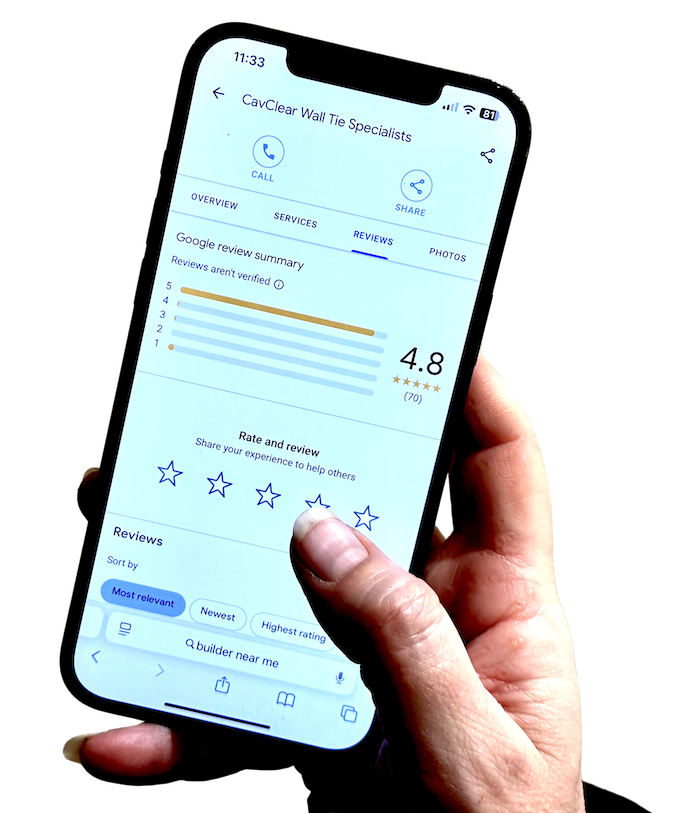
If you run a small local business, you may have seen services described as a reputation management agency, an online reputation management firm, or something similar.
That can sound useful, but it can also sound vague.
For a garage, MOT centre, plumber, electrician, builder, or other local service business, the real question is not whether the label sounds impressive. It is whether that kind of support solves the problem you actually have.
In many cases, small local businesses are not trying to manage every part of their online reputation at once. They are trying to fix something more specific.
They want more recent Google reviews. They want their business to look more trusted when people search. They want fewer long gaps without fresh feedback. And they want this handled in a way that does not create more work for them.
This is where the phrase reputation management agency can become unhelpful. It covers a wide range of services, but not every local business needs a broad agency-style arrangement.
This article explains what a reputation management agency usually does, where that can help, and how to tell whether your business needs that kind of wider support or a simpler managed review growth service instead.
What a reputation management agency usually means
A reputation management agency usually helps businesses improve, protect, or manage how they are seen online.
That can include review generation, review response support, business profile improvements, complaint handling advice, directory clean-up, or broader support around how the business appears across the internet.
For larger businesses, that wider approach can make sense. A company with multiple locations, a bigger marketing budget, and several reputation issues to manage may need support across a lot of moving parts.
For a smaller local business, though, the term can sometimes be broader than the actual need.
That is because many local businesses do not have a complex reputation problem. They have a consistency problem.
They do good work. Customers are often happy. But reviews arrive too slowly, too unevenly, or not at all unless someone remembers to ask.
📖 Definition
A reputation management agency usually offers broader support across several parts of your online presence. That can be useful, but it is not always the same as solving the specific review and trust problem a small local business is dealing with day to day.
So when you see the phrase reputation management agency, it helps to translate it into a more practical question:
What are they actually going to do for my business each month?
That is the part that matters.
What small local businesses are normally trying to solve
Most small local businesses are not looking for a grand online reputation strategy.
They are trying to solve a handful of practical problems.
A garage may want to look more established in Google before a customer decides who to call for an MOT or repair. A plumbing business may want more fresh reviews so it does not look quiet compared with local competitors. An electrician may want a more reliable way to ask for feedback without having to remember every time.
In other words, the usual problems are things like:
- not enough recent Google reviews
- a review profile that looks stale
- inconsistent follow-up after jobs
- uncertainty about how the business appears to new customers
- too much reliance on “we should probably ask more people”
These are day-to-day visibility and trust problems.
They are not always agency-sized problems.
Where an agency can help and where it can be too broad
A reputation management agency can help when the business genuinely has a wide reputation challenge.
For example, that might include reviews across several sites, old inaccurate listings, repeated complaint issues, weak search presence, and no clear process for how customer feedback is handled.
In that case, broader support may be useful because the problem is broader.
But for a smaller local business, broad support can sometimes become too general. You may end up paying for a wider service model when what you really need is reliable help with one important job.
A local roofer with patchy review recency may not need a broad reputation package. They may need a dependable managed process for getting more genuine Google reviews from real customers.
A garage with a decent website and strong service quality may not need a full reputation agency. It may need consistent review growth so its Google presence reflects how good the business already is.
💡 Key Insight
More services does not always mean better fit. For many small local businesses, the real question is whether the support matches the practical problem you need solved now.
More services does not always mean better fit.
The difference between reputation management and review management
This is one of the most useful distinctions to understand.
Reputation management is broader. Review growth is narrower and more specific.
Reputation management usually looks at the wider picture of how your business appears online. Review growth focuses on helping your business build a stronger flow of genuine customer reviews over time.
For a small local business, review growth is often the more immediate commercial need.
That is because fresh reviews affect two things at once. They help your business look more trustworthy to the next person searching for you, and they help your Google presence look more active and convincing.
That does not mean broader reputation work never matters.
It does mean that many local businesses benefit more from getting one important thing handled properly than from signing up to a broad service that touches lots of areas lightly.
If reputation management is the umbrella, review growth is often the part that makes the biggest day-to-day difference for a local business trying to win trust online.
What a local business should expect from online reputation management services
Whether you are speaking to a reputation management agency or a narrower managed review growth provider, the service should still make practical sense.
You should be able to understand what is being handled, how it helps, and what your part in the process will be.
For a small local business, sensible expectations usually include:
- a clear explanation of what the service covers
- a realistic account of what will and will not change
- support that fits how the business actually operates
- a process that does not depend on you constantly chasing it
- reporting that is easy to understand rather than overly technical
You should also expect the language to be clear.
You should be able to ask, “What happens each month?” and get a straight answer.
If the answer feels too vague, too broad, or too dependent on you doing lots of extra admin, it may not be the right fit.
Signs an agency may be the wrong fit for a smaller business
One sign is when the service sounds much bigger than the problem you are trying to solve.
If your main issue is that you need more fresh Google reviews and steadier trust signals, a broad agency package may be more than you need.
Another sign is when the service feels too marketing-heavy for the stage your business is at.
A small local business usually needs practical support, not layers of presentation.
Another warning sign is when the process sounds like it will create more to manage.
If you already feel stretched, a service that depends on lots of check-ins, approvals, meetings, or constant input from you may not remove much mental load at all.
It can also be a poor fit if the provider speaks mostly in general reputation language without understanding how local businesses are actually chosen.
Garages, MOT centres, and local trades are often chosen quickly. A customer searches, compares a few nearby options, looks for signs of trust, and decides. That is why review strength and recency matter so much.
❌ Common Mistake
Choosing a broad service because the label sounds bigger can leave you paying for something wider than the problem you actually need solved.
When a focused managed service makes more sense
A focused managed service often makes more sense when the business has a clear, specific need.
For many local businesses, that need is not “manage everything about our online reputation”. It is “help us build and maintain a stronger Google review presence without turning it into another job”.
That is where a narrower managed approach can be a better fit.
It keeps the work tied to the outcome the business actually needs. It is easier to understand, easier to judge, and reduces the risk of paying for something broader than the situation requires.
If a local garage is already doing good work and getting happy customers, but its reviews come in too slowly, the gap is not awareness of reputation. The gap is follow-through.
If a plumbing company has a decent name locally but too little fresh proof online, the problem is not necessarily broad reputation strategy. It is consistent review growth.
In cases like that, focused support can be more useful than wider support.
Questions to ask before choosing any reputation partner
Before choosing any provider, it helps to ask practical questions that bring the conversation back to what your business actually needs.
Start with this: what exactly will you be handling for us each month?
That question helps separate broad promises from real service. It also gives you a clearer sense of whether the provider is offering something practical or simply using general reputation language.
It is also worth asking how the service fits a small local business like yours. A good provider should be able to explain that clearly. They should understand the pressures of a local service business and show how their approach works in that reality, not just in theory.
You should also ask what part of the problem they are actually solving. If they cannot answer that in a direct way, the service may be too vague. The more clearly they can define the problem, the easier it is to judge whether their service is the right fit.
Another important question is how much depends on you to keep things moving. This matters more than many business owners realise. A service that still relies on you doing lots of remembering, chasing, or managing may not remove much mental load at all.
Finally, ask how they help you strengthen trust online in a practical way. That keeps the focus on outcomes rather than labels.
🗒 Checklist
Before choosing any reputation partner, ask:
- What exactly will you handle for us each month?
- What problem are you solving for a business like ours?
- How much depends on us to keep it moving?
- How will this help us look more trusted online in practice?
- Is this built for a small local business, or for a much broader need?
What matters most for garages, MOT centres, and local trades
For this kind of business, the basics usually matter most.
People want reassurance. They want to see recent proof. They want to feel that other customers have used you recently and trusted the experience enough to leave a review.
That is often more important than a big theoretical reputation plan.
A garage may not need a broad online reputation service to improve outcomes. It may need a stronger flow of fresh Google reviews so it looks active and trusted when local customers search.
An MOT centre may benefit most from recency and consistency, because customers often compare quickly and choose the business that feels most proven. A builder, plumber, or electrician may need a process that keeps reviews moving even when the work diary is full and no one has time to think about follow-up.
What matters most is usually not complexity. It is visible trust.
For many small local businesses, visible trust comes down to whether the review profile feels current, credible, and well looked after.
How to choose a practical approach without adding more admin
The best approach is usually the one that matches the problem without creating a second one.
If your business has a genuinely broad reputation challenge, then broader agency support may be worth exploring.
But if your main need is stronger Google reviews, steadier trust signals, and a more current public presence, then a focused managed review growth service may be the more sensible choice.
The key is not to be overly impressed by the bigger label.
Instead, ask what your business needs most right now. Do you need wide reputation support across lots of channels and issues, or do you need one important part of your reputation handled consistently and properly?
For many small local businesses, clarity on that question saves both money and hassle.
A practical service should leave you feeling that the right job is being handled, not that you have bought something larger than you can use.
See What a More Focused Managed Approach Looks Like
Trusted Reviews 4U helps local businesses build stronger Google trust with managed review growth that fits real day-to-day business life, without turning reputation into another thing to manage. See what this looks like for your business →