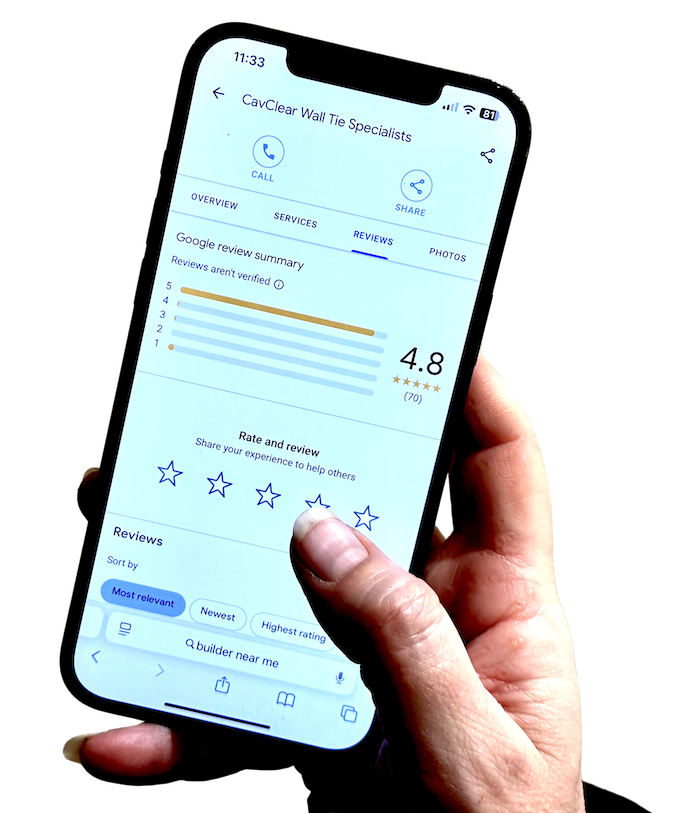
If you have just received a negative Google review, it is very easy to assume the next step is “get it taken down”.
Sometimes that is the right move. Sometimes it is not.
That is the uncomfortable part, and it is why this topic causes so much anxiety for small business owners. Google does remove some reviews, but only when they breach its content policies. Reviews can only be flagged for removal if they violate Google's policies, and Google's policies are the standard for removal. It does not remove a review simply because it is harsh, damaging, unfair in tone, or bad for business. Google’s own guidance is clear that you can report or flag any review, but only policy-violating reviews are eligible for removal, and Google does not step into normal disputes between businesses and customers. When you flag a review, Google's moderation team will make the final decision, and if a review is removed, it is because it was found to violate Google's policies. If a review is successfully taken down, you will see the review removed from your Google My Business profile.
That means the practical question is not “Can I get rid of this?” so much as “Does this review actually break a rule, and what should I do if it doesn’t?”
This article answers that properly. It explains what Google may remove, what usually stays up, how reporting works, what evidence helps, what to do while you wait, and how to protect your reputation when removal is unlikely. The goal is not false hope. The goal is a calmer, clearer process.
📖 Definition
A bad review is only realistically removable when it appears to breach Google’s policies. Removal is about policy violation, not whether the business agrees with the review.
Can you actually remove a bad Google review?
Yes, sometimes. But only in the right circumstances.
Google may remove a review if it violates its prohibited and restricted content policies. This process, often referred to as review removals or remove google reviews, applies to reviews that breach specific guidelines. That includes things like fake engagement (including reviews posted by competitors or bots, which are classified as spam or fake content), conflict-of-interest reviews, harassment, offensive content, personal information, obscenity, impersonation, spam, and off-topic content. Eligible reviews for removal include those that are spam, fake, or contain harassment or threats. If a review does not breach those rules, Google may leave it live even if it is negative and even if you strongly disagree with it.
That distinction matters because many bad reviews fall into the second category. They may feel unfair, exaggerated, one-sided, or commercially harmful, but still not meet Google’s removal threshold.
So the honest answer is this: some negative reviews are removable, but many are not. Reporting works best when you can point to a specific policy problem rather than simply explaining why the review is upsetting.
The types of reviews Google may remove
A removable review usually falls into one of a few clearer buckets.
One is fake engagement. This includes fake google reviews and fake reviews—reviews that are not based on a real experience, paid-for reviews, reviews posted from multiple accounts at one person’s request, or content posted to undermine a competitor. Google may automatically remove reviews that contain spam or inappropriate content, but legitimate reviews are generally not removed.
Another is conflict of interest. Reviews based on current or former employment, contractual or consultory relationships, personal affiliations, or competitor relationships may be removed. Businesses must not offer incentives for reviews or discourage negative reviews.
Another category is harassment or offensive content. Google does not allow content used to harass people or businesses, deliberately provocative attacks, or unsubstantiated allegations of unethical or criminal behaviour. Obscene and profane content may also be removed where it is being used offensively or to intensify criticism.
Personal information can also be grounds for removal. Reviews must not post personal information without consent, including personally identifiable or sensitive information.
Off-topic reviews may be removable too. Maps content must be based on experiences at a specific location, and Google does not allow general political or social commentary, personal rants, or advertising and solicitation in reviews.
Impersonation is another valid removal ground. Users must not impersonate any person, group, or organisation or pretend to be a verified authority.
Misleading reviews or those containing false claims can also be targeted for removal if they violate Google’s policies.
There is also a separate process for negative review extortion scams. These scams may involve a sudden rise in low-star reviews followed by demands for money, goods, or services in exchange for removing them.
🗒 Checklist
Common review types that may be removable
- Fake engagement or competitor-driven reviews
- Conflict-of-interest reviews
- Harassment or offensive content
- Personal information
- Off-topic reviews
- Impersonation
- Extortion-linked reviews
What Google usually will not remove
This is where expectations need to stay realistic.
Google says not to report a review just because you disagree with it or dislike it. Negative reviews, including poor reviews and other reviews that may not be flattering, can highlight areas for improvement and are not always a sign of poor service.
So if a customer had a genuine experience and writes a negative review in a way that does not break policy, Google may leave it up. Legitimate reviews—meaning authentic feedback from real customers—are generally not removed, even if they are negative or critical.
That includes reviews that are blunt, critical, emotionally frustrating, or commercially awkward. A one-star review that feels unfair is not automatically removable. A review that reflects a genuine customer experience but tells the story in a way you dislike is also not automatically removable. Even a review that contains factual inaccuracies may stay live unless it crosses into a policy category like impersonation, fake engagement, harassment, or personal information. The removal test is policy breach, not whether the business agrees with the account. Google may automatically remove reviews that contain spam or inappropriate content, but legitimate reviews are generally not removed.
That is often the hardest part for owners to accept, but it is useful clarity. Once you stop treating every bad review as a removal candidate, you can make better decisions about what to report, what to reply to, and what to outgrow over time.
⚠️ Warning
A harsh, exaggerated, or commercially damaging review is not automatically removable. Google’s test is policy breach, not whether the business thinks the review is fair.
How to report a review on Google step by step
Google gives business owners two main routes to manage reviews on their business listing.
The first is directly from your Business Profile. You can go to your profile, open the reviews, select the review, and flag it by choosing the Report option, picking the reason, and sending the report. Alternatively, you can use the Google Maps app to access your business listing, view reviews, and flag inappropriate ones for removal.
The second is through the Reviews Management Tool. You confirm the account associated with the Business Profile, choose the business, select the option to flag a new review for removal, pick the review, choose the reporting reason, and submit. The same tool also lets you check status later.
After you flag a review, it enters Google’s moderation process. It may take up to 72 hours or more for Google to evaluate the reported review.
The possible statuses include decision pending, report reviewed with no policy violation, and escalated after appeal. If a review is reviewed and Google says there is no policy violation, the business can submit a one-time appeal through the same management flow. You can appeal eligible reviews, including up to 10 at once.
So the basic reporting sequence is straightforward: flag or report, monitor, then appeal once if eligible.
🗒 Step
Simple reporting flow
- Flag the review from your Business Profile or the Reviews Management Tool
- Choose the clearest policy-based reason
- Wait for Google’s review decision
- Check the status
- Use the one-time appeal route if eligible
What evidence helps when reporting a review
The standard review-reporting flow is mostly reason-based, but the quality of your case still matters.
The strongest reports are usually specific. Instead of saying “this is unfair”, it is better to anchor the issue to a policy category: fake engagement, off-topic, conflict of interest, personal information, harassment, impersonation, or extortion.
For suspected extortion, gather evidence immediately, avoid engaging or paying, and keep screenshots of the demands, details of suspicious reviews, names or contact details of the people involved where possible, and timing details showing when the reviews appeared and when the extortion demand arrived.
In normal fake-review cases, useful supporting material may include records showing the reviewer was never a customer, evidence of competitor links, repeated wording across multiple accounts, or screenshots showing threatening or abusive communications elsewhere. When gathering evidence, try to obtain more detail from customers or reviews to better understand the root cause of the issue and address it effectively. That does not guarantee removal, but it gives your report more substance than a general complaint.
Contacting Google Support
When you encounter negative Google reviews that you believe violate Google’s policies, knowing how to contact Google support can make a significant difference. The Google Business Profile platform offers direct ways to report reviews that are fake, inappropriate, or otherwise harmful to your business’s online reputation. You can submit a request for review removal through your business profile or reach out to Google Support for further assistance. When contacting Google, it’s important to provide as much detail as possible—include screenshots, dates, and any evidence that supports your claim. This thorough approach increases the likelihood that Google will take action on your request. By proactively reporting problematic reviews and working with Google, you can help protect your business profile and maintain a positive reputation in the eyes of both existing and potential customers.
What to do while you are waiting for Google’s decision
Do not treat the reporting step as the whole plan.
Review evaluation typically takes several days, and in some cases reviews can also be delayed or removed by automated systems checking policy compliance.
While you are waiting, the most useful thing is to stay organised and avoid panic actions.
Take screenshots. Save the text. Note dates and times. If the review is part of a bigger pattern, record that pattern. If there is any off-platform contact from the reviewer or a third party, keep it.
Then decide whether the review needs a public reply while the report is pending. Not every reported review needs an instant response, but some do, especially if the allegation is serious and the review is visible to potential customers. A calm, factual reply can reduce damage while you wait.
That matters because reporting and replying are not mutually exclusive. In some cases, a sensible reply is part of the protection plan even if you still hope Google removes the review.
What to do if the review is not removed
This is where many businesses lose perspective.
If Google reviews the report and finds no policy violation, that does not mean the review is true, fair, or helpful. It only means Google does not see a policy reason to take it down. Google's moderation team will make the final decision on your removal request, but it's important to note that this is not always conclusive—rejections are common, and businesses may need to provide additional information or resubmit their applications.
At that point, the next formal route is a one-time appeal if the review is eligible. If the appeal is also unsuccessful, and all other options have been exhausted, legal action may be considered as a last resort.
After that, the practical focus usually needs to shift.
Instead of repeatedly trying the same removal request, you are often better off doing three things: write a strong public reply, tighten your complaint-handling process, and work on the wider review pattern around the business.
This is the point where the question changes from “How do I make this disappear?” to “How do I stop this one review doing so much damage?” That is a much more useful question.
💭 Tip
If removal fails, switch from removal mode to reputation-protection mode. A better reply, stronger complaint handling, and a healthier surrounding review pattern often do more good than repeatedly submitting the same request.
When a public reply is better than another removal request
A reply is often the stronger move when the review is unlikely to be removed but still needs answering.
A thoughtful review response is essential for managing your reputation. Google supports owner replies and says helpful, positive replies can show that you value feedback. Customers are notified when you reply, and customers can update their reviews afterwards.
That means a good reply does more than defend you. It shows future readers how you behave under pressure. In fact, future customers often judge your response more than the review itself, so it’s crucial to respond professionally and address the customer's concerns.
In practical terms, a strong review response usually does the following:
- Respond professionally and courteously, especially if the review is unfair but complies with Google's policies.
- Acknowledge the customer's concerns and apologize sincerely.
- Offer actionable solutions, such as refunds or follow-up calls, to resolve issues.
- Move detailed complaint resolutions offline by providing a direct phone number or email, especially for serious complaints.
- Use the "ERA" method: empathize with the customer, rectify the issue, and move the conversation offline for resolution.
- Respond within 7 days, and ideally within 24 to 48 hours, to demonstrate attentiveness and accountability.
- Go overboard to make things right—this shows you care about resolving issues and can turn a negative into a positive.
What does not help is sounding angry, sarcastic, defensive, or desperate to win the argument in public.
If the review clearly breaches policy, report it. But if it also looks likely to stay live, a good review response can be more valuable than another round of frustration.
How to reduce the damage of a negative review over time
Most owners feel as though a negative review will define the business forever.
Usually, it does not.
What tends to do the damage is not one bad review on its own, but the absence of enough recent, genuine context around it. If a business has a thin review profile, one harsh review can dominate. If the business has a healthier, more current pattern, that same review often has much less weight in the mind of a future customer. Building a strong foundation of good reviews and positive ones is essential for protecting your business reputation and brand reputation. This proactive approach helps strengthen your brand's online reputation and makes it easier to prevent negative reviews from having a lasting impact.
Proactively asking satisfied customers for feedback can help dilute the impact of negative reviews. Consistently delivering exceptional customer experiences and actively seeking feedback can help prevent negative reviews in the future. Over 90% of customers read online reviews before visiting a business or using its services, and 63.6% of consumers will specifically check Google reviews before visiting a business. Additionally, 94% of searchers will avoid businesses with bad reviews. A study found that most purchases were influenced by reviews with an average star rating between 4.2 and 4.5, indicating that mixed reviews can be perceived as more trustworthy than perfect ratings.
That does not mean you should ignore the problem or try to bury it with panic tactics. It means reputational protection is cumulative. A bad review hurts more when the surrounding profile is quiet, old, or inconsistent.
Using Google Business Tools
Google Business Tools, especially Google Business Profile, are essential for effective reputation management. These tools give you control over your business’s online presence, allowing you to monitor and respond to reviews, report inappropriate content, and keep your business information up to date. With Google Business Profile, you can engage directly with customers by responding to their feedback, which not only addresses their concerns but also demonstrates your commitment to customer service. If you spot reviews that contain inappropriate content or violate Google’s policies, you can quickly report them through your business profile dashboard. By actively using these tools, you strengthen your online reputation, show potential customers that you value feedback, and ensure your business is represented accurately across Google’s platforms.
A practical reputation protection plan for small businesses
If you want a calmer approach, think in this order.
First, assess removal eligibility properly. Does the review appear fake, abusive, off-topic, conflicted, extortionate, impersonated, or policy-breaching in some other clear way? If yes, report it with a specific reason. Removing a Google review can take anywhere from a few days to several weeks, depending on the review's nature and Google's assessment. If a review is deemed fake or defamatory, your company can escalate the issue to Google Business Support for manual reassessment. Google may automatically remove reviews that violate their policies, but companies can also submit applications to request removal of specific reviews.
Second, gather evidence before you act emotionally. Screenshots, dates, and context make your case stronger.
Third, decide whether a public reply is needed while the report is pending.
Fourth, if Google leaves the review live, move quickly from removal mode to reputation-protection mode. Reply well. Tighten complaint handling. Make sure future customers are not seeing a thin, unmanaged profile around that one negative review. Even one negative review on major review sites like Google Reviews, TripAdvisor, or Amazon can impact your company's reputation and conversion rates, so it's important to address or mitigate its effects and actively work to remove negative reviews when possible.
Fifth, stop treating reputation as a reactive job. Businesses are usually most exposed when they only deal with reviews after something goes wrong.
That is the practical difference between ad hoc damage control and a steadier managed approach. A managed reputation process does not promise that every bad review can be removed. It reduces the chances of panic, improves response quality, helps surface concerns earlier, and supports a healthier review pattern over time.
Want a More Consistent Reputation-Protection Process?
Trusted Reviews 4U helps local businesses handle reputation more steadily, so complaints are not only dealt with after the damage is done. The aim is a calmer managed process, not guesswork and panic every time a difficult review appears. Try the demo →