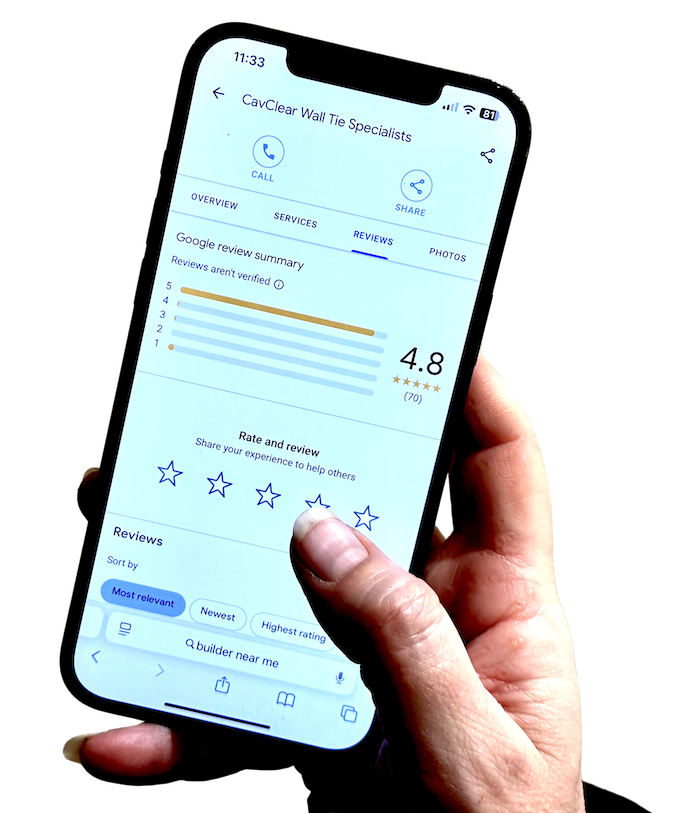
Most customers have already made up their mind before they call. They searched, they scanned your Google listing for a few seconds, and they either felt confident enough to tap your number or kept scrolling. Understanding what is online reputation - and how quickly it forms in a stranger's mind - is the starting point for every local garage and home service business that wants to win more new customers consistently.
What a Customer Actually Sees When They Search for a Local Garage or Tradesperson
Picture a car owner in a local town whose MOT is due next week. They open Google on their phone and type something like "MOT garage near me" or "car service [town name]". What appears is not a simple list of names and phone numbers.
Google displays a map and a short list of local businesses - typically three or four. Each one shows a business name, a star rating, a review count, an address, and sometimes opening hours. This block of results is called the local pack, and it is the first thing most people see when they search for a local service. Below it sit organic website results, but most people do not scroll that far before forming an opinion.
When a customer taps on a listing to find out more, they land on a Google Business Profile. This is where the real judgement happens. They see the full star rating, the total number of reviews, the most recent reviews, any photos, and - critically - whether the business owner has bothered to respond to what customers have written.
What appears on a Google Business Profile
Star rating and total review count, review recency (the dates of the most recent reviews), individual review text and owner responses, business photos, opening hours, and contact options. Together, these form a customer's first impression of your business - before a single word has been exchanged.
This is the digital shopfront that every first-time customer walks past. Whether it looks welcoming and credible, or quiet and uncertain, is determined entirely by what is - or is not - there.
How Quickly Customers Make a Decision Based on Your Google Listing
The uncomfortable truth is that customers do not study your listing carefully. They scan it. The whole process - from seeing your profile to deciding whether to call - typically takes well under a minute, and often closer to a few seconds.
This is not unique to garages or tradespeople. It reflects how people research local businesses before booking across almost every service category. They look for reasons to feel confident, and when those reasons are absent, they look elsewhere. There are usually two or three other businesses listed right alongside yours, and moving on takes a single tap.
The signals customers use to make that snap judgement are specific and consistent. They include:
- The star rating - anything below 4.0 creates hesitation
- The review count - a small number of reviews can feel less reliable than a larger one, regardless of the star score
- Review recency - when the most recent review was posted matters more than most owners realise
- Owner responses - their presence (or absence) signals how the business treats its customers
- Photo quality - a profile with no photos feels incomplete
Together, these signals answer the question every first-time customer is really asking: "Can I trust this business with my car, my boiler, or my home?" If the listing does not answer that question clearly, the customer moves on.
Why a Strong Offline Reputation Does Not Automatically Translate Online
This is the gap that catches many established businesses off guard. A garage that has been trusted in its community for fifteen years, with a loyal customer base and strong word-of-mouth, can look less credible online than a newer competitor that has been open for eighteen months.
The reason is straightforward. Loyal customers often do not leave reviews - not because they are unhappy, but because they were never asked, it did not occur to them, or they did not know how. Meanwhile, the newer competitor has been consistently asking every customer for a Google review from day one, so their profile looks active, current, and trustworthy.
The offline-to-online gap
A first-time customer searching Google has no way of knowing about your real-world reputation. They cannot see your return customer rate, your years of experience, or the quality of your work. They only see what is on the screen. Your offline reputation is invisible to them unless it is reflected in your online profile.
Review recency is a particularly sharp example of this. A garage with forty reviews, where the most recent one was posted fourteen months ago, can feel stale to a first-time searcher - as if the business has slowed down, changed hands, or is no longer actively serving customers. That feeling forms even when none of those things are true.
The solution is not to manufacture a reputation - it is to make the genuine reputation visible. The customers are already there. The good experiences are already happening. What is usually missing is a consistent, managed process for turning those real experiences into Google reviews.
The Signals Customers Use to Judge a Business in Under 30 Seconds
When someone lands on your Google Business Profile, they are not reading every review. They are scanning for patterns. Here is what that scan actually looks like in practice.
First, the star rating draws the eye. It is the most prominent visual element on the listing. A rating in the high fours reads as credible. A rating that drops into the low fours, or shows only a handful of reviews alongside it, creates a moment of doubt.
Next, the customer glances at the most recent reviews. This is where recency matters. If the most recent review is from a few weeks ago, the business feels active. If it is from many months ago, the profile feels dormant - and a dormant profile raises questions.
Then they look at how the owner responds. This is the part most business owners underestimate. A thoughtful, polite response to a review - positive or negative - tells a first-time customer far more than the review itself. It says: this business is paying attention, and they care about how customers feel.
What a customer is really scanning for
Customers are not looking for perfection. They are looking for evidence that the business is real, active, and takes its customers seriously. A profile with regular reviews and consistent owner responses communicates all three of those things without a single word of sales copy.
What One Unanswered Negative Review Can Do to Months of Good Word-of-Mouth
Negative reviews happen to almost every service business eventually. A job that did not go as expected, a miscommunication, a customer who felt their concern was not addressed - these things occur even when a business is doing most things right. The review itself is rarely what does the lasting damage.
What a first-time stranger notices is whether the business responded. When there is no response to a negative review, the customer reading it fills in the gap themselves. They assume the business either did not notice, did not care, or had no defence. None of those assumptions are good for trust.
A calm, professional response does something important. It reframes the situation. It shows that the business takes concerns seriously, that they communicate respectfully, and that they are the kind of outfit a customer can expect to hear from if something goes wrong. That is actually reassuring to a first-time buyer.
The silence problem
An unanswered negative review does not just sit there quietly. To every new customer who reads it, the absence of a response is itself a signal. It says the business either missed it or chose not to engage. In both cases, the customer draws their own conclusions - and those conclusions are rarely charitable.
Consider a typical scenario for a busy local MOT centre. A customer leaves a two-star review saying their appointment ran over and nobody kept them informed. The review sits unanswered for three months because the owner is always on the tools and does not regularly check the profile. Every person who searches for that garage in those three months sees the review and the silence alongside it.
In this kind of case, the damage is not from the review alone - it is from the accumulated effect of new customers seeing an unaddressed concern and drawing their own conclusions. A managed approach, where negative feedback alerts flag concerns quickly, means the business owner can respond promptly and professionally before that pattern takes hold.
Illustrative example based on a representative review-growth scenario.
What It Looks Like When a Business Manages Its Reputation Versus Leaves It to Chance
The difference between a managed listing and an unmanaged one is visible to a first-time customer within seconds.
The unmanaged listing
The listing has a reasonable star rating but most of the reviews are old. The most recent one was posted eight or nine months ago. There are no owner responses visible, and a couple of older reviews mention things the owner would have wanted to address. The real-world reputation of the business - years of good service, loyal regulars, fair prices - is completely invisible.
To a first-time searcher, this reads as a business that does not see its online profile as important.
The managed listing
The same business, managed differently, looks strikingly different. Reviews arrive consistently. There are responses to almost every review - brief, professional, and personal enough to feel genuine. Recent reviews mention specific jobs, which makes the profile feel real and active. Even the one less-positive review has a measured, courteous response beneath it.
This listing communicates something the unmanaged version cannot: that the business is present, attentive, and accountable. A first-time customer does not need to take a leap of faith - the evidence is already there.
Two garages, one search result
A customer searching for a local MOT garage sees two listings side by side. Garage A has 47 reviews, the most recent posted two weeks ago, with owner responses on most of them. Garage B has 52 reviews but the most recent is from eleven months ago, and no responses are visible. In this representative scenario, most customers choose Garage A - not because it has more reviews, but because it looks like a business that is actively serving people right now.
Illustrative example based on a representative review-growth scenario.
Our TR4U process
Building a visible, trustworthy online presence does not happen by accident. TR4U manages the entire review growth process on behalf of local businesses, so the work gets done consistently without landing on the business owner's to-do list.
Our TR4U process
Assess
We review your current Google Business Profile to understand where things stand - your existing star rating, review count, recency of your most recent reviews, and whether owner responses are in place. For garages and local service businesses, this often reveals a gap between the quality of the real-world service and what a first-time searcher actually sees. We also check how your listing compares to nearby competitors so we know exactly what a new customer is weighing you against.
Build
We set up your personalised review page - a dedicated link that makes it simple for your customers to leave a genuine Google review with minimal friction. We also prepare your customer contact list and configure your feedback routing, so that customers with concerns are given a private channel to raise them before they head to Google. All customers can still access Google and leave a review regardless of their rating. Your Dedicated account manager handles the setup so you are not navigating any of this alone.
Launch
We launch managed SMS and email review request campaigns to your recent customers - sent at the right time, in a way that feels natural rather than pushy. Our approach is Google Compliant throughout, meaning every request follows Google's guidelines for genuine, unbiased reviews. Volume is managed carefully and intentionally to keep growth looking natural and consistent, not sudden or suspicious.
Manage
We stay involved. If review momentum slows, we step in. If a concern comes through the feedback routing, you receive a negative feedback alert promptly so you can respond before it becomes a problem on your public profile. Our Managed Service means the work does not stop after the first batch of reviews - it keeps running so your profile stays current, active, and trustworthy to every new customer who finds you.
Ready to Make Your Reputation Visible?
Start Building the Online Reputation Your Business Has Already Earned
Try TR4U free for 14 days and we'll get you 10 new reviews or we'll give you your money back.
Review Growth