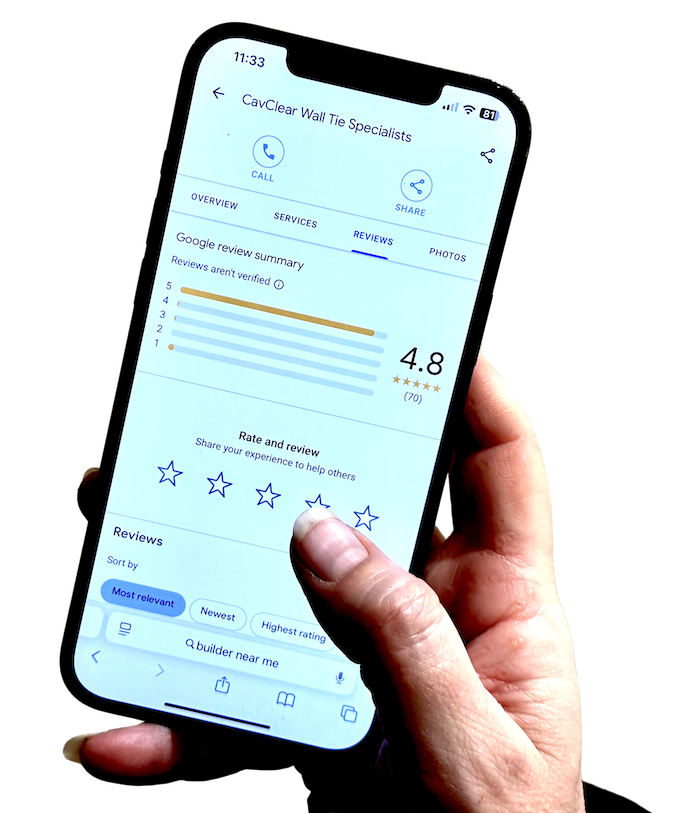
Google reviews for garages are one of the clearest signals local drivers use to judge whether a garage is trustworthy, active, and worth contacting, and they also influence how strongly that business appears in local search. If you run a garage, MOT centre, or tyre and servicing business, there is a good chance your real customer satisfaction is stronger than your online reputation makes it look. Most happy customers do not leave a Google review unless they are asked at the right time, in a simple way, so many good garages lose enquiries not because the work is poor, but because the evidence online is thin.
That creates a gap between the quality of work you do every day and what local drivers see when they compare you with nearby competitors. A lack of visible testimonials and good reviews can make even a good garage appear less trustworthy, regardless of the actual service quality. This is why the topic matters commercially: your Google review profile affects visibility, trust, and whether a driver feels confident enough to call or book, which in turn affects enquiries and revenue.
For many garages, this is not a quality problem. It is a process problem. This guide looks at why Google reviews matter for garages, why strong businesses often still struggle with low review volume, how reviews shape local search and customer decisions, and what practical steps help close the gap between real customer satisfaction and visible online reputation. When drivers compare garages, they often use the filter tool on Google Maps to show only those with 4.5+ star ratings, making it even more important to maintain a strong review profile. Local drivers also look for links to customer reviews and testimonials, which help build trust and allow potential customers to form an opinion about whether a business is a good garage.
💡 Key Insight
For most garages, weak review volume is not a sign of poor workmanship. It is usually the result of relying on customers to leave feedback voluntarily, rather than asking consistently after an MOT, service, repair, or tyre visit. When that happens, the profile becomes weak in both volume and recency.
The real problem with voluntary reviews
A lot of garage owners assume that if customers are happy, reviews will appear naturally over time. In practice, that is rarely what happens.
Think about a typical week in a local garage. Cars come in for MOTs, servicing, diagnostics, brakes, tyres, batteries, and general repairs. Many customers leave satisfied, thank the team, pay, and drive away. From the garage’s point of view, that is a successful job. From Google’s point of view, though, nothing happened unless the customer leaves a review. Many customers have a positive experience when getting their car serviced, but this often goes unshared unless prompted.
That silence creates a distorted picture. A garage may complete dozens of solid jobs each week and still add only the occasional review. Positive experiences, such as having a car serviced efficiently, are less likely to be reflected in online reviews. Meanwhile, the few customers who feel frustrated are often more motivated to say something publicly. Over time, that leaves some excellent garages looking average online, while competitors with a more organised review process look stronger than they really are.
How does that silence affect local search?
Most customers start by opening the Google Maps app or website to search for local garage services. When someone searches for phrases like “garage near me”, “MOT centre”, “car service near me”, or “tyre fitting near me”, they are usually comparing several local options quickly. Reviews help shape which businesses stand out first.
A garage with a steady flow of recent reviews generally looks more established than one with only a handful, even if the second business does better work. That stronger profile can make the business look more active, more trusted, and more relevant to local searchers.
For garages and MOT centres, review recency matters because drivers are not just looking for a garage that was well reviewed last year. They want reassurance that people are still booking MOTs, services, and repairs there now. Customers often look for good service and a reasonable price in recent reviews, as these are key factors that influence their decision. A profile with fresh reviews often feels safer than one where the latest feedback is several months old.
A thin profile creates the opposite effect. If your garage has only a small number of reviews, or long gaps between them, your listing can look quieter and less proven. Even if your rating is decent, the lack of volume makes it harder to compete with nearby garages that have built stronger review momentum.
🧭 Framework
Review volume tends to affect perception in stages:
0–20 reviews — A thin profile. Drivers may struggle to judge whether the garage is established, busy, or consistently reliable.
20–50 reviews — A more believable base, but still light if nearby competitors have stronger profiles.
50–100 reviews — A more competitive position for many town and city searches. At this stage, consistency and recency start to matter more.
100+ reviews — A stronger trust signal for most local drivers. Attention then shifts toward maintaining a good average rating, adding fresh reviews regularly, and avoiding long quiet gaps.
Why good garages can still look second best
One of the most frustrating parts of this is that better service does not automatically produce a better online reputation.
A garage can be honest, reliable, fairly priced, and technically strong, but still lose out to a competitor that simply asks for reviews more consistently. From a customer’s point of view, that competitor looks more proven. They have more recent feedback, more visible social proof, and more signs that other drivers trust them.
That matters because most people comparing local garages are not making a detailed technical assessment. They are looking for reassurance. They want to feel that other people have used the business, had a decent experience, and would use it again. Reviews provide that reassurance quickly. Phrases like “excellent service” and “highly recommend” in customer words help build trust and credibility almost instantly.
🔧 Example
Illustrative example:
Garage A completes strong work and has loyal customers, but only has 14 Google reviews because nobody asks in a consistent way, and its most recent review was four months ago.
Garage B is not dramatically better, but it asks customers after MOTs, services, and tyre jobs as part of its normal process. It has 85 reviews, with several left in the past few weeks. The words used in these reviews, such as “excellent service”, can make a significant difference in how trustworthy and appealing the garage appears.
When a driver compares the two online, Garage B usually appears more established, more current, and lower risk. In many cases, that is enough to win the enquiry before Garage A even gets a chance.
The conversion problem after people find you
Reviews do not just affect whether people find your garage. They also affect what happens next.
Imagine a local driver comparing several businesses for an MOT and service. Prices are broadly similar. Services are broadly similar. At that point, the decision often comes down to confidence. Customers are looking for a hassle-free and pleasant experience, and a strong review profile reassures them that the process will be smooth and comfortable.
If one garage has a fuller review profile, it tends to feel more dependable. A stronger profile lowers perceived risk. A recent profile also reassures people that the garage is still busy, still reliable, and still delivering the same standard of service. Positive reviews can also influence a customer’s decision to purchase a service or even a vehicle from the garage, as they highlight trustworthiness and satisfaction.
A garage with only a handful of reviews may still get the click, but it often has to work harder to win the booking. The customer may keep comparing, delay calling, or choose the garage that feels more established. This is where missed reviews turn into missed revenue.
The hidden gap between real satisfaction and visible reputation
The most useful way to think about this is as a gap.
On one side is your real customer experience: the jobs done properly, the honest advice, the honest service, the repeat customers, the emergency tyre replacements, the MOT issues explained clearly, the value for money, and the servicing work that keeps people coming back. These aspects, such as honest service and value, are key to customer satisfaction but are often not fully reflected in online reviews.
On the other side is your visible reputation: what shows up on Google when somebody who has never used you before tries to judge whether you are trustworthy. Many garages emphasise the importance of providing honest advice and value for money, but this commitment is not always visible to new customers without reviews.
For many garages, those two things are nowhere near as close as they should be. Without a consistent way to ask for reviews, each week adds more satisfied customers whose experience never becomes visible. Then one negative review lands, and because the positive volume is too low to balance it out, the listing looks more mixed than the business deserves.
📌 Important
A small number of critical reviews can carry a lot of weight when the overall profile is thin. If your garage only has a limited number of Google reviews, one unhappy customer can shape perception far more than they should.
What this costs a garage in practical terms
The cost is usually felt in four places.
First, fewer people click through from search results. If nearby garages look more established, they often attract more attention first, especially when customers are searching for reasonable pricing and accommodating service.
Second, fewer of the people who do find you go on to contact you. A thin profile creates hesitation, especially for first-time customers. Transparent pricing and an accommodating approach can help build trust and reduce hesitation.
Third, the enquiries you do get may be less efficient to convert. When trust is weaker at the start, more people ring around or compare more options.
Fourth, you can end up paying more elsewhere to make up the gap. If reviews are not helping enough with trust and visibility, then more pressure falls on paid ads, discounts, or follow-up just to maintain the same level of work.
This is why doing nothing is not neutral. Passive review collection usually leaves money on the table month after month.
A simple way to estimate your review gap
You do not need perfect data to get a useful picture. A simple working estimate can be enough.
Start by thinking about how many customers your garage serves in a typical month. Then estimate how many leave happy enough to recommend you. For most decent garages, that number will be much higher than the review count suggests.
Customers who have decided to leave a review can help reduce doubt for future customers by sharing their honest experiences. This transparency reassures those who may have doubts about independent garages or have had negative experiences elsewhere.
Then ask a second question: how many of those customers are currently being asked for a Google review in a timely, consistent way?
For many garages, the honest answer is “some of them”, “when we remember”, or “hardly any”. That is where the gap sits, and it is where a simple process built around a direct Google review link and QR code can make it much easier for happy customers to leave feedback.
🗒 Checklist
A practical way to assess your current position:
Estimate how many MOT, service, repair, and tyre customers you handle in a normal month.
Estimate how many leave broadly satisfied.
Check how many Google reviews you added in the last 30 days.
Check when your last 5 reviews were posted.
Look at how recent your competitors’ reviews are, not just how many they have.
Ask whether your profile looks active and trusted today, not just historically.
Ask whether your current review profile reflects the real standard of work you do.
Remember: if customers have doubts or change their mind, they can also edit or delete their review later if needed.
Why garages struggle to fix this consistently
Most garages do not ignore reviews because they do not care. They ignore them because the day gets busy.
Front desks are dealing with bookings, keys, calls, authorisations, parts delays, and jobs overrunning. Technicians are focused on getting work done properly. Owners and managers are trying to keep the workshop moving. Staff work hard to ensure all jobs are carried out professionally, but this effort is often not reflected in reviews.
In that environment, review collection becomes an “if we get round to it” task. Sometimes it happens. Usually, it slips. That is why this is better treated as an operational process than a motivation issue.
Consistency matters more than occasional bursts
Another common mistake is relying on occasional pushes. A garage might ask for reviews actively for a week or two, get a lift, then stop when things get busy again.
That usually creates a stop-start pattern. Reviews come in bursts, then go quiet. From the outside, the business can look inconsistent or inactive. Reviews should reflect the whole experience across multiple occasions, not just isolated events, so potential customers get a true sense of the garage’s reliability and service quality, which is why designing effective, well‑timed review requests makes such a difference to how many people actually respond.
A steady flow is usually more valuable than a short spike. It helps genuinely great service show up online more clearly. Regular review activity makes a garage look current, trusted, and active. It also builds confidence over time, because new customers can see that people are still using the business now, not just that they did six or twelve months ago, especially when this is supported by simple, consistent reputation monitoring processes.
That is why review recency matters so much for garages and MOT centres. A recent review does more than add one more star rating. It signals that the workshop is active, customers are still coming through the door, and the business is still delivering work people are happy to talk about. Many customers mention being impressed by the consistent, high-quality service they receive over multiple occasions, which strengthens trust in the garage.
What recovery can look like
The encouraging part is that this problem is usually reversible.
A garage with a strong underlying customer experience can often improve its visible reputation faster than it expects once review requests become systematic. The business is not trying to manufacture sentiment. It is simply making it easier for happy customers to say publicly what they already think. Professional service and knowledgeable staff contribute to more pleasant customer experiences, which in turn lead to better Google reviews for garages.
That can help in three ways quite quickly. The profile begins to look fuller. Reviews become more recent. And the overall picture becomes fairer, because positive experiences stop disappearing into silence.
For a garage, that improvement in recency can be especially valuable. It helps the business look current, credible, and active at the exact moment a local driver is deciding who to trust. Additionally, a professional response to negative reviews demonstrates the garage’s commitment to customer satisfaction and can help improve overall perception, and some businesses choose to use managed reputation services to automate review follow‑up and responses so this happens reliably.
Closing thought
If your garage does good work but your Google profile looks thinner, quieter, or less current than it should, that is not just a marketing frustration. It is a commercial issue. Being RAC recommended, offering warranty support, and having knowledgeable, helpful, polite, and courteous staff — the guys in the workshop — all contribute to a positive reputation.
When happy customers stay silent, weaker competitors can look stronger than you. In a world full of options, professionalism, honesty, and the ability to deliver fixed pricing and reliable vehicle repairs set a garage apart. Competitors can win more visibility, more trust, and more bookings simply because they collect reviews more consistently and keep their profile fresh.
The good news is that the fix is usually straightforward. Being available by phone and providing clear communication helps build trust, especially when staff answer customers’ questions clearly. A consistent review process can help your profile grow in both volume and recency, bringing your visible reputation closer to the real quality of your workshop, your team, and your service.
Also, keep in mind that a perfect 5.0 score with a large number of reviews can sometimes indicate that negative feedback is being managed or removed, so customers should look for genuine, balanced feedback, and may also compare local garages on their road or nearby. For garages, that means making sure the basics are in place, starting with a properly set up Google Business Profile for the garage and then using it to reflect the real standard of work you do through consistent, recent Google reviews from satisfied customers.
In summary, a well-run garage operates like a train — efficient, powerful, and reliable — spotting issues early and looking after every vehicle that comes through the door.