If you run a garage, MOT centre, or local trade business, you have probably heard some version of this before: reviews help SEO.
That is true, but it is also one of those phrases that gets repeated so often that it stops being useful. You are left with the same question afterwards: what does that actually mean for my business?
For most local business owners, “SEO reputation management” sounds more technical than it needs to be. It can sound like something built for agencies, software sellers, or people who spend all day looking at dashboards.
In practice, it is much simpler than that. For a local business, SEO reputation management is really about how your public reputation affects how easily people can find you, trust you, and choose you.
That means your Google Business Profile, your reviews, your rating, your review recency, and the general signals that show your business is active, trusted, and worth contacting.
This article explains that in plain English. It looks at how reviews and local visibility work together, what actually matters, and where local businesses often get distracted by the wrong things.
What SEO reputation management actually means in plain English
In plain English, SEO reputation management means looking after the parts of your online reputation that influence how visible and convincing your business appears in local search.
It is not just about “getting your name out there”.
It is about the connection between two things: how often your business appears when people search locally, and how trustworthy your business looks when it does appear.
Those two things work together.
A garage might show up in Google Maps when someone searches for “MOT near me”. A plumber might appear when someone searches for “boiler repair in Worcester”. An electrician might show up when someone searches for “local electrician”. That is the visibility side.
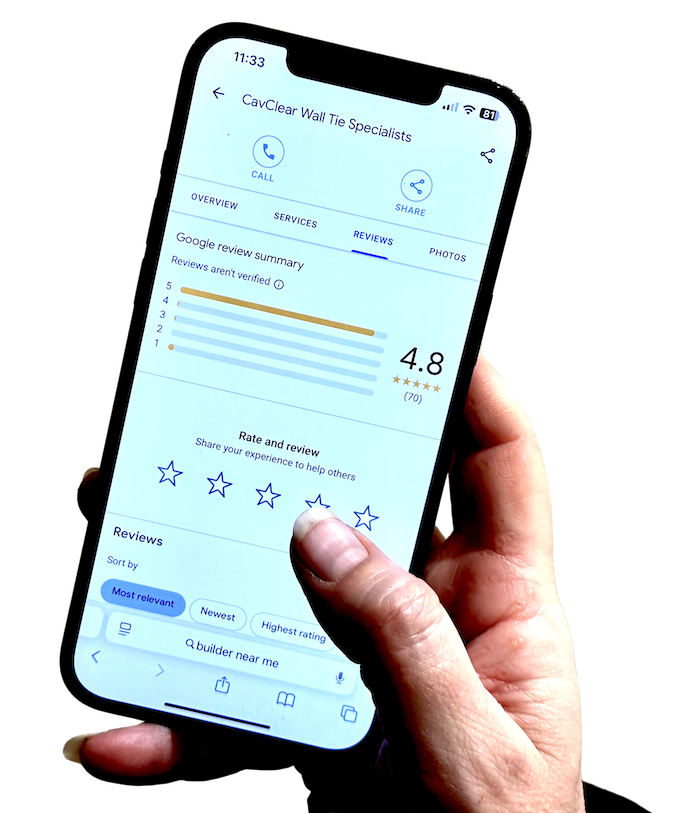
Then the person searching sees the business name, the star rating, the number of reviews, and often a recent review snippet. That is the reputation side.
📖 Definition
SEO reputation management, for a local business, is the work of keeping your public reputation strong enough to support both visibility and trust in local search.
The reason this matters is that those two moments are not separate. Your reputation does not just affect what happens after someone finds you. It can also influence whether they notice you, trust you, and click in the first place.
For a local business, that makes reviews more than a nice extra. They become part of how your business is discovered and judged.
How reviews influence local search visibility
Google uses many signals to decide which local businesses to show. Relevance, distance, and prominence all play a part. Reviews sit inside that wider picture.
They help in a few practical ways.
First, reviews contribute to prominence. A business with a stronger review profile usually looks more established than one with only a handful of old reviews. Google wants to show options that appear useful and credible to searchers, so a healthy review profile can support that.
Second, reviews add context. Customers often mention the kind of work you do, the area you cover, and the experience they had. Over time, that creates a clearer picture of your business.
If multiple people mention MOTs, tyre fitting, emergency call-outs, boiler servicing, or roofing repairs, that helps reinforce what your business is known for.
Third, reviews influence behaviour. Even if two businesses appear side by side, the one with a stronger review profile often looks more convincing and is more likely to earn the click, the call, or the direction request.
It is worth being realistic here. Reviews alone do not carry your whole local search presence. A poor Google Business Profile, inconsistent business details, weak service information, or an incomplete website can still hold you back.
But reviews absolutely shape how competitive you look in local search.
Why trust signals matter before someone clicks or calls
Many business owners think reviews matter only after someone lands on their website.
In reality, trust signals matter much earlier in the decision process.
Think about how people search locally. They usually do not study every listing in detail. They scan. They compare. They make quick judgements.
If your business appears with 4.8 stars, a healthy number of reviews, and something recent on show, that creates reassurance straight away. It tells the person searching that other people are using you now, not just that they used you a few years ago.
If another business appears with a similar rating but only a small number of reviews, or nothing recent, it can feel less certain. Not necessarily bad. Just less convincing.
That matters because local search is often a trust-first environment. Before someone visits your website, before they fill in a form, before they phone you, they are already asking themselves whether the business looks active, whether other people seem happy with them, and whether they would feel comfortable contacting them.
💡 Key Insight
Reputation does not only help after someone finds you. It helps shape whether you get noticed and trusted in the first place.
This is especially true for garages, MOT centres, and local trades, where the customer usually wants someone reliable rather than someone flashy.
The role of review recency, review volume, and consistency
A lot of businesses focus only on star rating. That is understandable, but it misses a big part of the picture.
A strong review profile usually has three qualities working together: recency, volume, and consistency.
Review recency
Recent reviews show that your business is active now.
If your last review was 14 months ago, a potential customer may not think, “This business must be terrible.” But they may wonder whether you are still operating at the same standard, whether you are still busy, or whether customers still feel strongly enough to leave feedback.
For local businesses, review recency often matters more than people expect. A steady trickle of current feedback can be more reassuring than a strong rating built mostly on older reviews.
Review volume
Volume gives context.
A 5.0 rating from 6 reviews does not carry the same weight as a 4.8 rating from 146 reviews. Most people understand that instinctively. The second business feels more proven.
Volume also helps because it makes your overall profile harder to distort. One awkward review has more impact when you only have a small number.
Consistency
Consistency is what ties the whole thing together.
Some businesses get a burst of reviews, then go quiet for months. Others build a more even pattern over time. The second group usually looks more stable and more credible.
That is important because consistency signals that your reputation reflects ongoing customer experience, not one push from last summer when someone remembered to ask.
🗒 Checklist
A strong review profile usually shows:
- recent feedback, not just old reviews
- enough volume to feel credible
- a consistent pattern rather than random bursts
When people talk about “review growth”, this is what matters most in practice: not random spikes, but steady visible proof.
How reputation affects local search performance beyond star rating
Star rating matters, but it is not the whole story.
There are several ways your reputation can affect local search performance beyond the number itself.
One is the wording inside your reviews. Customers naturally describe what you did, how quickly you helped, whether you were friendly, whether the job was explained clearly, and whether they would use you again. That kind of language helps build relevance and trust.
Another is response quality. Even though this article is not mainly about review replies, it is worth saying that a business which looks attentive and present can feel more trustworthy than one that ignores everything.
Another is conversion confidence. Two businesses might rank similarly, but the one with the stronger review profile often gets more of the actual enquiries. That means reputation influences performance even when ranking position itself has not dramatically changed.
So reputation is not just about how your profile looks. It also affects what people do once they see it.
Common mistakes local businesses make when trying to improve visibility
One mistake is treating reviews as an occasional task. Someone remembers to ask for a week, then things get busy, and it stops again. That creates gaps and weakens momentum.
Another is obsessing over rating while ignoring recency. A business can have a very good rating and still look quiet if nothing new has appeared for too long.
A third is asking too vaguely. Saying “leave us a review if you get a chance” is not the same as having a clear, consistent process that makes following through more likely.
Another common mistake is thinking visibility is only about websites and technical SEO. Those things matter, but for many local businesses the public trust layer is just as important. If your Google presence looks thin or stale, that affects what happens before someone ever reaches your site.
Some businesses also become so worried about negative feedback that they avoid asking altogether. That usually creates a worse long-term outcome. A quiet review profile rarely builds confidence.
❌ Common Mistake
Trying to “fix SEO” while ignoring stale reviews, inconsistent follow-up, or a thin Google profile usually misses the real issue.
The goal is not to force a perfect public image. It is to build a genuine, current one.
A simple way to strengthen reviews and search visibility together
The simplest approach is not complicated.
You need a way to ask customers consistently, close enough to the job or visit that the experience is still fresh, and in a way that does not depend on you remembering every time.
That matters because most review problems are not caused by bad intentions. They are caused by inconsistency.
A garage may do excellent work all month and still collect very few reviews simply because nobody had the time or headspace to keep asking. A plumber may have happy customers every week but still look quiet on Google because follow-up is hit and miss.
The practical answer is to focus on a small number of habits:
- make review asking part of the normal service rhythm
- keep the request simple and easy to act on
- aim for a steady flow rather than bursts
- keep your Google profile active and accurate
- pay attention to how current your public reputation looks, not just your average rating
That way, your reputation improves and your search presence becomes stronger at the same time.
When reputation issues start affecting enquiries and local trust
Sometimes the impact is obvious. Sometimes it is quieter.
You may notice it when competitors with weaker real-world service seem to attract more attention simply because they look more current online.
You may notice it when your rating is fine, but your review profile feels stale compared with others around you.
You may notice it when customers say they nearly did not contact you because they could not get a clear sense of what recent customers think.
These are not always dramatic warning signs. Often they show up as lost confidence at the margins.
That matters because local decisions are often made on thin differences. A customer may compare three garages, two electricians, or four plumbers. If your public trust signals feel less current, that can be enough to push the enquiry elsewhere.
That is why reputation management is not just about protecting against obvious damage. It is also about avoiding quiet trust loss.
How to approach SEO reputation management without creating more admin
The most useful mindset is to stop treating this as a technical SEO project and start treating it as a consistency problem.
You do not need to become an expert in every ranking factor. You do not need to spend your evenings reading local SEO forums. And you do not need more admin for the sake of it.
What you need is a dependable way to keep your reputation current.
That means keeping your Google Business Profile accurate, keeping reviews moving steadily, paying attention to customer experience, and making sure your public trust signals do not go stale.
For most local businesses, that is the practical version of SEO reputation management.
It is calmer, more realistic, and more useful than turning it into a technical project you never quite have time to manage properly.
Ready to See What This Looks Like for Your Business?
Trusted Reviews 4U helps local businesses keep review growth, visibility, and reputation follow-through moving together in a more consistent way. See what this looks like for your business →