If you run a local business in the UK, reputation management can sound like one of those phrases that belongs in agency decks rather than real day-to-day business life. That is part of the problem.
A lot of owners hear “reputation management” and picture vague marketing language, expensive retainers, or dramatic rescue work after something has gone wrong. In practice, for most local businesses, reputation management is much more straightforward than that. In the UK market, reputation management services are tailored to the specific needs of local clients, ensuring strategies are effective within the local context and competitive landscape.
It is the ongoing work of making sure people see a business they can trust. Organisations and clients across the UK and the world rely on strong reputation management to build trust and credibility, as the digital world makes reputation issues visible on a global scale.
That includes reviews, of course. But it also includes how complaints are handled, how visible recent customer feedback is, how your business appears on Google, how problems are answered in public, and whether your reputation is being looked after steadily rather than only when something uncomfortable happens. Search engine results are especially important, as 65% of people trust search engines the most when researching a business.
For most UK local businesses, reputation problems do not arrive as one dramatic event. They build slowly. Reviews stop coming in.
This guide explains what reputation management means in a UK local-business context, what a sensible process includes, why reactive fixes are usually not enough, and what to look for if you want a more managed approach. Reputation management is critical for UK companies to build trust, drive sales, and attract talent.
📖 Definition
For a local business, reputation management is the ongoing work of making sure people see a business they can trust.
What reputation management means for a UK local business
In practical terms, reputation management means looking after how your business is perceived before, during, and after someone deals with you.
For a local business, that usually comes down to a few simple questions:
What do people see when they search for you?
Do your reviews look current, credible, and genuine?
If a customer has a concern, is it handled properly?
If someone reads a negative review, do they see a calm response or silence?
Does the overall picture suggest a dependable business, or an unmanaged one?
It's important to note that personal reputation, as well as business reputation, can significantly influence public perception and customer trust.
That is reputation management.
It is not just “getting more reviews”. It is not just replying to comments once in a while. And it is not just trying to clean up problems after they appear. It is the wider discipline of protecting trust.
For a UK local business, that matters because buying decisions are often made quickly. A customer searches, compares, scans, and decides. They are not doing a deep forensic review of your business. They are looking for signs that feel reassuring. That means your public reputation is often doing part of the sales work before you ever get to speak to the customer.
Why reputation management matters before a customer ever gets in touch
A lot of businesses think reputation becomes relevant once a complaint appears or once someone leaves a bad review.
Usually, it matters much earlier than that.
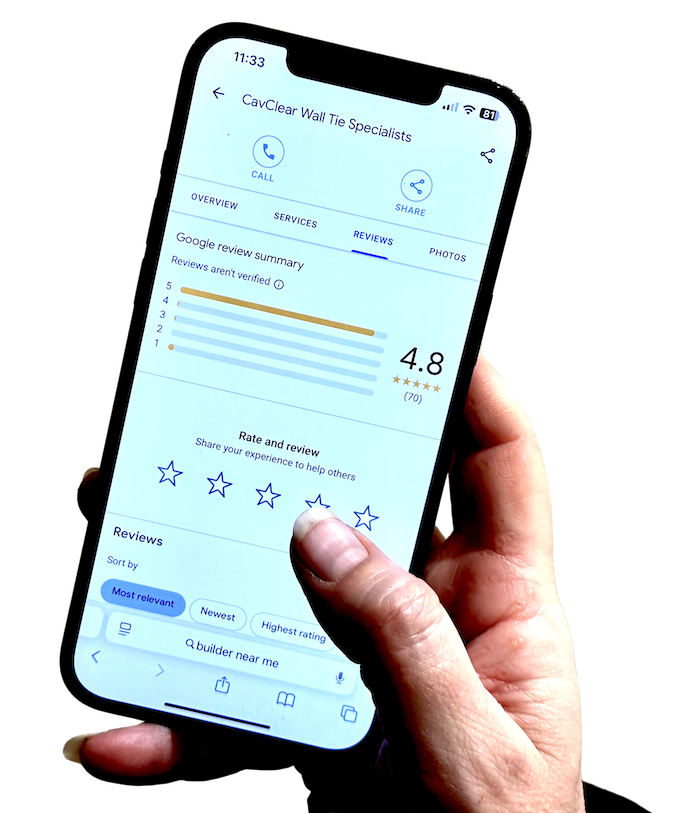
By the time a customer calls, books, visits, or sends an enquiry, they have often already formed an impression. They may have looked at your Google rating, read a handful of reviews, checked whether the comments feel recent, noticed whether complaints are answered, and compared you with nearby alternatives, so having a strong, well-managed Google reviews profile in the UK becomes a key part of their decision.
That means your reputation is influencing behaviour before contact begins.
A strong reputation does not guarantee business, but it reduces hesitation. It helps a customer feel more comfortable taking the next step. It makes your business look active, trusted, and current.
A weak or unmanaged reputation does the opposite. It creates doubt.
That doubt is often invisible. People do not tell you they nearly called but chose someone else because your reviews looked stale or your response to a complaint felt defensive. They just move on.
This is why reputation management matters even when nothing dramatic has gone wrong. It is not only about damage control. It is about making the public picture of your business match the quality of the work you actually do.
📌 Important
Your reputation is often influencing behaviour before contact even begins. It shapes whether a customer feels comfortable taking the next step.
The difference between review management and wider reputation management
Review management is one part of reputation management. It is not the whole thing.
Review management usually means generating reviews, monitoring them, and responding to them. That is important, but it is only one layer.
Wider reputation management includes review management, but also covers things like complaint handling, negative feedback processes, public responses, visibility protection, profile accuracy, and the consistency of your reputation over time. An integrated approach that combines digital PR, SEO, and other tactics is essential for managing and improving brand reputation holistically, as it coordinates various online reputation management strategies to address negative content and promote positive narratives.
That difference matters because a business can have some reviews and still have a weak reputation process.
For example, a business might:
get reviews in bursts, then go quiet
reply to positive reviews but ignore difficult ones
wait until a complaint goes public before dealing with it
have no clear system for handling unhappy customers
depend on memory rather than process
That is not really reputation management. It is occasional review activity.
A sensible reputation approach is wider than that. It joins together the customer-feedback side, the complaint-handling side, and the public-facing trust side, so your business is working from a future-proofed reputation strategy that can adapt as platforms change.
That is the practical shift. Not “How do we get a few more reviews?” but “How do we manage trust more steadily?”
What usually damages a local business reputation over time
Most local business reputations are not damaged by one single disaster.
More often, they are weakened by accumulation.
Inconsistency
This is one of the biggest problems. Reviews come in for a while, then stop. A business looks active one month and neglected the next. That makes the public picture feel uneven.
Slow complaint handling
When concerns are not picked up early, they are more likely to become public frustrations later. Often the issue is not the existence of a complaint. It is the fact that the complaint was left to harden.
Silence in public crisis communications
An unanswered negative review does not just represent one unhappy customer. It can also suggest that the business is inattentive, indifferent, or unsure how to respond.
Thin review patterns
A business with only a small number of reviews is more vulnerable to reputational swings. One difficult review can dominate when there is not enough genuine recent feedback around it.
Reactive behaviour
Many owners only think about reputation when something goes wrong. That is understandable, but it usually means the business is always catching up instead of using steady systems to proactively build a stronger reputation before issues appear.
No clear ownership
If nobody is really responsible for reviews, complaint follow-up, or public responses, the work becomes everyone’s job and no one’s job at the same time.
That is how reputation drift happens. Not all at once, but through small gaps that keep being left open.
⚠️ Warning
Most local business reputations are not damaged by one single disaster. More often, they are weakened by small gaps left open over time.
What a practical reputation management process looks like
A practical reputation process for a local business does not need to be complicated. It needs to be steady.
At a basic level, it should include five things, starting with well-designed review requests that are timed and worded effectively.
1. A consistent way of requesting reviews
Not random asking. Not a burst once every few months. A repeatable process that gives recent customers a fair, simple chance to leave feedback, often supported by an automated review system that sends timely, branded requests.
2. A private route for concerns
This is important. Good complaint handling starts before a problem becomes a public argument. If a customer has a concern, there should be a clear route for that to be raised and handled properly.
3. A habit of monitoring what appears publicly
You do not need to obsessively check every platform every hour. But you do need to know when something important has appeared and whether it needs action, which is where simple, practical reputation monitoring services can help you stay on top of key signals.
4. A calm response process
If a difficult review appears, the business should know what happens next. Is it reportable? Does it need a public reply? Who writes it? How quickly? What tone should be used?
5. Ongoing visibility protection
A healthy reputation is easier to maintain than to rebuild. That means keeping your review pattern current, your profile accurate, and your public-facing trust signals active over time.
That is what makes a process practical. It turns reputation from an occasional stress point into something more controlled.
🧭 Framework
A practical reputation process usually includes:
a consistent review-requesting process
a private route for concerns
a habit of monitoring public feedback
a calm response process
ongoing visibility protection
How online reviews, complaints and responses work together
These three parts are often treated separately, but they work best when they are handled as one system. Reviews tell the public story. Complaints tell you where private friction is building. Responses show how the business behaves when something does not go smoothly.
When those three elements work together, reputation becomes more resilient.
Building relationships with customers and stakeholders through ongoing engagement is essential for effective reputation management UK. Engaging with stakeholders through newsletters, events, and social media campaigns strengthens relationships and enhances reputation.
For example, if a business consistently gathers genuine reviews, handles complaints properly, and replies calmly where needed, one negative moment is less likely to define it.
If those parts are disconnected, the opposite happens. Complaints are missed. Reviews are sporadic. Replies are rushed. The business feels exposed every time something difficult appears.
This is also where compliance-safe handling matters. Reputation protection should not rely on blocking reviews or trying to stop unhappy customers from having a voice. The stronger approach is to make it easier to catch concerns early, respond properly, and build a healthier pattern of genuine public feedback over time, as shown in proactive reputation management for UK moving and storage businesses.
That is protection. It is not filtering.
Why reactive reputation fixes rarely solve the real problem
A reactive fix can be useful in the moment. Sometimes a review needs answering. Sometimes a complaint needs urgent attention. Sometimes a clearly unfair review needs reporting.
But if that is the whole strategy, the business stays vulnerable.
Reactive fixes usually fail because they only address the visible problem, not the system behind it.
If a bad review appears and the business scrambles to deal with it, but still has no steady review flow, no complaint process, and no response discipline, the next issue will feel just as disruptive.
That is why one-off fixes rarely feel satisfying for long. They deal with the symptom, then leave the underlying weakness untouched.
A better question is not “How do we solve this one reputation problem?” but “Why does our reputation only get attention once something uncomfortable happens?”
That is the question that leads to a more stable process.
Managed reputation support vs trying to handle everything ad hoc
This is where the difference becomes clearer.
An ad hoc approach usually looks like this:
check reviews occasionally
respond when something feels urgent
ask for feedback when someone remembers
deal with complaints case by case
hope the overall picture stays good enough
That can work for a while, especially for smaller businesses with low customer volume. But once the business gets busier, it usually becomes fragile.
A managed approach is different because the work is treated as ongoing rather than optional. With managed support, a dedicated team provides ongoing, expert support for reputation management, ensuring that every aspect is handled professionally and consistently.
That does not mean turning reputation into a complicated system full of dashboards and jargon. It means there is an actual process behind it. Reviews are requested steadily. Concerns are surfaced more quickly. Responses follow a calmer standard. Visibility is protected before a problem becomes dominant.
That is the real contrast. Not “DIY versus magic”. More “occasional attention versus consistent handling”.
For many local businesses, the reason managed support becomes attractive is simple: reputation work matters, but it rarely stays at the top of the list when the day gets busy. A well-managed reputation makes a business more attractive to clients and talent.
⚖️ Practical comparison
Ad hoc handling usually means checking reviews occasionally, replying when something feels urgent, and asking for feedback when someone remembers.
Managed handling means the work is treated as ongoing, with a steadier process behind reviews, complaints, responses, and visibility protection.
What local businesses should look for in a reputation management service
If you are comparing options, the important thing is not flashy wording. It is whether the service deals with the real operational problem and whether it offers straightforward reputation management services rather than an overcomplicated agency-style package.
A comprehensive reputation management strategy should include public relations activities and the use of blogs to enhance visibility and credibility in search engine results. Online reputation management services can help displace harmful content and promote a positive online image for brands.
Here are the practical things to look for.
Security features such as escrow systems, transparent freelancer profiles, and client reviews to ensure safe and reliable transactions.
The ability to help organizations communicate effectively with employees as well as customers, partners, and the media, building trust and credibility with all stakeholders.
Experience with public relations, including media engagement, content sharing, and crisis communication to control the narrative and promote positive messaging.
Use of blogs and other content strategies to improve search engine visibility and reinforce your brand’s reputation.
Clear process for monitoring, reporting, and responding to online mentions.
Proven track record of displacing negative content and promoting positive results in search engines.
Crisis management planning that includes defined roles, messaging, and action plans to minimise damage in the event of a reputation issue.
A managed approach, not just access
If the service mostly gives you something to log into and manage yourself, that may still leave you with the same follow-through problem you already have.
Review consistency, not just review volume talk
A sensible service should care about steady, genuine review growth over time, not just headline numbers.
Complaint handling that is practical
If concerns arise, there should be a clear route for handling them properly. That matters just as much as generating positive feedback.
Calm public-response support
A local business should not be left improvising every time a difficult review appears.
Compliance-safe processes
Any service worth taking seriously should avoid implying that negative reviews can simply be blocked or filtered out. That is not a sensible or safe way to think about reputation protection.
A realistic tone
Be wary of dramatic promises, vague “online domination” language, or anything that treats reputation as though it can be fixed overnight. For most local businesses, the stronger promise is steady improvement and better handling, not theatrics.
Measuring reputation management success
Understanding whether your online reputation management efforts are working is essential for any local business aiming to build trust and drive business growth. Measuring reputation management success goes beyond simply counting the number of positive reviews—it’s about tracking the full impact of your reputation management services on your brand perception, online visibility, and customer relationships, using clear review metrics such as volume, velocity, and sentiment trends.
One of the most important indicators is the improvement in your online reviews and ratings. Consistent, positive reviews not only enhance your digital reputation but also influence how potential customers perceive your business when they search online. Effective review management means regularly monitoring online reviews, responding thoughtfully to both positive and negative ones, and using customer feedback to develop strategies that encourage more positive visibility.
But reputation management success isn’t just about reviews. It’s also about how your business appears in search engine results. People trust search engines to provide accurate, up-to-date information, so maintaining a positive presence in search results is crucial. This includes managing your digital presence across your website, social media posts, and news articles. Proactive reputation management services will help you monitor and improve your online visibility, ensuring that your business is seen for the right reasons.
Crisis communications and media relations are also key components of measuring success. When a crisis arises—whether it’s a negative review, harmful content, or unfavorable news articles—having a crisis management plan in place can protect your reputation and help you maintain control of your brand’s narrative. Press releases, timely responses, and even Google removals can all play a role in mitigating negative content and restoring a positive reputation.
To truly measure the effectiveness of your online reputation management services, track key metrics such as search engine rankings, the volume and sentiment of online reviews, and the reach of your social media activity. Regularly analyzing customer feedback and monitoring your digital reputation allows you to identify trends, address issues proactively, and build stronger relationships with your target audience on a global scale.
Ultimately, a successful reputation management strategy is one that helps your business maintain a positive, accurate, and trustworthy online presence. By taking a proactive approach and leveraging the extensive experience of professional reputation management services, you can protect your brand, increase sales, and ensure your company stands out in your industry for all the right reasons.
A practical next step for improving reputation steadily
If your current approach to reputation is mostly reactive, the first useful step is not to panic and not to overcomplicate it.
Start by asking a few straightforward questions.
Are reviews coming in steadily or only occasionally?
Are concerns being picked up early enough?
Do negative public comments get a calm reply?
Does your public reputation feel current and credible?
Is there an actual process, or are you mostly relying on memory?
That gives you a more honest starting point.
From there, the goal is not to build a perfect reputation machine. It is to move from patchy, reactive handling to something steadier and easier to maintain.
That is what practical reputation management really is for a local business. Not agency jargon. Not one-off rescue work. Just a calmer, more reliable way of protecting trust.
Want to See What a Managed Reputation Process Looks Like?
Trusted Reviews 4U helps local businesses handle review growth and reputation protection more steadily, so it does not all depend on finding time for reactive fixes. Try the demo →