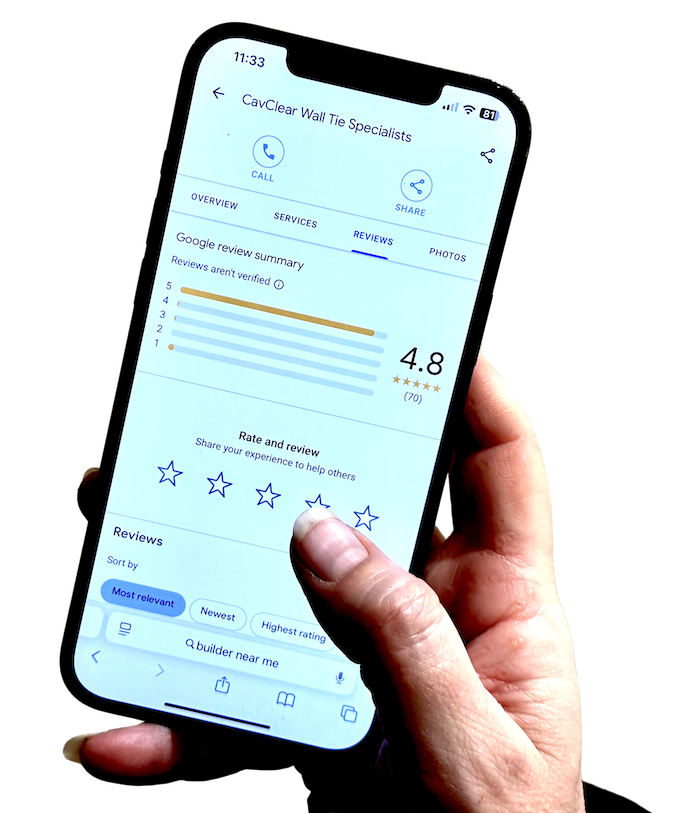
If you have searched for a “google review template”, you are probably trying to solve a very normal problem. You want a message you can actually send. Not something over-written. Not something that sounds like marketing copy. Not something that makes you feel awkward pressing send. Just a simple review request that feels natural, respectful, and clear enough for a customer to act on.
That is a sensible thing to look for.
But there is usually a second problem sitting underneath the first one. Most local businesses do not struggle because they cannot think of a sentence. They struggle because review asking happens inconsistently. One week you remember. The next week you are busy. Someone on the team means to follow up and does not. A few happy customers are asked in person, others are missed, and the whole thing becomes a stop-start habit rather than a repeatable process. Consistently collecting reviews is crucial to boost your business's reputation and visibility.
That is why templates help, but they are not the whole answer.
This article gives you practical Google review templates for SMS and email, shows what makes a good review request message, explains what to avoid, and makes the wider point that steady review asking needs a process, not just a clever phrase. By collecting reviews consistently, you can boost customer engagement and strengthen your reputation over time.
📖 Definition
A good Google review template is not there to sound clever. It is there to make the next step feel easy, natural, and clear enough for a customer to act on.
What makes a good Google review template
A good Google review template does not try too hard.
That is one of the most useful things to understand early. Businesses often assume the message needs to sound polished or impressive. In practice, the best review requests usually feel normal. They sound like something a real person would send after a completed job, appointment, visit, or purchase.
A strong template usually has five simple ingredients.
First, it sounds human. It should read like a genuine follow-up, not a formal marketing email.
Second, it is short. Most customers do not need a long explanation. They need to know why you are messaging and what you are asking them to do.
Third, it is clear. A customer should be able to understand the next step immediately.
Fourth, it is timely. The best message in the world is weaker if it arrives long after the experience has faded.
Fifth, it is respectful. A good review request should feel like an invitation, not pressure.
You can customise the template design to fit your business's tone and tailor it to specific customer interactions, such as after a purchase or following positive feedback, ensuring your message feels both professional and personal, especially when you focus on designing the perfect review request.
That matters especially for local businesses. If you are a plumber, salon owner, accountant, dentist, estate agent, garage, or café owner, the relationship with the customer is usually personal enough that the tone matters. A stiff or over-eager message can feel off. A calm, simple one usually works better.
🧭 Framework
A strong review request usually has five simple ingredients.
Human — it sounds like a real follow-up from a real business.
Short — it gets to the point without extra weight.
Clear — the next step is obvious.
Timely — it arrives while the experience is still fresh.
Respectful — it feels like an invitation, not pressure.
Why simple review requests usually work better than clever ones
There is a temptation to overthink review wording.
Businesses often look for the “perfect” message, as if the right phrase will do all the work. In reality, simpler messages usually perform better because they reduce friction.
A customer who has had a decent experience does not need a speech. They do not need a paragraph about how important feedback is to your business journey. They do not need a highly polished brand voice exercise. They need a straightforward request at the right time.
Simple wording works because it feels believable. It sounds like a normal follow-up from a real business. It is easier to read on a phone. It gets to the point quickly. It gives the customer less mental work to do. An effortless message makes it even easier for customers to respond, increasing the likelihood that they will leave a review.
Short Google review templates for SMS
SMS works well because it is quick, direct, and easy for customers to open. With SMS, you can directly connect customers to your Google review page, making it simple for them to leave feedback. The downside is that there is less room for unnecessary words, which is actually helpful.
Here are some short templates you can adapt.
1. Simple completed-job SMS
Hi {{first_name}}, thanks for choosing {{business_name}}. If you have a moment, we’d really appreciate a Google review: {{review_link}}
This works because it is short, polite, and direct. It does not over-explain.
2. Friendly local-business SMS
Hi {{first_name}}, thanks again for coming to {{business_name}}. If you’d be happy to leave us a Google review, here’s the link: {{review_link}}
This feels natural and works well for shops, salons, cafés, clinics, garages, and other local businesses where the customer has visited in person.
3. Service follow-up SMS
Hi {{first_name}}, thanks for having us out today. If you’d like to leave a quick Google review, you can do that here: {{review_link}}
This is useful for trades and home services where the work happened at the customer’s property.
4. Straightforward repeat-customer SMS
Hi {{first_name}}, thanks again for using {{business_name}}. If you haven’t already left us a Google review, we’d really appreciate one here: {{review_link}}
This avoids sounding as though you are forgetting they may already know the business well.
5. Softer SMS for relationship-led businesses
Hi {{first_name}}, we hope everything went well today. If you have a minute, we’d be grateful for a Google review: {{review_link}}
This works well when you want the message to sound a little gentler without becoming too wordy.
The main point across all of these is that none of them are clever. They are readable, polite, and easy to act on. Leaving a Google review only takes a few minutes, making it quick and convenient for your customers.
🔧 Example
Simple completed-job SMS: Hi {{first_name}}, thanks for choosing {{business_name}}. If you have a moment, we’d really appreciate a Google review: {{review_link}}
Why it works: it is short, polite, and direct without sounding over-written.
Simple Google review templates for email
Email gives you a little more room, but that does not mean it should become long. A good review request email should still be short enough to scan quickly.
Here are a few practical examples.
1. Basic review request email
Subject: Thanks for choosing {{business_name}}
Hi {{first_name}},
Thanks again for choosing {{business_name}}.
If you have a minute, we’d really appreciate a Google review. It helps other people find us and know what to expect.
Leave a review here: {{review_link}}
Thanks,
{{business_name}}
This is the safest starting point for most businesses. Simple, polite, and easy to personalise.
2. Post-visit email
Subject: Quick favour from {{business_name}}
Hi {{first_name}},
Thanks for visiting us today.
If you’d be happy to leave a Google review, here’s the link: {{review_link}}
We really appreciate it.
Thanks,
{{business_name}}
This works well when the interaction was recent and the customer will still remember the visit clearly.
3. Post-job email for service businesses
Subject: Thanks again
Hi {{first_name}},
Thanks again for choosing {{business_name}} for your recent job.
If you have a moment, we’d really appreciate a Google review here: {{review_link}}
It helps future customers feel confident when choosing a local business and builds credibility for our business.
Best, {{business_name}}
This keeps the tone broad enough for trades, repairs, professional services, and other appointment-led businesses.
4. Repeat-customer email
Subject: Thanks for your continued support
Hi {{first_name}},
Thanks again for coming back to {{business_name}}.
If you haven’t already left us a Google review, we’d really appreciate one here: {{review_link}}
Many thanks,
{{business_name}}
This avoids making the request sound generic.
5. Slightly warmer email
Subject: Thank you from {{business_name}}
Hi {{first_name}},
We really appreciate your support.
If you have a minute to leave us a Google review, here’s the link: {{review_link}}
Thanks again,
{{business_name}}
This works well for businesses that want a softer tone without turning the message into a long note.
Templates for different situations: recent job, repeat customer, completed visit
A good template depends partly on the context. The wording does not need to change dramatically, but it should still fit the situation. For best results, always include your Google Business Profile review link in your templates so customers can easily leave feedback directly on your profile.
Recent job
Where work has just been completed, the main thing is to keep the message current.
SMS example:
Hi {{first_name}}, thanks for choosing {{business_name}} today. If you’d like to leave us a Google review, here’s the link: {{review_link}}
Email example:
Hi {{first_name}}, thanks again for choosing {{business_name}} today. If you have a minute, we’d really appreciate a Google review here: {{review_link}}
The wording is simple because the timing is doing much of the work.
Repeat customer
A repeat customer already knows you, so the message should not sound like a first introduction.
SMS example:
Hi {{first_name}}, thanks again for using {{business_name}}. If you haven’t already left us a Google review, here’s the link: {{review_link}}
Email example:
Hi {{first_name}}, thanks again for coming back to {{business_name}}. If you have a moment, we’d really appreciate a Google review: {{review_link}}
The phrase “if you haven’t already” is useful here because it acknowledges the existing relationship.
Completed visit
For appointment-based or in-person businesses, referencing the visit helps keep the message grounded.
SMS example:
Hi {{first_name}}, thanks for visiting {{business_name}} today. If you’d like to leave a Google review, here’s the link: {{review_link}}
Email example:
Hi {{first_name}}, thanks for coming in today. If you have a minute, we’d be grateful for a Google review here: {{review_link}}
Again, the key is not creativity. It is fit. A review request feels stronger when it matches the customer’s actual experience.💭 Tip
A review request usually works better when it fits the actual situation — recent job, repeat customer, or completed visit — rather than sounding like a generic message sent to everyone the same way.
What to avoid when asking for Google reviews
Knowing what not to say is often as useful as having a template.
When requesting reviews, avoid language that suggests only satisfied customers should respond. Instead, encourage all customers to share their honest feedback. Remind them that sharing their experiences publicly through Google reviews not only helps your business improve but also assists other potential customers in making informed decisions.
Do not make it too long
A long message creates effort. It increases the chance the customer skims it, postpones it, or ignores it.
Do not sound pushy
Phrases that feel demanding or overly eager can create resistance. You are inviting a review, not cornering someone into one.
Do not over-polish it
A message that sounds too polished can feel insincere. Most customers respond better to normal language.
Do not make the ask confusing
The message should have one obvious job. If the customer is being asked to do three things, they may do none.
Do not imply only happy customers should respond
This matters both practically and compliantly. Review request language should not suggest that only satisfied customers are being asked, and it must not drift into review-gating territory. TR4U’s content rules are explicit here: all customers can leave a Google review regardless of rating, and concerns may be routed privately as an option alongside the Google path, not instead of it.
Do not obsess over sounding “professional”
Professional does not mean stiff. For a local business, “clear and respectful” is usually more effective than “formal and polished”.
⚠️ Warning
Review request language should not suggest that only satisfied customers are being asked, and it must not drift into review-gating territory.
When to send a review request for the best chance of a response
Timing usually matters more than tiny wording changes.
That is one of the most overlooked parts of review asking. Businesses often spend too long tweaking phrases and too little time deciding when the message should go.
In most cases, the best time is shortly after the experience, while it is still fresh. That might mean after a completed job, after a visit, after an appointment, after collection, or soon after the customer has seen the result clearly. Some businesses also use a Google Review QR Code Generator to create a custom qr code that links directly to the Google Business Profile review page at that moment or implement an automated review system that sends well-timed requests automatically. With free generators, that review-page link usually cannot be changed once the code is created.
The customer still remembers the interaction, the result, and how they felt about it. The request does not feel random or delayed. It feels connected to something that has just happened. That does not mean every business should send at exactly the same minute. But the general principle is strong: send close enough to the experience that the customer does not have to reconstruct the whole thing in their head.
To optimize your process, track the timing and results of your review requests—monitoring when you ask and the outcomes helps you identify what gets the best results and refine your approach.
This same principle appears in TR4U’s content planning notes for review-related content and GBP extraction: asking shortly after the service while the experience is fresh is the useful practical rule.
Why templates alone do not solve inconsistent review asking
This is the deeper point.
A template can remove hesitation, which is helpful. It can stop you staring at a blank message box. It can make the request feel easier to send. But it cannot solve inconsistency by itself.
If nobody sends it, the template does nothing, no matter how many tips you pick up from a reviews and reputation learning centre.
If it gets used for three days and then forgotten, it does nothing.
If the whole process depends on whoever is least busy that day, it does not become reliable.
That is why many local businesses stay stuck even after they find a “good template”. The message improves, but the behaviour around it does not. Review requests still go out unevenly. Follow-up still depends on memory. Customers are still missed.
So the real issue is usually not message quality on its own. It is operational consistency.
A useful template is a support. It is not a system. A consistent process will improve your ability to collect more reviews, which can boost your local search rankings and online reputation, especially if you pay attention to key review metrics that drive results.
Managed review requests vs doing it ad hoc
This is where the comparison becomes practical rather than theoretical, especially if you are trying to build a steady, credible profile of Google reviews for a UK local business.
An ad hoc approach usually looks like this, especially if you rely on one-off email or text messages rather than a coordinated email and SMS marketing process for review generation:
send something when you remember
rely on staff to ask when it feels appropriate
try a few templates
forget for a week
pick it up again later
That approach can produce the odd review, but it rarely produces a healthy, steady pattern.
A managed approach is different because it is built around consistency. The wording is handled, the timing is thought through, the process is repeatable, and the follow-up does not rely on the owner remembering to keep it moving. A managed service lets you automate and schedule review requests, and makes it easy to share those requests with customers via email or other channels, encouraging more customers to leave reviews.
That is the real difference between “having a template” and “having review requests handled properly”.
TR4U’s source documents are clear that the service should be framed as managed, not as another tool or software product. The client uploads customers, and the managed service handles the review-growth process around them, alongside straightforward reputation monitoring services that keep an eye on what customers are saying. The underlying promise is not “here is a message you could use”. It is “this is handled for you in a calm, coordinated way”.
That is why templates matter, but process matters more.
💡 Key insight
A useful template is a support. It is not a system. The real difference comes from whether review asking happens consistently or only when someone happens to remember.
A practical next step for businesses that want this handled properly
If you have been looking for a Google review template, you are not wrong to start there.
A simple message is useful. It can make asking easier. It can remove the feeling that you need to invent the perfect wording every time. It can help your business sound natural and consistent.
But if review asking still depends on memory, mood, or spare time, the bigger issue has not really been solved.
The businesses that grow reviews more steadily usually do not have dramatically better wording. They have a better process. They ask more consistently, at the right time, in a way that does not create more mental load for the owner. Collecting reviews regularly helps build trust with potential customers and improves your business's visibility in local search results.
That is the more useful standard to aim for. Building trust and increasing visibility through Google reviews are key factors in driving business growth.
Want to See What Managed Review Growth Looks Like for Your Business?
Trusted Reviews 4U builds your personalised review page and shows you exactly how the managed process works — before you commit to anything. Try the demo →