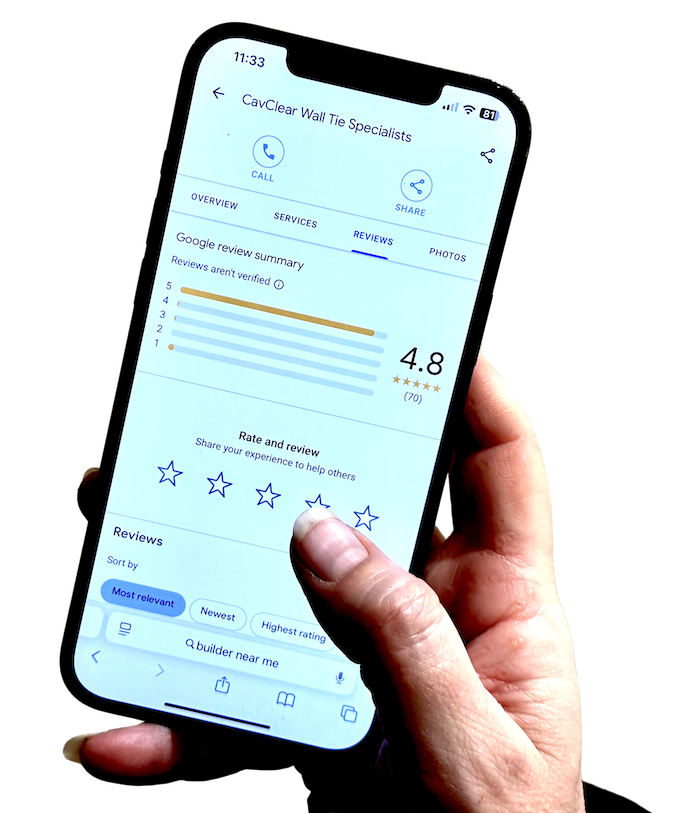
Most business owners do not struggle to ask for reviews because they think reviews are unimportant.
They struggle because the moment feels awkward.
You finish the job, wrap up the appointment, send the invoice, or hand over the product, and then there is that brief hesitation. Should you ask now? Is it too soon? Will it sound needy? Will the client feel put on the spot? Then the moment passes, and what should have been one simple request turns into something forgotten.
That is usually the real problem.
For a local business, the challenge is rarely that asking is impossible. It is that the whole process depends too much on timing, memory, and confidence in the moment. The good news is that learning how to ask clients for reviews is usually much simpler than people think.
You do not need a clever speech. You do not need to sound polished. You just need a normal, timely way to ask for a review that fits naturally into the customer journey.
This article explains why review requests feel awkward, what customers actually respond to, when to ask, what to say, and how to make review requests part of a repeatable process rather than something you only do now and then.
Why asking clients for reviews feels awkward in the first place
The awkwardness usually comes from two things: social discomfort and overthinking.
Most owners are perfectly comfortable doing the work, solving the problem, and helping customers. But the second they need to ask customers for reviews, it can feel like asking for praise. Even when the customer seems happy, the moment can feel slightly unnatural if you are not used to it.
Then comes the overthinking. You start searching for the perfect phrase, the right moment, and the least awkward tone. That is usually what makes the request heavier than it needs to be.
In reality, most customers do not find a calm, polite request strange. What makes it awkward is usually when the business owner sounds hesitant, apologetic, or suddenly unlike themselves.
That is why the goal is not to become slick. It is to make the request feel normal.
💡 Key Insight
Review requests usually feel awkward because they are treated like a special performance. In practice, they work better when they feel like a normal part of the customer journey.
What clients actually respond well to in a review request
Most customers respond well to three things: clarity, simplicity, and timing.
First, they need clear instructions. If the request is vague, they are more likely to do nothing. If you give them a direct link, the next step feels obvious.
Second, keep the message short. The best review requests are usually direct and easy to read. A long explanation makes the ask feel bigger than it is. Keep the message short, make the request clear, and move on.
Third, ask close to the experience itself. If a customer has just had a positive interaction, the request feels connected and natural. If you leave it too long, the moment loses energy.
That is why asking for a review works best when it feels like a normal follow-up, not a formal event.
📖 Definition
A good review request is usually short, clear, and easy to act on. It is not about clever wording. It is about making the next step feel simple and natural.
When to ask for a review so it feels natural
Timing is one of the biggest factors in whether review requests feel natural.
For most service-based businesses, the best time to ask for reviews is shortly after the job is done, the appointment is complete, or the result is clear. For product-based businesses, it may be slightly later, once the customer has had a chance to use what they bought after a recent purchase.
The broad rule is simple: ask when the experience is still fresh.
That might be after a completed appointment, after a smooth delivery, after a finished job, or after a positive follow-up conversation. If the customer is clearly satisfied, that is often the right moment to ask for a review.
This also helps avoid awkwardness. When the request is tied to a recent good experience, it feels relevant rather than random.
💭 Tip
If you are unsure about timing, start with the point where the customer naturally says “thanks” or confirms the job is done. That is often the cleanest moment to ask.
How to ask in person without sounding pushy
In-person asking sounds harder than it really is.
Most of the time, you do not need anything elaborate. A simple line is enough:
“If you’ve got a minute later, we’d really appreciate it if you could leave us a Google review.”
“If you were happy with everything today, a quick Google review would really help us.”
“If you get a chance, we’d be grateful if you could leave a review.”
That is enough.
The key is to say it naturally and not overwork the moment. If you say it simply and move on, it tends to feel fine. If you over-explain, wait nervously, or make the request sound like a big favour, it becomes uncomfortable.
When you ask for a review, tone matters more than having the perfect script.
🔧 Example
A good in-person request is usually one sentence, said calmly, at the end of a positive interaction. The less you make it sound like a performance, the more normal it feels.
How to ask by SMS or email simply and clearly
For many businesses, text and email are even easier because they remove face-to-face pressure and let customers respond in their own time.
A simple text can work well:
“Thanks again for choosing [business name] today. If you have a minute, we’d really appreciate a Google review: [review link]”
“Thanks for using [business name]. If you’d like to leave a review, here’s the direct link: [insert link]”
A simple email works too:
“Hi [name], thanks again for choosing [business name]. If you have a moment, we’d really appreciate it if you could leave us a review here: [review link]”
This is where review request emails can be useful, especially if you want a repeatable way to follow up. A good review request email should be short, polite, and easy to act on. It should feel on brand, include a direct link, and avoid unnecessary waffle.
You can also use a post-purchase email or follow-up email if that fits how your business already communicates.
If you want a few natural message examples you can adapt, see Google Review Template: Simple Messages for Local Businesses.
What to avoid when asking clients for reviews
A few things make review requests feel more awkward than they need to.
Do not make the request too long. Do not sound apologetic. Do not sound pushy. Do not turn it into a speech about how much the review would mean. Most customers do not need persuading. They just need a simple, respectful ask.
It is also important not to create compliance problems. Your request should be open and fair, not selective in a way that suggests only certain people should post. The aim is to encourage honest feedback, not to filter out negative feedback or hide negative reviews.
If a difficult experience has happened, that is a separate issue to handle properly. But your general review process should stay even-handed.
Another obvious mistake is forgetting to make the next step easy. If you ask without giving a direct link, you leave the customer with more work than necessary.
❌ What to Avoid
Long explanations, hesitant delivery, and selective asking usually create more awkwardness, not less. Simple and even-handed works better.
Why overthinking the wording usually makes it harder
This is where many owners get stuck.
They assume there must be one perfect sentence that makes the request feel effortless. So they keep editing the wording, second-guessing the tone, and delaying the ask until they feel more confident.
Usually, that makes the whole thing harder.
The truth is that most customers do not need a polished script. They respond to a normal message delivered at a sensible moment. In many cases, the simpler the wording, the better it performs.
That is because the customer is not grading your phrasing. They are deciding whether the request feels clear and easy enough to act on.
So yes, wording matters. But once it is short, polite, and understandable, the bigger issue is rarely the sentence itself.
How to make asking for reviews part of a repeatable process
This is the bigger point.
Most businesses do not really have a wording problem. They have a consistency problem.
They can ask for reviews once or twice, but then the habit fades. When things get busy, the requests stop. The intention stays there, but the rhythm disappears.
That is why a proper process matters.
A simple system might include one set point where you request feedback, one or two channels such as text and email, one short message, a saved review link, and a basic follow-up routine. That is enough to support steady review generation without making each ask feel like a new decision.
This also makes life easier for staff. They do not have to improvise every time or decide whether it is appropriate. They just follow the process.
That is what makes asking easier in practice. Not a smarter sentence. A steadier system.
🧭 Simple Framework
Choose one clear moment to ask
Use one or two channels you already use naturally
Keep one short message saved and ready
Store the review link somewhere obvious
Review whether requests are actually being sent
Asking manually vs having a managed review process
Manual asking can work, especially for a smaller local business with lower volume.
But it has one obvious weakness: it depends on people remembering.
That is where businesses lose momentum. Review requests happen in bursts. Then work gets busy, attention shifts, and the process drops away. That is why many businesses struggle to get more reviews, even when they know the value of customer feedback.
A managed process creates more consistency. It helps encourage customers at the right point, keeps the wording simple, and reduces the mental load on the owner. It can also support broader reputation handling and a steadier stream of genuine reviews from happy customers.
That does not remove the human side. It just makes the operational side more reliable.
If you want to see what that managed approach looks like in practice, you can explore it here: How it works.
A practical next step for businesses that want this to feel easier
If asking feels awkward, the answer is not to become more salesy.
It is to make the process simpler.
Use natural wording. Pick a better moment. Send a follow-up with a direct link. Keep the ask light, normal, and easy to act on.
Most importantly, build a system that does not depend on memory alone.
That is what makes it easier to ask for reviews consistently. It also helps create a steadier flow of useful feedback and stronger reassurance for new customers who are deciding whether to trust your business.
When done properly, review requests are not awkward. They are simply part of a good customer journey.
Want a simpler way to make review requests more consistent?
Trusted Reviews 4U helps local businesses handle review requests more steadily, so asking does not keep depending on timing, memory, or confidence alone. Build your review page →