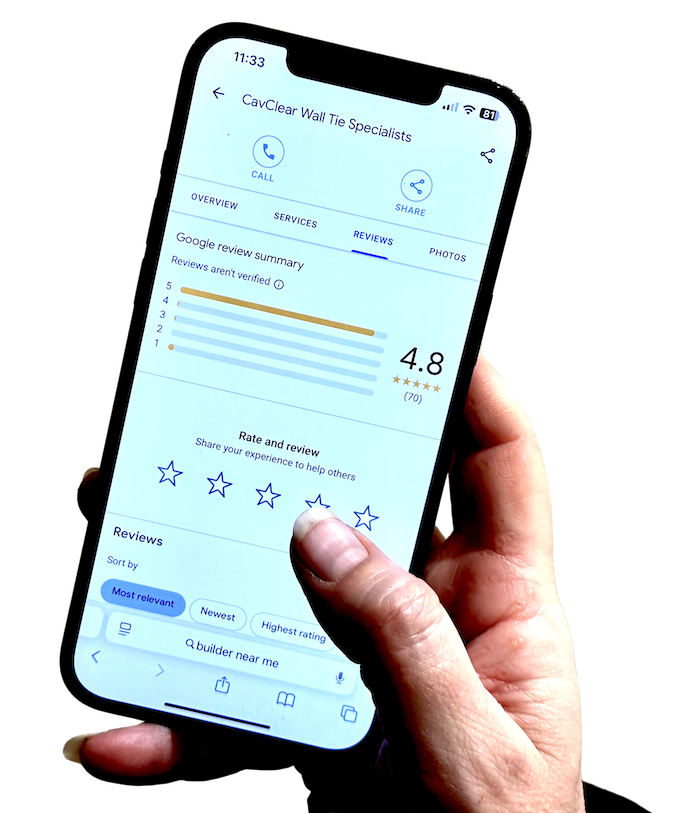
If you run a local business, you have probably heard some version of this before: reviews help SEO.
That is true, but it is also one of those phrases that gets repeated so often it starts to lose meaning. A lot of business owners are left with the same question afterwards: what does that actually mean for me?
For a garage, MOT centre, or local trade business, SEO reputation management does not need to be complicated. You do not need to become an SEO specialist. You do not need to get buried in technical tactics that have little to do with how customers actually find you.
What matters is understanding how your reputation and your visibility work together.
This guide explains that relationship in plain English. It looks at how Google uses reviews in local search, why reputation affects visibility as well as trust, and what practical actions help both without creating unnecessary complexity.
What SEO reputation management means in simple terms
In simple terms, SEO reputation management is about how your business’s online reputation affects how easily people can find you in search.
For local businesses, that usually comes down to the connection between your Google Business Profile, your reviews, your customer feedback, and your local visibility.
It is not really about “managing” search in some grand or technical sense. It is more about making sure the signals Google sees around your business are healthy, current, and believable.
If your business has a steady flow of genuine reviews, accurate business details, and a profile that looks active and trustworthy, that supports visibility.
If your profile is stale, your reviews are old, your details are inconsistent, or your reputation has obvious unresolved issues, that can work against you.
📖 Definition
SEO reputation management, in practical terms, means keeping your reputation and your local visibility moving in the same direction so your business looks active, credible, and current in Google’s eyes.
That is why reputation and search are not separate topics. For a local business, they feed into each other all the time.
How Google uses reviews as part of local search
When someone searches for a local service, Google is trying to decide which businesses feel most relevant, most trustworthy, and most useful for that search.
Reviews are one of the signals that help it make that judgement.
That does not mean reviews are the only factor. They are not. But they do contribute to the overall picture.
Google can learn several things from reviews. It can see that customers are actively engaging with your business. It can see whether that activity is recent or old. It can see whether the overall sentiment appears strong or mixed. It can also pick up contextual signals from the language people use in reviews, which can help reinforce what your business is known for.
For example, if a garage is regularly reviewed for MOTs, servicing, tyres, and honest advice, that builds a fuller picture of what the business does and how customers experience it.
For a local trade business, reviews that mention punctuality, workmanship, communication, and reliability add similar context.
Again, reviews are not a shortcut to rankings on their own. But they are part of how Google understands whether a business looks credible and active in its local market.
Why reputation affects visibility, not just trust
A lot of business owners think of reputation as something that matters after a customer has found them.
That is only half the picture.
Reputation also affects visibility before the click, call, or enquiry happens.
This matters because Google does not just want to show any nearby business. It wants to show businesses that look relevant and trustworthy enough to be useful to the searcher.
That is where reputation starts to influence visibility.
A business with current reviews, a healthy profile, and signs of real customer engagement often looks more alive than one with long periods of silence. That does not guarantee top placement, but it supports the kind of trust signals Google tends to value in local search.
This is especially important for local service businesses because customers often make quick decisions. They search, scan the options, compare the obvious trust signals, and choose who to contact.
💡 Key Insight
A strong reputation supports visibility before it supports conversions. It helps Google decide whether your business looks active and credible enough to be shown in the first place.
So reputation helps twice. It can support whether you are seen, and then it can support whether you are chosen.
The role of consistency in review growth and SEO
Consistency matters more than many businesses realise.
It is easy to think in terms of bursts. A business gets a few reviews in one month, then nothing happens for a while, then another burst appears later. That can feel productive in the moment, but it is not always the strongest pattern long term.
For local visibility, steady review growth often matters more than occasional spikes.
Why? Because consistency helps your profile look active and current. It shows that real customer experiences are still happening now, not just in the past. It also helps build a more natural-looking review profile over time.
For garages and local trades, this is often where momentum breaks. The business does good work, customers are happy, but asking for reviews happens inconsistently. Then months go by with little visible activity.
That creates two problems at once. Trust starts to feel less current, and the profile can begin to look quieter than it should.
This is why consistency is such an important part of SEO reputation management. It is not just about getting more reviews overall. It is about keeping your reputation moving in a steady, believable way.
How negative feedback fits into your overall reputation
Negative feedback is part of the picture too.
No business likes receiving it, but it is unrealistic to think reputation can only be built from positive experiences being visible and everything else disappearing.
For local businesses, the healthier goal is to deal with negative feedback properly, not pretend it can be avoided entirely.
From a search and visibility perspective, negative feedback matters because it affects the overall trust picture. A business with repeated unresolved problems, poor sentiment, or clear patterns of dissatisfaction may appear weaker to both Google and potential customers.
That said, one piece of negative feedback does not define your business.
What matters more is the broader pattern. Is the business still generating genuine positive sentiment overall? Are issues isolated or repeated? Does the profile look neglected, or does it look like the business is actively engaged and taking customer experience seriously?
This is one reason private feedback systems can be useful alongside public reviews. They give customers a direct way to share concerns while still preserving public review access for everyone. That can help businesses spot issues early and improve the underlying experience before small frustrations become repeated public problems.
📌 Important
Giving customers a private route to share concerns should never block access to Google reviews. Public review access still needs to remain available to everyone.
Handled properly, negative feedback becomes part of reputation management, not the end of it.
What Google does and does not consider when ranking businesses
It helps to keep this simple.
Google does not rank local businesses based on reviews alone. Local visibility is shaped by a combination of relevance, distance, and prominence, along with the overall quality and completeness of your business presence.
That means reviews matter, but so do basics like:
- having a properly set up Google Business Profile
- choosing the right business category
- keeping your business details accurate
- maintaining opening hours
- making sure your profile reflects what you actually do
- building a believable, active local presence over time
What Google is not doing is rewarding gimmicks.
It is not looking for unnatural review spikes, keyword-stuffed business names, or clever ways to manipulate perception. Those things often create more problems than benefits.
For most local businesses, the useful lesson is simple. Focus on being a real, well-presented, consistently reviewed business with a strong and accurate local profile. That is much closer to how local visibility actually works than chasing technical shortcuts.
Common misconceptions about reviews and SEO
One common misconception is that reviews are a separate issue from SEO.
They are not. For local businesses, they are part of the same trust-and-visibility picture.
Another misconception is that any increase in review count will automatically improve rankings.
More reviews can help, but only as part of a broader pattern. If the profile is incomplete, inconsistent, or inactive in other ways, review count on its own will not solve everything.
A third misconception is that only five-star sentiment matters.
In reality, reputation is more nuanced than that. The goal is not to create a profile that looks artificially perfect. The goal is to build a healthy, genuine reputation over time and deal properly with the occasional concern when it arises.
Another misunderstanding is that businesses should focus on SEO first and fix reputation later.
For local search, that split rarely makes sense. If your reputation is weak, stale, or inconsistent, it becomes harder to support visibility properly. The two need to work together.
❌ Common Mistake
Trying to “fix SEO” while leaving your review profile stale, inconsistent, or neglected usually misses the real issue. For local businesses, visibility and reputation are linked from the start.
Practical ways to improve your reputation and visibility together
The good news is that the practical actions are fairly straightforward.
First, make sure your Google Business Profile is properly completed. Accurate category selection, services, contact details, opening hours, and location details all support clarity.
Second, aim for steady, genuine review growth rather than occasional bursts. A consistent flow of real customer feedback is usually more helpful than stop-start activity.
Third, make it easy to ask for reviews in a way the business can maintain. The important word here is maintain. A perfect review process that never gets followed is less useful than a simple one that actually happens.
Fourth, pay attention to customer feedback and recurring concerns. Improving the underlying customer experience strengthens reputation at the source.
Fifth, respond thoughtfully where appropriate. That supports trust, shows the business is present, and helps keep the profile feeling active rather than abandoned.
Finally, avoid separating “reputation work” from “visibility work” in your head. If customers are finding you through Google, the two are already linked.
🗒 Checklist
If you want to improve reputation and visibility together, focus on:
- a complete and accurate Google Business Profile
- steady review growth rather than one-off bursts
- sensible feedback handling
- a customer experience worth talking about
- consistent follow-through over time
What to avoid when trying to “manage” your reputation
The first thing to avoid is overcomplicating it.
A lot of businesses get pulled into abstract SEO conversations that are not especially useful for their day-to-day reality. If the approach becomes hard to follow, it usually breaks.
It is also worth avoiding anything that feels manipulative.
That includes trying to manufacture an unnatural review pattern, stuffing your listing with unnecessary keywords, or treating reputation as something that can be controlled through tricks rather than earned through real customer experiences and consistent follow-through.
Another thing to avoid is neglect.
Some businesses do a one-off push, get a handful of reviews, and then stop paying attention. Others try to “fix SEO” while leaving their review profile stale and inconsistent. Both approaches usually fall short.
Finally, avoid treating negative feedback as something that should simply be hidden from view. A better approach is to learn from it, handle it properly, and keep the wider reputation healthy and current.
A simple approach to keeping your reputation and SEO aligned
If you want a practical way to think about this, keep it simple.
Your local visibility improves when Google can see that your business is real, relevant, active, and trusted.
Your reputation supports that by showing current customer experience, steady review activity, and a business presence that feels alive rather than neglected.
So the aim is not to chase clever SEO tactics. It is to keep the important basics aligned:
- a complete and accurate profile
- consistent review growth
- sensible handling of feedback
- a customer experience worth talking about
- steady follow-through over time
For local businesses, that is usually the strongest route.
It is calmer, more realistic, and more sustainable than trying to separate SEO from reputation or turning either one into a technical project you never quite have time to manage properly.
And if you want a more joined-up way to keep both moving together, it often helps to look at a managed approach that supports visibility and reputation as one connected job rather than two separate ones.
See What a Managed Approach Looks Like in Practice
Trusted Reviews 4U helps local businesses build and protect their Google reputation with steady review growth, practical follow-through, and a managed approach designed to support both trust and visibility over time. See what this looks like for your business →