If you run a local business, promoting it can feel harder than it sounds.
A lot of advice is built around content calendars, ad funnels, constant posting, or wider digital marketing plans that do not match how a busy garage, MOT centre, plumber, electrician, roofer, or builder actually works.
Most local service businesses do not need more theory. They need practical ways to become easier to find, easier to trust, and easier to choose.
That is what local promotion really comes down to.
It is not about trying to be everywhere. It is about showing up properly in the places local customers already look, giving them enough confidence to get in touch, and doing it consistently enough that your visibility does not keep going quiet.
This article explains how to promote your business locally in a way that fits real day-to-day business life. The focus is on trust, visibility, reviews, and simple actions that build momentum without creating unnecessary admin.
What local business promotion really means
Local business promotion is not just “marketing” in the broad sense.
For a small local business, it usually means making sure people in your area can do three things easily:
find you
understand what you do
feel confident enough to contact you
To do this effectively, you need to understand your local market and identify your target customers. These are the people most likely to need your services and engage with your business.
That sounds simple, but a lot of businesses make it harder than it needs to be.
They may do good work and have a decent local reputation in real life, but online they look quieter than they really are. Their Google profile may be outdated. Their website may be thin or unclear. Their reviews may be strong overall, but old. Or they may rely too much on word of mouth without supporting it with visible trust online.
Promoting your business locally does not mean becoming a full-time marketer.
It means making your business easier to discover and more convincing when it is discovered.
📌 Key point: Local promotion is not about doing more marketing for the sake of it. It is about helping nearby customers find you, understand you, and trust you more easily.
Start with the places local customers already look
The best place to start is not with new channels. It is with the places your customers already use.
For most local service businesses, that means:
Google search
Google Maps
your Google Business Profile
your website
your reviews
Most internet users rely on local search results to find businesses nearby, making it essential to appear where local searches happen.
That is where many buying decisions begin.
Someone needing an MOT may search for a local garage. Someone with a leaking boiler may search for a heating engineer. Someone needing an electrician may search while already comparing businesses on their phone.
In fact, many searches have local intent, and searches that include terms such as “near me” or “close by” show how much local search influences customer decisions.
In those moments, customers are not usually looking for clever marketing. They are looking for reassurance. They want to see that you are nearby, active, relevant, and trusted.
That is why local promotion often works best when it starts with visibility and proof rather than trying to chase attention in too many places at once.
Before worrying about more advanced tactics, it is worth asking: if someone nearby searches for the service I offer, what do they actually see?
Why Google Business Profile matters more than most businesses realise
For many local businesses, Google Business Profile is one of the most important promotion tools they have. That is because it sits right at the point where search and trust meet.
Setting up and optimising your Google Business Profile is a core part of local visibility. It can help your business appear more clearly in local search results and give potential customers important information before they decide whether to contact you.
It helps customers see your business name, location, opening times, reviews, rating, photos, and services before they even visit your website. In many cases, they make their first judgement from that view alone.
A good Google Business Profile helps promote your business because it makes you look present, credible, and easier to act on.
If it is incomplete, outdated, or quiet, the opposite can happen. Even a good business can look less active than it really is.
The practical basics matter:
keep your opening hours accurate
make sure your contact details are right
list the services you actually want to be found for
use clear business descriptions
keep photos current where possible
make sure the profile does not feel abandoned
This is not about polishing for the sake of it.
It is about helping local customers feel that your business is active and ready to help.
🔎 Practical check: Search for your business as if you were a new customer. Look at your Google Business Profile, opening hours, photos, reviews, and services. Does it feel current, clear, and trustworthy?
How reviews help promote your business without feeling salesy
Reviews are often treated as a separate reputation topic, but they are also part of local promotion.
That is because reviews do promotional work without sounding like promotion.
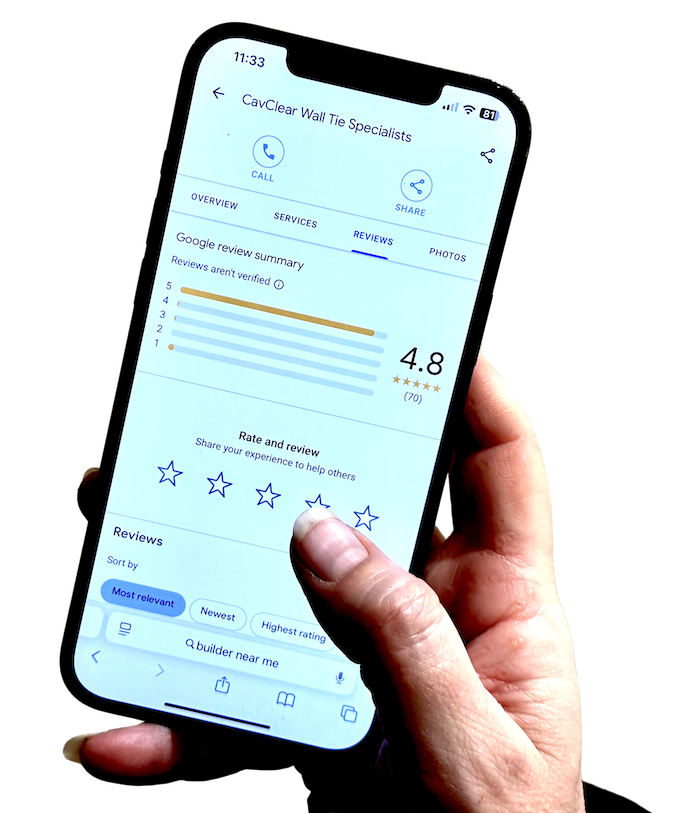
A review is visible proof from a real customer. Actively asking customers for honest reviews can support trust and credibility when done properly and without filtering who is allowed to leave feedback.
Reviews help the next person understand what your business is like, what kind of jobs you do, and whether other people trust you enough to recommend you publicly.
That matters because local customers usually trust other customers more than marketing claims.
A garage saying it is reliable is one thing. Ten recent customers saying the team were helpful, clear, and easy to deal with is much stronger.
That is why reviews help promote your business without feeling pushy. They do not read like adverts. They read like reassurance.
Simple ways to improve local visibility on your website
Your website does not need to be complicated, but it does need to do its job well.
For local promotion, that usually means helping people understand three things quickly:
where you are
what you do
why they should trust you
A lot of small business websites miss one of those.
The practical improvements are often simple. Search engine optimisation, and specifically local SEO, can help your website appear when people search for services in your area. Local SEO involves making your business more visible in online search results within your specific geographical area, often by making your services and location clearer.
Make sure your main services are clearly named in plain English. Make sure your location or service area is easy to spot. Make sure your contact details are obvious. Make sure visitors can quickly tell whether you are the right fit for the job they need doing.
For example, a garage website should clearly mention MOTs, servicing, repairs, tyres, diagnostics, or whatever is relevant to that business. A plumbing website should not make people hunt to work out whether you do emergency call-outs, boiler work, or general plumbing.
This is not about heavy SEO theory. It is about clarity.
It also helps to carry trust signals onto the site itself. That can include customer reviews, clear business information, useful content, and wording that sounds like a real local business rather than generic marketing copy.
If someone lands on your website after seeing your Google profile, the site should reinforce confidence, not create doubt.
How to stay visible in your local area consistently
This is where many businesses struggle. They know how to make improvements once. The harder part is staying visible consistently.
That usually comes down to creating a small number of repeatable habits rather than relying on occasional bursts of effort.
For example:
keeping reviews moving rather than asking in random waves
keeping your business information up to date so customers always have access to accurate details
updating key business information when things change
adding fresh photos from time to time
keeping your website accurate as services evolve
making sure your Google presence does not go stale
Consistency matters because local visibility is rarely built through one big push.
It is usually built through small signals that keep your business looking active and trusted over time.
That is especially true in competitive local areas. A business with a decent presence that stays current and up to date often looks stronger than a better business with an outdated public profile.
💡 Simple reminder: Local visibility tends to fade when a business looks quiet online. Keeping your information accurate, reviews moving, and profile active helps customers see that your business is still present and trusted.
Offline promotion still matters for local businesses
Not all local promotion happens online.
For service businesses, offline visibility still matters because local trust often builds through repeated real-world exposure.
That might include:
branded vans
signage
uniforms
workshop frontage
local sponsorships
partnerships with nearby businesses
simple word-of-mouth prompts
Physical print marketing, such as business flyers, direct mail, and leaflet advertising, can still be useful for some local businesses. Distributing well-designed business flyers and business cards in your area can help people remember your name and recognise your services.
Direct mail, which involves sending physical promotional materials directly to customers’ homes, can also be used by some businesses to reach local households. Local newspaper features, community publications, and local radio can also help build recognition depending on your area, audience, and budget.
Out of home advertising, such as billboards, posters, and bus stop banners, may also be an option in some local areas, although it is usually worth weighing the cost carefully against more direct visibility improvements.
These things still help because they make the business feel familiar.
Then, when someone searches for you later, that familiarity combines with your online presence. They may already recognise the name from a van they saw around town, a sign they passed, or a recommendation from someone nearby.
What to prioritise if you do not have much time
If time is tight, it helps to focus on the few things that usually make the biggest difference first. When both time and budget are limited, prioritise low-cost, high-impact strategies that deliver results without adding unnecessary complexity.
Start with your Google Business Profile.
Then make sure your reviews are not going stale. Then make sure your website clearly explains what you do and where you do it. That alone will put many businesses in a stronger position than they are now.
If you have limited time, a sensible order is:
Keep your Google Business Profile accurate
Wrong opening hours, poor service information, or an incomplete profile makes promotion harder before it even starts.
Focus on review consistency
Fresh genuine reviews support trust and help your business look active. Encouraging current customers to leave honest reviews regularly can strengthen your reputation over time.
Make your website clearer
Most local businesses do not need a bigger website first. They need a clearer one.
Use simple offline reminders
Branded vehicles, local presence, and polite word-of-mouth prompts still matter. Engaging with the local community, such as participating in local events, supporting neighbourhood initiatives, or sponsoring local groups, can increase familiarity and strengthen your reputation.
Avoid spreading yourself too thin
Trying to master every channel at once usually creates more stress than progress.
You can also use geo-targeted ads to reach potential customers within a specific radius of your business location, but they do not need to be the first step for every business.
If you only do a few things well, local visibility tends to improve more steadily than if you start ten things and keep dropping them.
Common mistakes that make local promotion harder than it needs to be
One common mistake is thinking promotion means doing everything.
That mindset usually leads to overload. The business owner tries to juggle too many marketing strategies at once, such as social media, SEO, paid ads, posting, flyers, and local networking, and then ends up feeling that none of it is manageable.
Another mistake is ignoring Google because it feels too obvious. In reality, the obvious places are often the most important ones.
Another is treating reviews as a separate issue instead of part of local visibility. If your reviews are old or inconsistent, that affects how convincing your business looks when people search.
Some businesses also spend too much energy on ideas that do not fit how customers actually buy. For example, they may worry about building a wider social presence when most of their actual enquiries come from search and trust.
Offline marketing can also be difficult to measure. Unlike some digital channels, it is not always clear what is working. One practical way to understand this better is to ask customers how they heard about your business.
⚠️ Avoid overcomplicating it: For many local service businesses, the biggest gains come from being easier to find, easier to understand, and easier to trust. That usually matters more than trying to be active on every marketing channel.
A simple local promotion plan for a busy small business
If you want a practical way to approach this, keep it simple.
First, check what your business looks like in Google search and Google Maps. Look at it as if you were a new customer. Does it feel current, clear, and trusted?
Second, tidy the obvious gaps. Update your business information, services, photos, and contact details if needed.
Third, focus on keeping reviews coming in steadily. Not in awkward bursts. Not once every few months when someone remembers. Steadily.
Fourth, make sure your website supports local trust. Clear services. Clear locations. Clear contact routes. Reassuring wording.
Fifth, keep your local presence visible offline as well. Vans, signage, local familiarity, and real-world customer experience still play a part.
Building a strong local customer base is essential. These are the people most likely to use and recommend your services. Collaborating with other local businesses, especially non-competing ones, can also help you reach new customers through shared credibility and provide useful insight into your local market.
And finally, avoid overcomplicating it. A local business usually grows visibility by becoming easier to find and easier to trust, not by becoming a full-time marketing operation.
If you want to see what a more consistent managed approach to review growth can look like as part of stronger local visibility, TR4U is built to help local businesses strengthen trust online without turning it into another thing to manage. See what this looks like for your business →